2026 Best SDS Plus Hammer Drill for Buyers?
Choosing the right Sds Plus Hammer Drill in 2026 depends on more than headline impact energy. A tool that feels powerful on paper may be tiring overhead or awkward in a narrow utility room. Buyers should compare drilling performance, vibration control, weight, grip comfort, and the availability of compatible bits. For concrete anchors, a compact model may be easier to control. For repeated holes in dense masonry, endurance and effective impact action matter more.
This guide helps buyers assess those trade-offs before choosing a drill. It considers corded and cordless options, battery capacity, dust-management features, and the jobs each design suits. Check manufacturer specifications carefully, especially maximum drilling diameters and recommended operating limits. Small details matter. A balanced handle, clear mode selector, and secure chuck can make a long workday less frustrating. Still, no single model is best for every user. Price, battery platform, maintenance needs, and how often the drill will be used can change the decision. A lower-cost tool may be sufficient for occasional repairs, while frequent site work can justify a more durable model. There is a limit to comparisons, too: published figures cannot fully describe comfort in your hand. Use the recommendations as a starting point, then match them to your materials, workload, and budget.
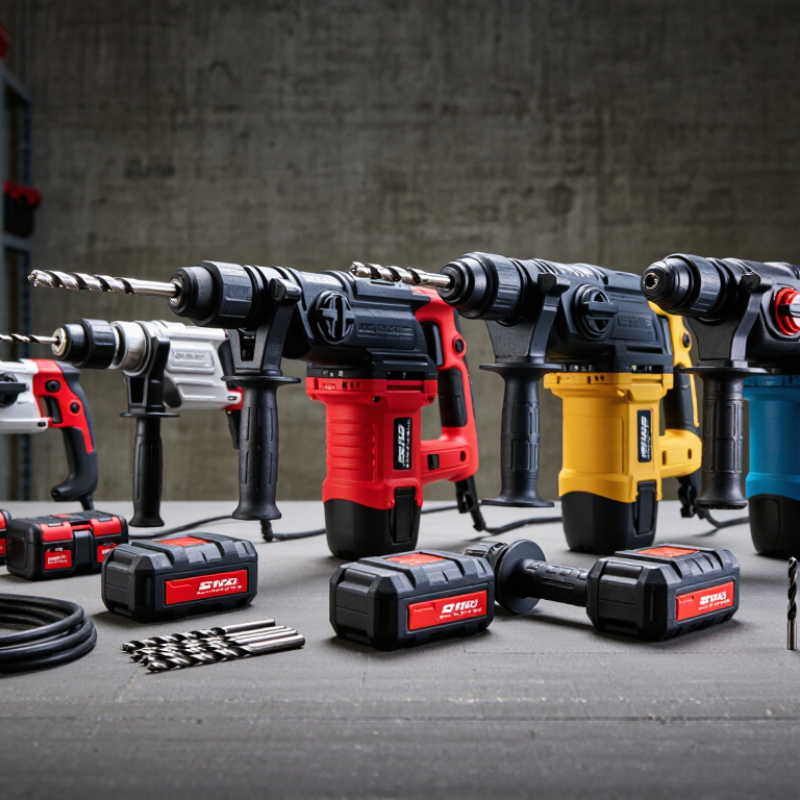
Define SDS-Plus: Bosch’s 10 mm Shank and Rotary-Hammer Interface
SDS-Plus describes a shank-and-chuck interface, not simply a drill-bit size. Its shank is nominally 10 mm across and has four grooves: two help transfer rotation, while two allow the chuck to retain the bit. This grooved shape lets the bit slide into a compatible rotary-hammer chuck without tightening a conventional three-jaw chuck. A small click is useful, but always check that the bit is seated securely.
During drilling, the tool’s hammer mechanism delivers repeated forward impacts through the bit, while the chuck still permits rotation. That combination is useful for drilling masonry, where a smooth 6 mm concrete bit can meet gritty resistance and fine dust. SDS-Plus bits can move slightly back and forth in the chuck by design. That movement is not automatically a fault. Still, excessive wobble, damaged grooves, or a bit that will not lock deserves attention.
The 10 mm measurement does not mean every 10 mm bit will fit. A round-shank bit needs a compatible chuck or adapter, and larger rotary hammers may use a different interface. Check the tool manual before buying; the names can look similar on a shelf. One thing is easy to miss: interface compatibility does not guarantee that a bit suits the material or drilling task.
Compare 2026 Models by Impact Energy (J) and Concrete Drilling Capacity (mm)
When comparing 2026 SDS Plus hammer drills, start with impact energy, measured in joules. Compact models around 2–3 J suit small anchor holes and occasional home repairs. Mid-range tools near 3–4 J can handle more frequent drilling in concrete. Higher energy may improve progress, but it can also add weight and vibration. More is not always better.
Check the stated concrete drilling capacity in millimeters alongside the joule rating. A compact drill may list a maximum near 20–24 mm, while some heavier SDS Plus models reach roughly 28–32 mm. Treat these figures as limits, not ideal everyday sizes. For repeated holes near a tool’s maximum, drilling may slow and place extra strain on both the machine and operator. Numbers need context.
Compare ratings under similar conditions, and check whether the listed capacity refers to concrete rather than masonry generally. Bit quality, concrete hardness, hole depth, and operator pressure all affect real results. A 3 J model rated for 26 mm may outperform a higher-rated tool with poor vibration control, but specifications alone cannot confirm that. Read the manual, examine vibration data, and choose capacity with room to spare. A little caution helps.
Evaluate Speed, Impact Rate, and Weight Against Manufacturer Specifications
A useful SDS Plus hammer drill comparison begins with the manufacturer’s stated speed, impact rate, and weight. No-load speed, measured in revolutions per minute, indicates how quickly the bit turns without resistance. Impact rate, usually listed as blows per minute, describes hammer action—not guaranteed drilling speed. Numbers need context.
Compare models using the same operating mode and check whether their specifications refer to identical conditions. A high impact rate may help with concrete, but bit condition, material hardness, and applied pressure also affect progress. For example, a drill rated at 4,500 blows per minute is not automatically faster than one rated lower. Read the fine print. Some manufacturers list maximum figures that do not reflect sustained work.
Weight can change the experience over a full morning of overhead drilling. Check whether the listed figure includes the battery, side handle, and depth stop; tool-only weight can make a comparison misleading. A lighter model may feel easier to control, while a heavier one may feel steadier in some tasks. Neither detail alone decides the better buy. Match the published figures to your typical hole size and work position, then consider how the drill feels in your hands. I would not treat any single specification as a verdict; real materials can be stubborn.
Check Tool Safety and Testing Requirements Under IEC 62841-2-6
2026 Best SDS Plus Hammer Drill for Buyers?
In 2026, compare SDS Plus hammer drills by more than impact energy and price. Check the manual, product label, and test documents for the exact model. IEC 62841-2-6 covers particular safety requirements for hand-held hammers. Confirm with the supplier or testing laboratory that the model’s classification, functions, and applicable edition match the standard.
A careful evaluation may include insulation, temperature rise, mechanical strength, and abnormal operation. The precise tests depend on the tool and applicable requirements. Ask for a report from a competent laboratory, not just a vague “safety tested” claim. Also inspect the side handle, trigger lock, and chuck area for secure fit and damage. Standards testing cannot predict every jobsite condition. That distinction is easy to overlook.
Tips: Ask to see model-specific test records. Check that accessories fit securely, and wear suitable eye and hearing protection. Feel the handle after a brief test. If vibration seems unusually harsh, pause and investigate.
Match Corded and Cordless Drills to Runtime, Vibration, and Dust-Control Needs
A 2026 SDS Plus hammer drill choice should fit the work, not just the tool’s impact rating. For repeated holes in concrete, compare corded power with cordless runtime under realistic load. Battery estimates can feel optimistic on cold mornings, especially with large-diameter bits. Check the stated vibration level, weight, and whether the drill accepts a depth stop and dust-extraction shroud. Small details matter when drilling overhead or in a cramped room.
Vibration deserves a careful look. The UK Health and Safety Executive’s hand-arm vibration guidance sets a daily exposure action value of 2.5 m/s² A(8) and a limit value of 5 m/s² A(8). These are daily exposure benchmarks, not a promise that one drill is safe for every user. For dust, OSHA’s respirable crystalline silica standard, 29 CFR 1926.1153, Table 1, describes controls for handheld and stand-mounted drills, including a shroud and dust-collection system. Match extraction to the shroud, and check that airflow keeps up as the filter loads.
Tips: Compare runtime using your usual bit size and concrete, then keep a spare charged battery for longer jobs. Record the drill’s vibration figure and estimate trigger time across the shift. Clear dust from the filter often. It is easy to forget.