2026 Top Hybrid Energy Storage Systems for Global Buyers
The 2026 Top Hybrid Energy Storage Systems for Global Buyers guide examines technologies shaping reliable, flexible power worldwide. Hybrid Energy Storage Systems combine different storage technologies, such as lithium-ion batteries, flow batteries, supercapacitors, or thermal units. This combination can balance fast response, long-duration backup, and renewable-energy variability.
Markets differ. Details matter.
Dr. Imre Gyuk, a leading energy-storage expert and former director of the U.S. Department of Energy’s Energy Storage Research Program, has stated, “Energy storage is the key to unlocking the full potential of renewable energy.” His observation remains highly relevant as buyers assess solar-plus-storage projects, microgrids, commercial facilities, and utility-scale installations.
This overview focuses on practical evidence rather than attractive product claims. It compares usable capacity, round-trip efficiency, response time, cycle life, degradation behavior, thermal management, energy-management software, and warranty conditions. It also considers safety certifications, grid-interconnection requirements, local servicing, spare parts, and end-of-life planning. Requirements vary across jurisdictions, so buyers should verify current standards with qualified local professionals.
A strong system on paper may perform poorly without correct sizing, commissioning, and maintenance. That is imperfect.
Price alone cannot reveal lifetime value. A lower-cost battery may require earlier replacement, while a premium system may create unnecessary expense for short-duration needs. This guide therefore highlights trade-offs, documented performance, supplier experience, and transparent limitations. Some data may change as manufacturers update specifications. Careful verification remains essential.
Hybrid Energy Storage Systems: Definition and Core Operating Principles
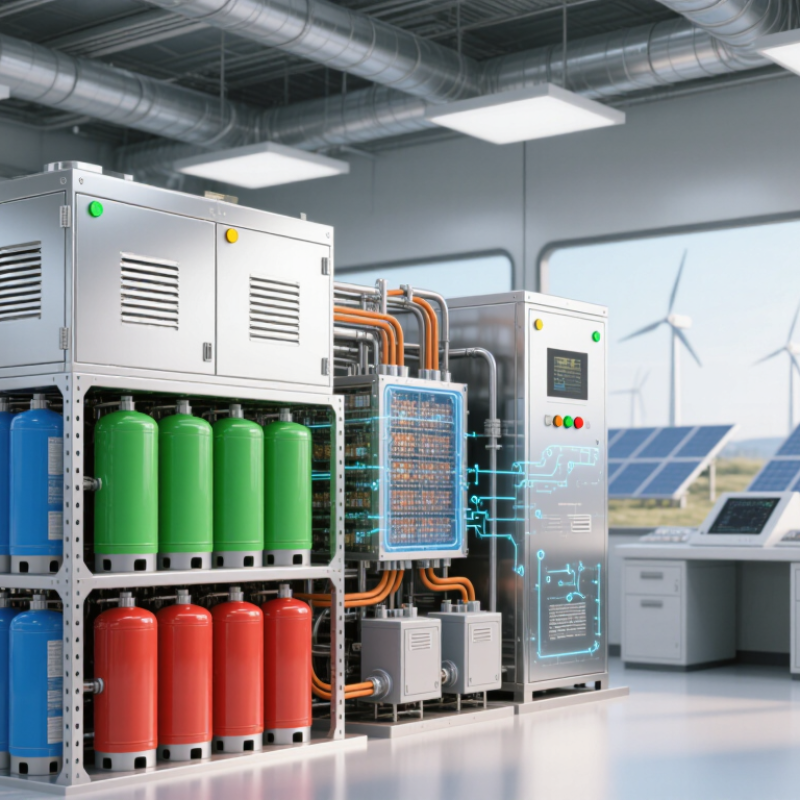
Hybrid energy storage systems combine two or more storage technologies with different response characteristics. A common architecture pairs batteries with supercapacitors, thermal storage, or renewable generation. One asset supplies sustained energy. Another handles sudden power changes. This division reduces stress on the main battery and can improve operating flexibility. The IEA reported that global battery storage additions reached 42 GW in 2023, increasing by more than 130% from 2022.
The core principle is coordinated power control. An energy management system forecasts demand, solar output, electricity prices, and reserve needs. It then sends commands through the power conversion system. The battery management system monitors cell voltage, temperature, state of charge, and fault conditions. Fast devices respond within milliseconds, while batteries provide longer discharge periods. The result is smoother frequency control, peak shaving, and renewable energy shifting. Small details matter, especially sensor accuracy and communication delays.
For global buyers, the term hybrid needs careful examination. It is not perfectly standardized across markets. Some suppliers describe a battery-plus-inverter package as hybrid, although it may contain only one storage technology. Buyers should request system diagrams, dispatch logic, degradation assumptions, and round-trip efficiency under actual operating conditions. The U.S. National Renewable Energy Laboratory notes that storage performance depends strongly on duty cycle, temperature, and control strategy. A system can look efficient on paper. Field behavior may differ. That gap deserves honest testing.
How to Evaluate Systems for Different Global Energy Needs
Evaluating a hybrid energy storage system starts with the site, not the catalog. A coastal microgrid may need salt-mist protection, while a cold inland facility needs heating before charging. Map the load in fifteen-minute intervals. Separate critical pumps, refrigeration, data equipment, and flexible loads. A system sized only from annual consumption can fail during a ten-minute peak.
Compare battery capacity, inverter power, round-trip efficiency, response time, and expected degradation under local temperatures. Ask for independently verified test data and clear definitions. Standards such as IEC and UL may support technical confidence, but local grid rules still control interconnection. Check islanding behavior, protection settings, fire detection, emergency access, and remote monitoring. These details matter more than a polished dashboard.
Global buyers should model delivered cost, installation, duties, spare parts, training, and disposal responsibilities. Require warranty terms that state usable capacity, cycle limits, response times, and exclusions. Review the service network in the target country. A low purchase price can become expensive after one failed power-conversion module. Include solar variability and backup-fuel limits in the forecast. Forecasts are imperfect. Keep a margin. Pilot testing is wise, yet it may not represent a dusty summer or weak grid. Recheck assumptions with measured site data every quarter.
2026 Top Hybrid Energy Storage Systems for Global Buyers
Indicative round-trip efficiency ranges for storage technologies commonly combined in hybrid energy systems
Lithium-ion and sodium-ion systems typically provide high efficiency and fast response for daily renewable-energy shifting. Flow batteries are better suited to longer discharge durations, while pumped-storage hydro and thermal storage can support large-scale or long-duration applications. Hybrid projects should evaluate efficiency together with storage duration, operating temperature, cycle life, safety requirements, grid conditions, and local regulations.
Data shown as indicative global engineering ranges synthesized from publicly available energy-storage technology assessments. Actual performance varies by system design, operating conditions, auxiliary loads, and project configuration.
Top Hybrid Energy Storage System Configurations for 2026
In 2026, hybrid energy storage system configurations will matter more than battery size alone. Buyers should match architecture with load behavior, grid rules, and renewable output.
An AC-coupled system connects solar inverters and batteries on the alternating-current side. It suits existing solar plants because storage can be added without replacing the main inverter. A DC-coupled system shares a DC bus with solar panels. It captures energy that would otherwise be clipped during bright midday hours. This design can reduce conversion losses, although controls become more demanding.
Co-located solar-plus-wind systems with battery storage offer broader generation profiles. Wind may support evening charging when solar production falls. Behind-the-meter hybrids can combine batteries, rooftop solar, backup generation, and controllable loads. They can reduce demand charges and improve resilience, but backup sizing is often underestimated. The International Energy Agency’s Batteries and Secure Energy Transitions report states that global energy storage capacity may need to increase sixfold, reaching 1,500 GW by 2030. That target raises pressure for flexible, bankable configurations. BloombergNEF reported that lithium-ion battery pack prices reached about 115 dollars per kilowatt-hour in 2024, yet system costs still depend heavily on power electronics and installation.
Tips: Request hourly simulation, not annual energy estimates. Check round-trip efficiency, degradation assumptions, fire protection, and local interconnection limits. A four-hour battery is not automatically optimal. In some sites, two hours with stronger controls may perform better. In others, the model may fail during cloudy weeks. Reality is less tidy.
Installation, Safety, Maintenance, and Regulatory Considerations
2026 Top Hybrid Energy Storage Systems for Global Buyers
Installation, Safety, Maintenance, and Regulatory Considerations
A hybrid energy storage system should match the site, not only the sales specification. During installation, survey roof loading, drainage, cable routes, ambient temperature, and emergency access. Keep battery enclosures away from combustible materials and standing water. Provide clear working space around disconnects and ventilation openings. A few centimeters lost during construction can complicate future servicing.
Use qualified electrical professionals for wiring, protection settings, grounding, and grid connection. Commissioning should include insulation checks, polarity verification, battery communication tests, alarm testing, and controlled shutdowns. Record serial numbers, settings, test results, and installer qualifications. Safety signage must remain readable after dust, rain, and sunlight exposure. Small details matter.
Maintenance schedules should cover visual inspections, terminal torque, filters, cooling fans, corrosion, software status, and event logs. Test smoke detection, emergency stops, and isolation procedures under approved conditions. Train site workers to respond to unusual heat, swelling, odor, or repeated alarms. Do not open damaged battery cabinets without specialist authorization. Local fire, electrical, building, environmental, and grid-interconnection rules may differ sharply between countries. Confirm permits and certification before delivery, especially for transport and indoor placement. A checklist helps, but it can miss hidden moisture or poor workmanship. Recheck critical points after the first month of operation.