
2026 Best Melasma Nanosecond vs Picosecond Laser?

Melasma can look like soft brown clouds across the cheeks, forehead, or upper lip, but choosing a laser is not a simple wavelength contest. In 2026, readers comparing nanosecond and picosecond devices need more than bold claims about speed or pigment removal. Melasma is chronic, can return, and may worsen after irritation or excess heat. Small details matter.

Dermatologist Dr. Pearl Grimes has described melasma as “one of the most challenging conditions to treat.” That warning is useful context for this comparison. A nanosecond laser delivers energy in billionths of a second; a picosecond laser uses even shorter pulses. Yet shorter pulses do not guarantee safer or better results for every person. Treatment settings, wavelength, skin tone, prior procedures, sun exposure, and the clinician’s experience all influence risk and response.

This guide to Melasma Nanosecond Picosecond Laser options will compare how the technologies work, what evidence can—and cannot—show, and which questions to ask during a consultation. It will also distinguish laser treatment from daily photoprotection and other clinician-directed care, which often remain central to management. There is no universal winner. Results vary, recurrence is possible, and post-inflammatory darkening deserves honest attention. The comparison may feel less decisive than a device advertisement. That is the point: a cautious plan, tailored to the individual, is more credible than a promise of clear skin.
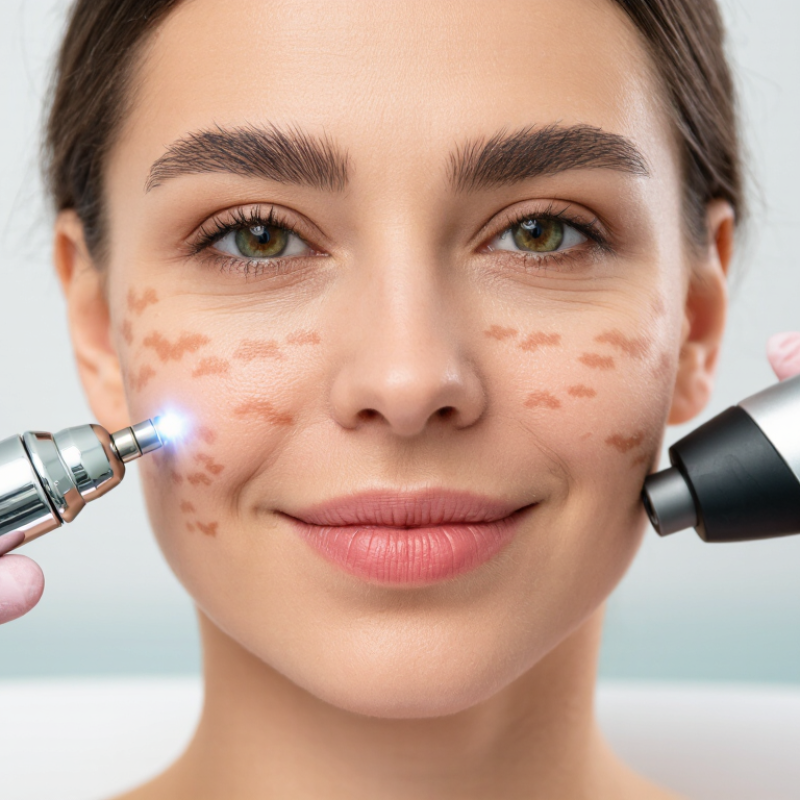
2026 Best Melasma Nanosecond vs Picosecond Laser?

What Is Melasma and How Do Laser Treatments Target It?

Melasma is a pigment condition that often appears as flat brown or gray-brown patches on the cheeks, forehead, upper lip, or jaw. It is not simply a collection of surface spots. Hormonal changes, visible light, ultraviolet exposure, heat, and inherited tendency can all contribute. The exact mix differs from person to person. That makes diagnosis important: other conditions can look similar, and a clinician may use a close examination before discussing treatment.

Laser treatments direct energy toward melanin, the pigment that gives skin its color. Nanosecond and picosecond devices deliver energy in very short pulses, which can break pigment into smaller particles for the body to clear. But melasma is reactive. Heat and irritation may trigger darker patches, and laser treatment can cause temporary redness or uneven lightening. It is not a guaranteed fix. A dermatologist should assess skin type, pigment depth, medical history, and previous reactions before recommending a device. Often, daily broad-spectrum sun protection and prescribed topical care are considered before laser treatment or alongside it. Even careful treatment can disappoint; melasma may return, and the best plan can take adjustment. A patch of cheek pigment rarely tells the whole story.

How Do Nanosecond and Picosecond Lasers Work?

Nanosecond and picosecond lasers differ mainly in pulse duration. The NIST SI Brochure defines a nanosecond as 10⁻⁹ seconds and a picosecond as 10⁻¹² seconds: a picosecond is 1,000 times shorter. Short pulses deliver energy before heat spreads far into nearby tissue. This matters for melanin, the pigment targeted in many laser treatments. The selective photothermolysis principle described by Anderson and Parrish in Science (1983) explains how wavelength and pulse duration influence targeted heating. In practice, nanosecond devices can produce substantial photothermal effects, while shorter picosecond pulses may create stronger photoacoustic stress. The distinction is useful, but not absolute.

For melasma, the target is complicated. Pigment may sit at different skin depths, and inflammation or heat can worsen discoloration. A shorter pulse does not automatically mean safer treatment or better results. Clinicians also consider wavelength, fluence, spot size, skin tone, and recent sun exposure. Too much energy can leave redness, irritation, or darker patches. That risk deserves attention. Published research on laser treatment for melasma remains mixed, and recurrence is possible; established reviews therefore describe lasers as a cautious option, not a universal first choice. A consultation should include a review of prior treatments and a plan for sun protection. The pulse number alone cannot predict your outcome.

2026 Best Melasma Nanosecond vs Picosecond Laser? How Do They Work?

Representative pulse-duration comparison. Actual durations vary by laser device and settings.

How they work: Melanin absorbs laser energy. Nanosecond and picosecond pulses deliver that energy over different time spans, producing heat and rapid mechanical effects that can fragment pigment. A shorter pulse does not guarantee better melasma results or fewer side effects; outcomes depend on diagnosis, skin type, wavelength, settings, and treatment plan. Melasma can recur, so laser treatment requires careful clinical assessment.

Illustrative pulse-duration values only—not a comparison of clinical effectiveness or a specification for all devices.

How Do the Two Laser Types Compare for Melasma?

Melasma is more complicated than a patch of excess pigment. It can involve different skin depths and may flare with sunlight, heat, hormones, or irritation. Nanosecond and picosecond lasers deliver energy in different pulse durations. Nanosecond pulses last longer; picosecond pulses are shorter. Both can break pigment into smaller particles, but neither guarantees lasting clearance.

The comparison is not neat. A picosecond pulse may limit heat spreading to nearby tissue, but that does not make it automatically safer or more effective for every person. Wavelength, energy settings, skin tone, and the clinician’s experience all matter. Some people develop irritation or darker patches after treatment, and melasma can return. That matters. Evidence for laser treatment varies, so a careful assessment should include other options, such as topical therapy and sun protection.

A dermatologist should confirm the diagnosis and review prior treatments, triggers, and the risk of post-inflammatory pigmentation. Ask how many sessions may be needed, what recovery looks like, and how results will be monitored. Broad-spectrum sunscreen and shade remain important, even after a laser session. For some patients, a laser may have a role; for others, the risk may outweigh the likely benefit. The choice deserves caution.

Which Factors Guide Laser Choice and Treatment Planning?

2026 Best Melasma Nanosecond vs Picosecond Laser?

Which Factors Guide Laser Choice and Treatment Planning?

Choosing a laser starts with the pigment, not the pulse duration. A dermatologist assesses skin phototype, pigment depth, recent sun exposure, hormonal triggers, and prior irritation. Brown patches can look similar but respond differently. Wood’s lamp examination may help, though it is not definitive. Nanosecond and picosecond devices both fragment pigment; neither guarantees lasting clearance.

Published clinical reviews report improved melasma severity scores with both approaches, but small study groups and varied settings limit direct comparisons. No clear winner.

Planning should include a baseline photograph, a measurable outcome such as the modified Melasma Area and Severity Index (mMASI), and a cautious test spot. The 2023 International Evidence-based (S2) Guideline for Melasma emphasizes combination care and ongoing photoprotection; laser treatment is not a substitute for it.

Discuss the risk of rebound darkening, patchy light spots, and relapse before treatment. I would not promise a fixed session count. That part remains uncertain.

Tips:

Bring a list of medications and recent skin products. Use broad-spectrum SPF 30 or higher daily, as recommended by the American Academy of Dermatology. Ask how progress and side effects will be checked between sessions.

What Are the Risks, Limitations, and Aftercare Needs?

Nanosecond and picosecond lasers can lighten some melasma, but neither reliably removes its underlying tendency to return. Melasma may involve more than pigment alone, so treatment results vary. A darker patch can reappear after sun exposure, hormonal changes, or skin irritation. That matters. A board-certified dermatologist should assess your skin tone, medical history, and prior treatments before recommending a device or settings.

Possible side effects include redness, swelling, temporary darkening, lighter patches, and, less commonly, burns or scarring. People with darker skin tones may face a higher risk of lasting pigment changes. Treatment can also trigger irritation that makes melasma more noticeable. A laser can make a photo look better before the pigment is truly stable. That is easy to miss. Ask about a test spot, realistic expectations, and non-laser options; laser treatment is not suitable for everyone.

Aftercare is part of treatment, not an optional extra. Follow your clinician’s instructions, use a gentle cleanser and moisturizer, and apply broad-spectrum SPF 30 or higher daily. Hats and shade help, too. Avoid picking, scrubbing, strong exfoliants, and unnecessary heat while your skin is recovering. Contact your clinician if pain, blistering, or worsening discoloration develops. Even careful aftercare cannot guarantee that melasma will stay away.

2026 Best Melasma Nanosecond vs Picosecond Laser? — What Are the Risks, Limitations, and Aftercare Needs?

Comparison Nanosecond Laser Picosecond Laser
Pulse duration Delivers energy in nanosecond pulses. Delivers shorter, picosecond pulses. Pulse duration alone does not determine whether treatment is appropriate for melasma.
Role in melasma care Low-fluence Q-switched treatments have been studied as an add-on option, often using a 1064 nm wavelength. They are not a guaranteed or permanent solution. Evidence for melasma is still developing. Shorter pulses do not establish that it is more effective or safer for every patient.
What affects results Wavelength, energy settings, treatment density, device design, clinician technique, melasma type, skin tone, and sun exposure all influence outcomes. The term “nano” or “pico” alone is not enough to compare treatments.
Potential benefits May lessen pigmentation for some carefully selected patients when used conservatively and alongside ongoing melasma management. May be considered in selected cases, but current evidence does not support assuming it consistently outperforms nanosecond treatment for melasma.
Common short-term effects Temporary redness, warmth, swelling, tenderness, or darkening and crusting of treated spots can occur. The degree and duration vary with settings and individual response.
Important risks Both types can worsen pigmentation, trigger post-inflammatory hyperpigmentation, cause uneven lightening or hypopigmentation, and rarely cause blistering, scarring, or infection. Melasma may also recur or rebound after an initial improvement.
Key limitations Melasma is chronic and often returns. Lasers do not remove its underlying tendency, and laser treatment alone is generally not a first-line approach. Outcomes are variable, and repeated sessions may increase the risk of mottled pigmentation.
Who needs extra caution People with darker skin tones, a history of post-inflammatory pigmentation, active tanning, irritated skin, or uncertain diagnosis may have greater risk or need a different plan. A qualified dermatologist should assess suitability and settings.
Before treatment Confirm the diagnosis and discuss prior treatments, medications, skin sensitivity, and pigment-change history. A clinician may recommend a test spot and may first stabilize melasma with topical treatment and strict photoprotection.
Aftercare Follow the treating clinician’s wound-care instructions. Use gentle cleansing and moisturizer; avoid picking, scrubbing, and irritating active ingredients until the skin has recovered. Protect the area from sunlight with broad-spectrum SPF 30 or higher, protective clothing, and shade; tinted sunscreen with iron oxides may help protect against visible light. Seek medical advice for severe or worsening pain, blistering, spreading redness, or signs of infection.
Practical takeaway There is no universally “best” pulse duration for melasma. A dermatologist should weigh potential benefit against the risk of worsening pigmentation and build a maintenance plan that prioritizes sun and visible-light protection.

Medical note: This comparison is general educational information, not a diagnosis or treatment recommendation. Laser suitability and outcomes vary; consult a board-certified dermatologist experienced in treating melasma.

Scroll to Top