The landscape of permanent magnet electric motor innovation is rapidly evolving. By 2026, experts forecast a substantial growth in this technology. The global permanent magnet motor market is projected to reach $18 billion by 2026, bolstered by increasing demand for energy efficiency and sustainability.
Recent studies highlight that permanent magnet electric motors offer superior efficiency compared to traditional motors. For instance, they can improve energy savings by up to 30%. This efficiency leads to a significant reduction in operational costs for various applications. Notably, the adoption of these motors in electric vehicles is growing. Industry reports estimate that, by 2025, 75% of all electric vehicles will be powered by permanent magnet electric motors.
However, challenges remain. The sourcing of rare earth materials poses sustainability concerns. Additionally, manufacturers must overcome production costs that limit widespread adoption. As we explore these innovations, understanding both the benefits and challenges is crucial. The future of permanent magnet electric motors holds great promise, but caution and strategic planning are needed.
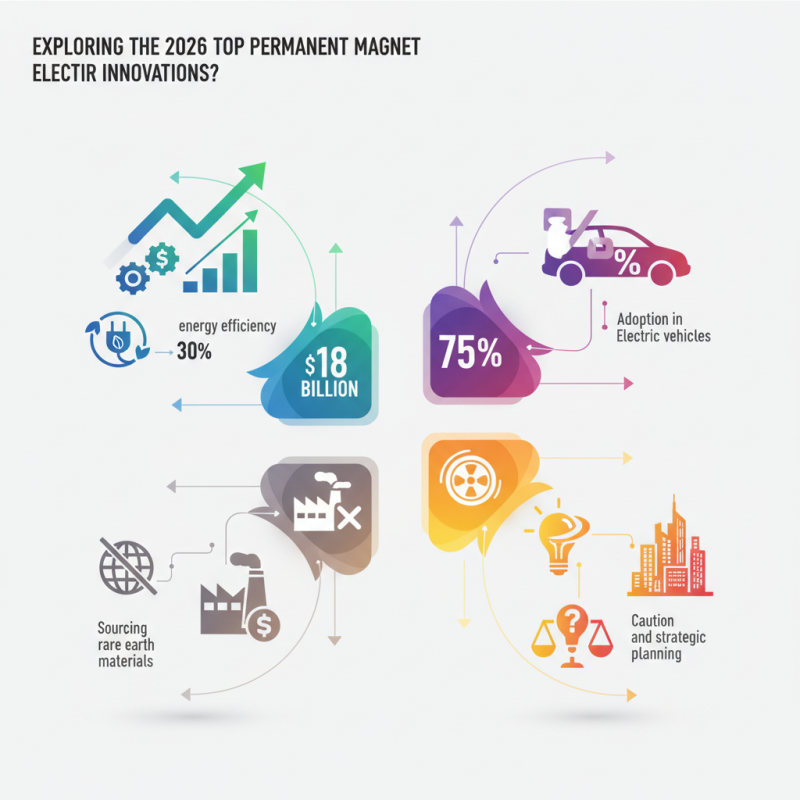
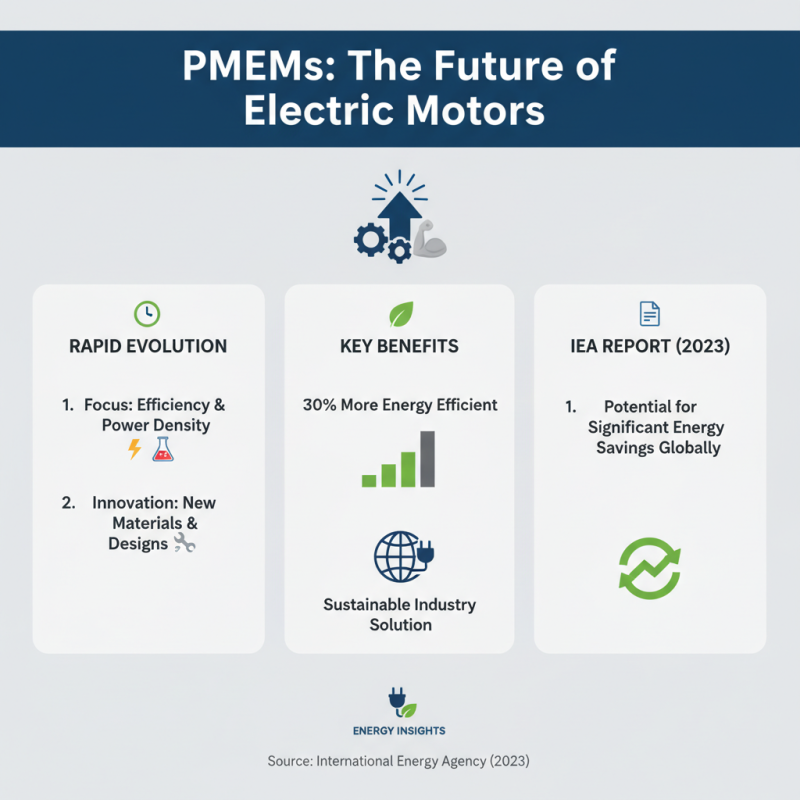
Permanent magnet electric motors (PMEMs) are evolving rapidly. Recent innovations have focused on efficiency and power density. According to a 2023 report by the International Energy Agency, PMEMs have the potential to improve energy efficiency by 30% compared to traditional motors. This evolution is crucial as industries seek sustainable solutions to meet increasing demands.
One prominent area of innovation is the enhancement of magnet materials. Advances in rare-earth magnet technology are yielding stronger and lighter magnets. This reduces the size and weight of motors without sacrificing performance. However, dependency on rare-earth materials poses challenges. The supply chain can be unstable, which raises concerns about sustainability. Manufacturers are exploring alternatives, but the transition is not straightforward.
Another trend is the integration of smart technology. Sensors and control systems are being embedded into motors. This enables real-time monitoring and predictive maintenance. Such innovations aim to reduce downtime and increase operational efficiency. Yet, as systems become smarter, complexities arise. Balancing functionality with reliability requires ongoing research and development. Overall, the sector is headed towards exciting innovations.
The 2026 permanent magnet electric motor market is seeing rapid developments. Numerous key players are innovating to enhance efficiency and performance. These advancements not only boost energy efficiency but also improve the sustainability of manufacturing processes. However, some companies still face challenges with scalability. The transition from prototype to production can be complex.
Many innovators are focusing on new materials for magnets. These materials promise higher magnetic flux, which leads to smaller and lighter motors. Yet, sourcing these materials sustainably remains a concern. Some companies are trying to address this issue through recycling initiatives. Still, the effectiveness of these initiatives varies widely across the industry.
Collaboration among players is crucial in this competitive market. Partnerships can drive innovation and support a faster go-to-market strategy. However, not all collaborations yield positive outcomes. Trust and alignment of goals often dictate success. The landscape is evolving, and only those who adapt will thrive.
The 2026 landscape for permanent magnet electric motors is evolving rapidly. Key advancements in materials are pivotal for enhancing efficiency. Research shows that using advanced magnet materials could increase performance by up to 30%. These materials enable motors to operate at higher temperatures while maintaining efficiency. Higher temperatures can reduce the size and weight of the motor, which is crucial for applications in electric vehicles.
Design innovations also play a significant role. Innovative designs can enhance airflow within the motor, improving cooling and overall efficiency. In fact, new cooling technologies have shown to lower thermal losses by up to 20% in tested environments. However, not all designs yield expected results; some prototypes have failed to meet efficiency targets. This highlights the need for continuous evaluation and adjustment.
The industry must adopt a mindset of testing and iteration. Every innovation comes with its own set of challenges. As companies push the boundaries, they must remain cautious of potential failures. Monitoring performance data is essential to refine these technologies. Exploring this frontier requires time and resilience, as well as a commitment to overcoming setbacks.
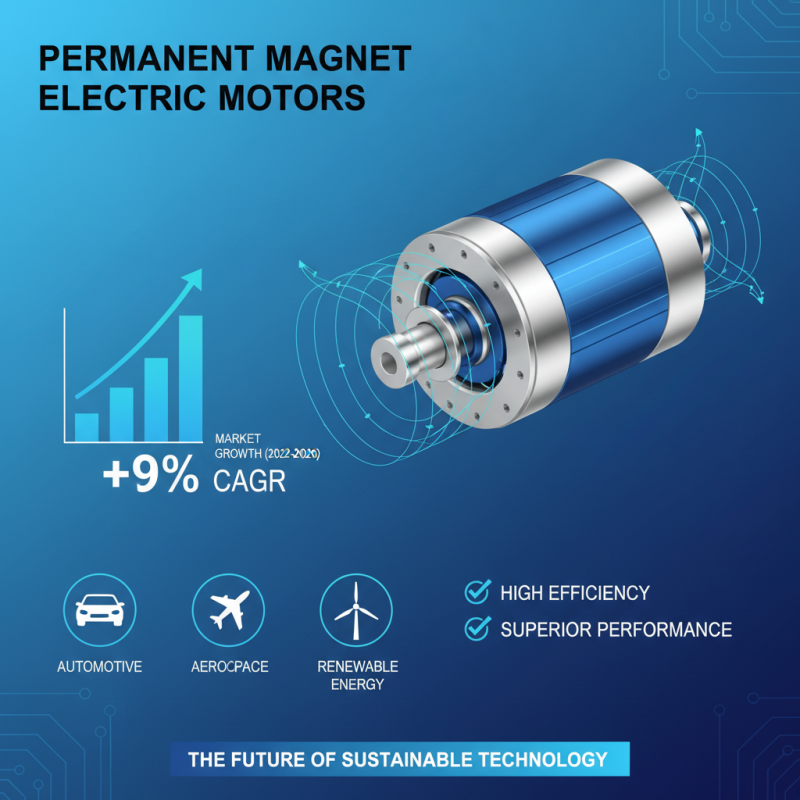
Permanent magnet electric motors (PMEMs) are gaining traction in various industries. Their efficiency and performance make them ideal for applications in automotive, aerospace, and renewable energy sectors. According to a recent market report, the global PMEM market size is expected to grow at a CAGR of over 9% from 2022 to 2026. This growth highlights the importance of these motors in modern technology.
In the automotive sector, PMEMs are being integrated into electric vehicles (EVs). They provide better acceleration and efficiency than traditional motors. Data shows that electric vehicles using PMEMs can achieve about 98% efficiency. This efficiency significantly reduces energy costs and enhances vehicle performance. However, the reliance on rare earth materials raises sustainability concerns that need addressing.
Tip: When selecting a motor, consider both efficiency and sustainability.
PMEMs are also revolutionizing the renewable energy sector, especially in wind turbines. Their lightweight design and high torque capabilities improve energy capture. This innovation could increase global wind energy generation by 15% by 2025, according to industry forecasts. Still, the challenge lies in recycling these motors. Most end-of-life PMEMs do not have established recycling processes.
Tip: Keep an eye on improvements in recycling technologies for PMEMs.
The landscape of permanent magnet electric motors is evolving rapidly. Innovations are aimed at improving performance and efficiency. New materials, like high-temperature superconductors, show promise. They could lead to smaller, lighter motors with higher output. Research is ongoing, but the environmental impact of material sourcing is a concern.
Many challenges persist in development. One major hurdle is sustainability. Sourcing rare earth elements can be damaging. The industry's reliance on these materials raises ethical questions. As the demand for greener technologies grows, so does the pressure to innovate responsibly. Efforts to recycle existing materials are increasing, but they are still in early stages.
Another area of focus is cost-efficiency. Manufacturers face rising production costs. Developing a cost-effective supply chain is essential. Automation in manufacturing processes could help. However, this approach requires significant investment. The balance between innovation and profit margins will be critical in the coming years.
| Category | Innovation Type | Key Features | Potential Applications | Challenges |
|---|---|---|---|---|
| Design | Advanced Rotor Designs | Increased Efficiency, Enhanced Cooling | Automotive, Industrial Applications | Complex Manufacturing Process |
| Materials | High-Performance Magnets | Higher Magnetic Density, Reduced Weight | Aerospace, Renewable Energy | Cost of Raw Materials |
| Control Systems | Smart Motor Controllers | Improved Precision, Real-Time Monitoring | Robotics, Manufacturing Automation | Integration Complexity |
| Sustainability | Recyclable Materials | Environmentally Friendly, Reduced Waste | Consumer Electronics, EVs | Regulatory Challenges |
| Electronics | Integrated Digital Technologies | Enhanced Compatibility, IoT Integration | Smart Grid Solutions, Home Automation | Cybersecurity Risks |