Top Benefits of Using Permanent Magnet Motor Generators for Efficient Energy Conversion?

The shift towards sustainable energy solutions highlights the significance of the permanent magnet motor generator. Industry expert Dr. Emily Carter, a leading engineer in renewable energy technologies, once stated, "Permanent magnet motor generators are pivotal for achieving high efficiency in energy conversion." This insight reflects the growing importance of this technology in modern applications.

Permanent magnet motor generators offer distinct advantages. They are compact and often lighter than traditional systems, making them ideal for many applications. Their efficiency rates can exceed 95%, drastically reducing energy losses. This efficiency is crucial in a world that prioritizes energy conservation and sustainability.

However, challenges persist. Material costs for permanent magnets can be high, influencing overall system affordability. Additionally, manufacturers must balance performance and longevity, often leading to difficult design choices. As the industry evolves, continuous improvements and innovations remain necessary to address these challenges effectively.
Top Benefits of Using Permanent Magnet Motor Generators for Efficient Energy Conversion?

Definition and Overview of Permanent Magnet Motor Generators
Top Benefits of Using Permanent Magnet Motor Generators for Efficient Energy Conversion?

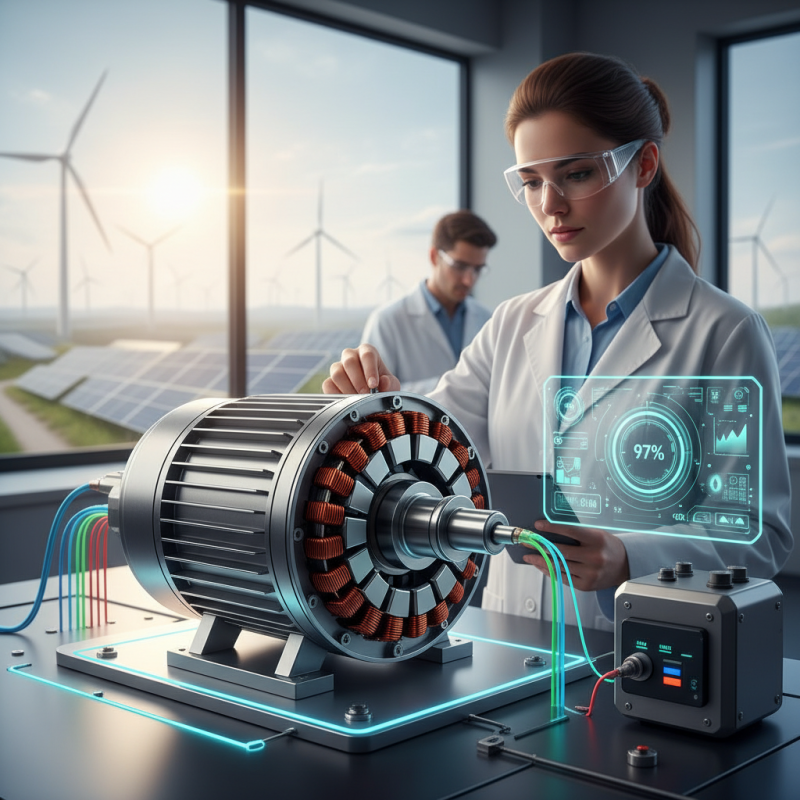
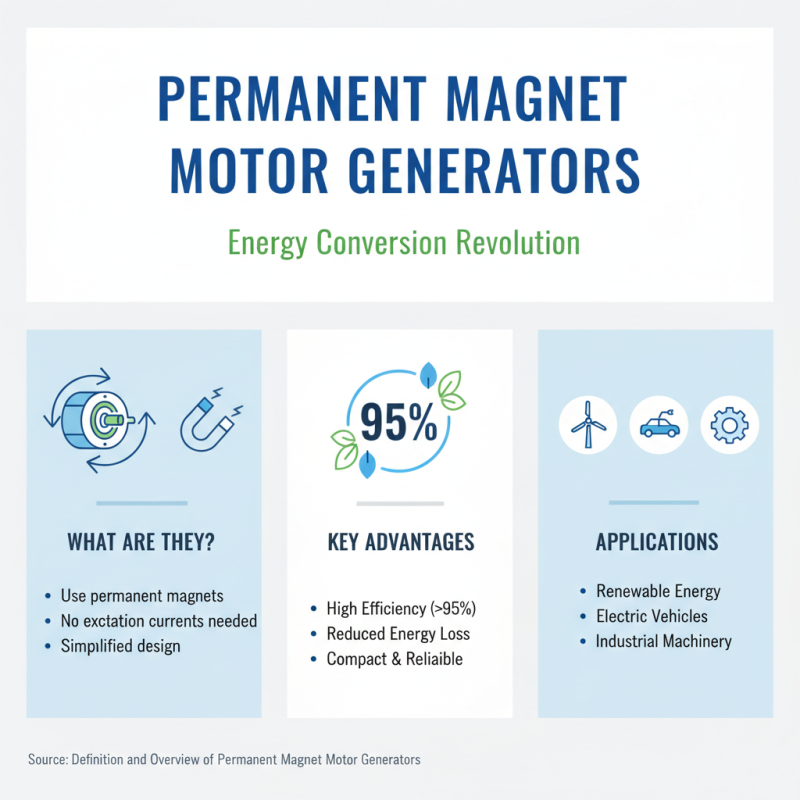
Permanent magnet motor generators (PMMGs) are a revolutionary technology for energy conversion. They operate using magnetic fields created by permanent magnets, eliminating the need for excitation currents. This design leads to higher efficiency. PMMGs can achieve efficiencies over 95%, making them a popular choice in various applications.

When considering PMMGs, it's essential to note their advantages. Their compact size allows for easy integration into smaller systems. They operate quietly, reducing noise pollution. However, the high initial cost may be a barrier for some. It's crucial to evaluate the long-term savings on energy and maintenance.

Tips: Evaluate your energy needs before investing. Think about your space constraints. Always consider the total lifecycle cost, not just the upfront price. Regular maintenance is vital to sustain efficiency. Keep in mind that while PMMGs are efficient, they might not be suitable for every application. Reflect on your specific requirements for the best results.
Key Advantages of Permanent Magnet Motor Generators in Energy Conversion

Permanent Magnet Motor Generators (PMMGs) are gaining traction in various sectors due to their remarkable efficiency. According to a report by the International Energy Agency, PMMGs can achieve efficiency rates of over 95%. This level of efficiency significantly reduces energy loss during conversion. Industries are increasingly attracted to PMMGs for their ability to convert mechanical energy to electrical energy with minimal waste.

One notable advantage of PMMGs is their compact design. These motors generate high torque in a small footprint, making them ideal for applications where space is limited. A study from the Electric Power Research Institute highlighted that PMMGs take up to 30% less space compared to traditional motor generators. This can result in more efficient layouts in manufacturing and renewable energy setups. However, their cost can be a barrier, especially for smaller operations. Not all businesses can justify the initial investment, despite long-term savings.

Moreover, PMMGs offer lower maintenance needs due to fewer moving parts. A report from the IEEE states that PMMGs require 50% less maintenance than their counterparts. This reduction can lead to lower operational costs and increased uptime. However, the advanced technology behind PMMGs can be complex, requiring trained personnel for installation and repair. This could pose a challenge for companies in regions with limited access to skilled technicians.

Comparison with Traditional Electric Generators: Efficiency and Performance

Top Benefits of Using Permanent Magnet Motor Generators for Efficient Energy Conversion?

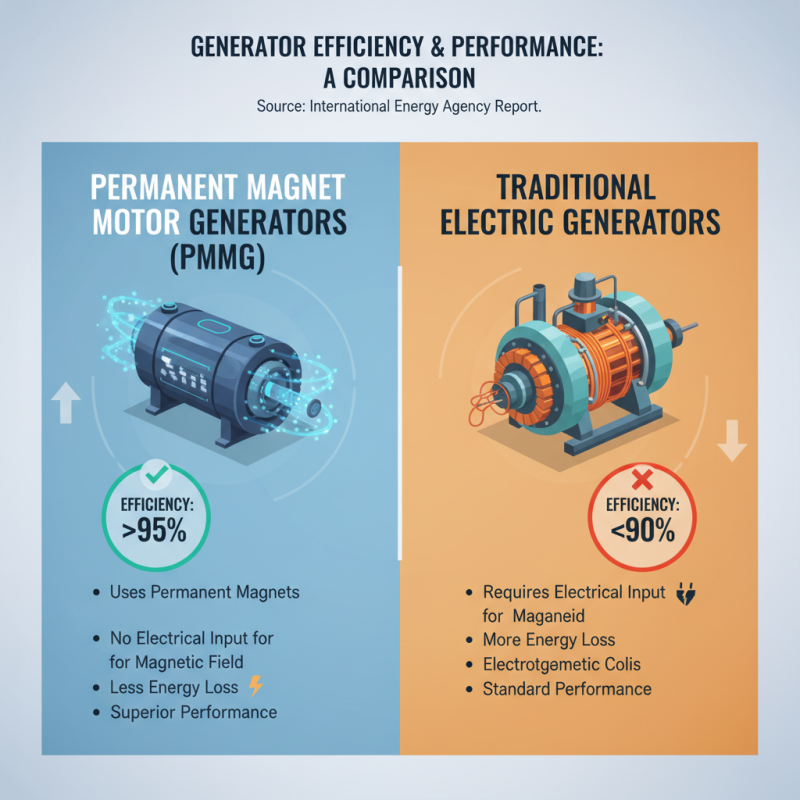
Permanent magnet motor generators (PMMGs) showcase several advantages over traditional electric generators. PMMGs use permanent magnets to create a magnetic field, eliminating the need for electrical input to generate the magnetic field. This results in less energy loss. According to a recent report by the International Energy Agency, PMMGs can achieve efficiencies of over 95%, while traditional generators often fall below 90%.

One significant difference lies in performance metrics. Traditional electric generators typically involve mechanical wear and maintenance issues. PMMGs, on the other hand, have fewer moving parts. This improvement not only leads to reduced wear but also intervals between maintenance. A study from the Electric Power Research Institute highlighted that PMMGs can operate up to 20% longer before needing service compared to conventional systems. This reliability can translate into lower operational costs over time.

However, it's important to recognize some challenges. The production of high-performance magnets relies heavily on rare materials. Supply chain issues may affect the availability of these resources. Furthermore, while PMMGs offer high efficiency, their initial cost can be a barrier for some applications. Transitioning to these advanced systems requires careful consideration of both economic and environmental factors.

Applications of Permanent Magnet Motor Generators Across Industries

Permanent magnet motor generators (PMMGs) are transforming various industries. Their compact design and high efficiency make them popular in renewable energy applications. Wind turbines use PMMGs to convert kinetic energy into electricity effectively. This efficient conversion leads to reduced operational costs and lower environmental impact.

In the automotive sector, PMMGs power electric vehicles, ensuring smooth operation and minimal energy loss. They enhance the vehicle's performance by providing instant torque. However, challenges remain in terms of cost and material sourcing. The dependency on specific materials can affect production stability.

Manufacturing industries are also seeing the benefits of PMMGs. They improve conveyor systems and robotics, leading to increased productivity. The precision of these motors helps in reducing waste and improving product quality. Still, integrating PMMGs into existing systems can require retraining staff, which adds complexity. Adapting to new technologies is a process that needs patience and reflection.

Top Benefits of Using Permanent Magnet Motor Generators for Efficient Energy Conversion

Future Trends and Innovations in Permanent Magnet Motor Generator Technology

Permanent magnet motor generators (PMMGs) are transforming the energy landscape. Emerging trends highlight their efficiency and compact design. By 2025, the global permanent magnet motor market is projected to reach $25 billion, reflecting the rising adoption of sustainable technologies.

Innovations in material science are crucial for future PMMGs. Advanced magnetic materials, like rare-earth magnets, enhance performance. However, their cost and supply chain risks remain a challenge. The demand for recyclability is also gaining traction. Exploring alternatives could mitigate these issues.

Smart technology integration is another exciting trend. IoT-enabled PMMGs offer real-time monitoring and data analytics. This leads to improved maintenance and efficiency. However, ensuring cybersecurity in connected systems is imperative. Future developments should focus on balancing advanced features with safety measures.

Top Benefits of Using Permanent Magnet Motor Generators for Efficient Energy Conversion

Benefit Description Impact on Efficiency
Higher Efficiency Permanent magnet motors typically offer efficiencies of 90% or higher. Reduces energy loss during conversion, leading to lower operational costs.
Compact Size These motors are smaller and lighter compared to traditional motors. Allows for more flexible designs and easier installation.
Low Maintenance Fewer moving parts lead to reduced wear and tear. Decreases downtime and maintenance costs over time.
Better Torque Control Provides precise control over torque delivery for various applications. Enables improved performance in dynamic environments.
Sustainability Supports green technology initiatives by enhancing renewable energy usage. Contributes to a reduction in carbon footprint.
Scroll to Top