
China Best Welding Flanged Pipe Manufacturer Supplier

Choosing China’s best Welding Flanged Pipe manufacturer supplier requires more than a polished catalog. It requires evidence from the production floor, inspection records, and customer experience. Reliable manufacturers combine practical engineering knowledge with controlled welding procedures, accurate flange machining, and consistent material sourcing. They understand how pipe dimensions, pressure ratings, temperature, and connection standards affect real installation performance.

Quality is visible.

A capable supplier should explain material grades, flange specifications, wall thickness, welding methods, and surface treatment without vague promises. Certificates such as mill test reports, dimensional inspection records, and pressure testing results support that explanation. Traceability should follow each order from raw steel to finished pipe. Factory photographs, sample inspections, and independent testing can provide useful confirmation. Experienced teams also recognize common problems, including flange misalignment, weld undercut, uneven faces, and coating damage during transport. These details matter when pipes arrive at a busy construction site.

No supplier is perfect. A responsible manufacturer admits limitations and discusses corrective actions openly. Perhaps a custom diameter needs longer production time. Maybe a coating option requires additional testing. Clear communication is safer than exaggerated claims. Buyers should assess welding qualifications, quality control systems, export experience, packaging methods, and after-sales support. A dependable China Welding Flanged Pipe supplier delivers more than products. It provides technical documents, responsive communication, and practical solutions for water, energy, chemical, and industrial projects. The strongest partnership grows through verified performance, careful review, and a willingness to improve each order.
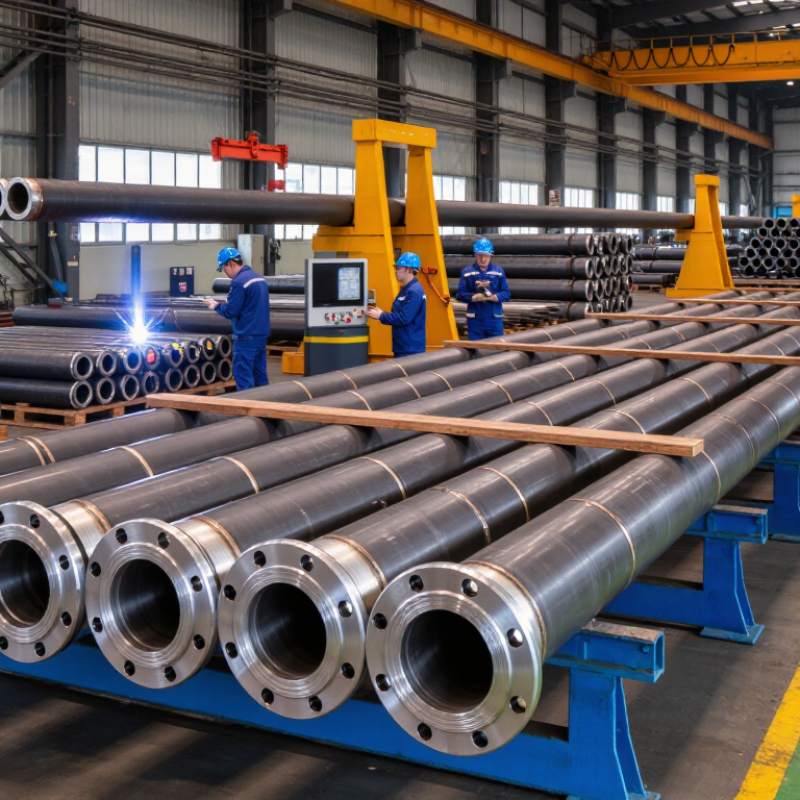
China Best Welding Flanged Pipe Manufacturer Supplier

What Is a Welding Flanged Pipe?

China Best Welding Flanged Pipe Manufacturer Supplier

What Is a Welding Flanged Pipe?

A welding flanged pipe is a steel pipe joined to a flange by welding. The flange creates a bolted connection between pipes, valves, pumps, or other equipment. Unlike a plain pipe end, it allows technicians to disconnect the system without cutting the pipe.

Manufacturers usually prepare the pipe end, align the flange, and apply a controlled weld. Common methods include butt welding and socket welding. The choice depends on pipe size, wall thickness, pressure, and service temperature. A raised-face flange may improve gasket seating, while a flat-face design suits certain low-pressure connections.

Dimensions must match the project standard. ASME B16.5 and EN 1092-1 are frequent references. Material selection also matters. Carbon steel may suit general water or air systems, while stainless steel performs better in corrosive environments. Weld quality requires visual checks, dimensional inspection, and, when specified, non-destructive testing.

Small errors can create large leaks. Uneven bolt tightening may damage the gasket or distort the flange. This is often overlooked. In real workshops, alignment is not always perfect, so fit-up checks deserve careful attention. A reliable supplier should provide material certificates, welding records, inspection reports, and traceable dimensions before shipment.

Welding Flanged Pipe: ASME B16.5 Class 150 Flange Outside Diameter

Welding flanged pipes commonly use weld neck or slip-on flanges to connect pipes, valves, and other equipment. The chart shows standard outside diameters for selected nominal pipe sizes (NPS) under ASME B16.5 Class 150.

Dimensions are shown in millimetres and represent standard flange outside diameters. Reference: ASME B16.5, Pipe Flanges and Flanged Fittings.

How Welding Flanged Pipes Are Designed and Manufactured

Designing and manufacturing welding flanged pipes requires more than joining a pipe to a flange. Engineers first confirm the working pressure, temperature, fluid type, pipe diameter, and connection standard. These details determine flange thickness, bore size, welding method, and material grade. A reliable design also considers thermal expansion and possible vibration. Small errors here can create serious leakage risks later.

During production, technicians cut the pipe accurately and prepare clean bevels for welding. The flange is aligned with fixtures before tack welding begins. This prevents uneven bolt holes and unwanted distortion. Qualified welders then complete the joint using controlled heat input. Each weld should receive visual inspection, dimensional checks, and, when required, non-destructive testing. Hydrostatic testing can reveal weak points that drawings may miss. In practice, no design is perfect. Field conditions sometimes expose assumptions that looked reasonable in the workshop.

Tips: Keep flange faces protected during storage. Check bolt-hole alignment before installation. Record material certificates, weld parameters, and inspection results for traceability. Avoid forcing misaligned pipes into position. That shortcut often damages the flange or stresses the weld. A capable welding flanged pipe manufacturer supplier should communicate these limitations clearly, not hide them behind polished specifications.

China Best Welding Flanged Pipe Manufacturer Supplier - How Welding Flanged Pipes Are Designed and Manufactured

Category Design or Manufacturing Parameter Typical Data or Applicable Standard Engineering Significance
Product scope Welded flanged pipe assembly Pipe or tube joined to a forged or plate flange by a qualified weld procedure Provides a detachable bolted connection for piping, valves, pumps, and equipment.
Common flange types Welding neck, slip-on, socket-weld, threaded, lap-joint, and blind Selection depends on pressure, temperature, installation space, alignment, and maintenance requirements. The hub and connection design influence stress distribution, fatigue resistance, and installation method.
Dimensional standard Outside diameter, bolt circle, bolt holes, thickness, and facing dimensions ASME B16.5 generally covers NPS 1/2 through NPS 24; ASME B16.47 covers larger flanges, commonly NPS 26 through NPS 60. Using the correct dimensional standard helps ensure compatibility with mating flanges and bolts.
Pressure class Nominal pressure-temperature rating Common ASME classes include 150, 300, 600, 900, 1500, and 2500. The allowable pressure depends on material group, temperature, size, and the governing standard; class number is not a universal pressure value in bar or MPa.
Pipe size Nominal pipe size and outside diameter Typical designation uses NPS or DN; the pipe wall thickness is selected separately by schedule or project specification. The bore, pipe outside diameter, and flange bore must be coordinated to prevent flow restriction or interference.
Facing options Raised face, flat face, ring-type joint, and other specified facings Facing selection must match the mating flange, gasket type, pressure class, and service conditions. Correct facing and gasket contact are essential for leak-tight bolted joints.
Typical materials Carbon steel, stainless steel, low-alloy steel, and nickel alloys Examples include ASTM A105 carbon-steel forgings and ASTM A182 stainless or alloy-steel forgings, subject to the project specification. Material selection considers corrosion resistance, temperature, pressure, weldability, and mechanical properties.
Pipe preparation Cutting, end facing, beveling, cleaning, and dimensional inspection Butt-welded joints commonly use a prepared bevel, with the exact angle, root face, and root gap defined by the qualified welding procedure. Accurate preparation supports full penetration and reduces the risk of lack of fusion or excessive weld reinforcement.
Welding process GTAW, SMAW, GMAW, FCAW, or SAW, depending on material and size The process, filler metal, preheat, interpass temperature, and heat input are controlled by a qualified WPS/PQR. Controlled welding reduces distortion and helps achieve the required strength and toughness.
Welding qualification Procedure and welder qualification ASME Section IX is widely used for qualifying welding procedures and personnel when specified by the applicable construction code. Qualification confirms that the welding variables can produce acceptable weld properties.
Heat treatment Preheating, post-weld heat treatment, or solution treatment where required Requirements depend on material, thickness, weld procedure, service, and the governing design or fabrication code. Heat treatment can reduce residual stress and control hardness or metallurgical changes.
Dimensional inspection Flange alignment, bore, thickness, bolt-hole spacing, face condition, and overall length Inspection is performed against the approved drawing, purchase specification, and applicable dimensional standard. Controls help prevent installation problems, uneven gasket loading, and bolt-hole mismatch.
Non-destructive examination Visual testing, liquid penetrant, magnetic particle, ultrasonic, or radiographic testing The examination method and acceptance criteria are selected according to material, weld type, service, and project requirements. NDE can identify surface or internal discontinuities that may not be visible during routine inspection.
Pressure testing Hydrostatic or pneumatic testing when required Test pressure, duration, fluid, and safety controls are established by the applicable piping or equipment code and project specification. Testing verifies pressure-boundary integrity; it should not be replaced by an assumed universal test value.
Surface protection Cleaning, passivation, coating, painting, or temporary corrosion protection The treatment is selected according to material, environment, transport conditions, and service requirements. Proper protection helps limit oxidation, contamination, and handling damage before installation.
Documentation Inspection and traceability records Typical records may include material certificates, dimensional reports, weld procedure records, NDE reports, pressure-test reports, and final inspection records. Traceable documentation supports quality verification, maintenance, and project acceptance.
Note: All dimensions, pressure ratings, materials, welding requirements, and inspection criteria should be confirmed against the applicable standard, approved drawing, piping code, and project specification.

Key Materials, Standards, and Quality Requirements

China Best Welding Flanged Pipe Manufacturer Supplier

Key Materials, Standards, and Quality Requirements

A reliable welded flanged pipe begins with the correct material selection. Carbon steel grades such as ASTM A106 and ASTM A105 suit many water, oil, and gas systems. Stainless steel 304 and 316 provide stronger corrosion resistance in chemical or humid environments. Chloride exposure deserves special attention because ordinary stainless steel may suffer unexpected pitting.

Dimensions and pressure ratings must match the project specification. Common references include ASME B16.5, ASME B16.47, and EN 1092-1. These standards define flange dimensions, facing types, bolt patterns, and pressure classes. Pipe wall thickness should follow the selected piping code, not a convenient workshop habit. Small errors matter.

Welding quality depends on qualified procedures and trained operators. A controlled WPS, approved PQR, and proper filler metal reduce cracking risks. Inspection should include visual checks, dimensional measurement, hydrostatic testing, and suitable ultrasonic or radiographic examination. Material certificates, heat numbers, and inspection records should remain traceable from raw plate to shipment. Not every polished flange is reliable. In practical production, flange alignment still causes occasional rework, especially on large diameters. We review root gaps, tack welds, and face runout before final coating. This process is not perfect, but honest records expose weak points early and support better corrective action.

How to Choose a China-Based Manufacturer and Supplier

Choosing a China-based welding flanged pipe manufacturer requires more than comparing prices. China produced about 1,019 million tonnes of crude steel in 2023, according to World Steel Association data. This scale supports broad material access, but it does not guarantee consistent fabrication quality. The OECD Steel Outlook 2023 also reported global steel overcapacity above 600 million tonnes. Therefore, capacity claims should be tested through records, not sales language.

Ask for heat-number traceability from raw plate or pipe to the finished flange. Review material test certificates, welding procedure qualifications, welder records, dimensional reports, and hydrostatic test results. Confirm the applicable standard, such as ASME, EN, or ISO requirements, before requesting quotations. A useful factory audit should inspect bevel preparation, fit-up gaps, welding consumables, and final packing. Photos help, but witnessed inspections provide stronger evidence. Small details matter.

Check whether the supplier controls subcontractors and can repeat the same specification monthly. Request a sample inspection before mass production. Verify flange drilling, wall thickness, face finish, and corrosion protection at that stage. A low quotation may hide thinner walls or incomplete testing. That mistake is expensive. No checklist is perfect, because a rushed subcontracting change can still escape review. Use staged payments, clear acceptance criteria, and an independent inspection plan to reduce that risk. A reliable supplier should answer technical questions with documents, measurements, and realistic lead times.

Applications, Benefits, and Maintenance Considerations

Welding flanged pipes serve water treatment plants, fire protection systems, food processing lines, and industrial utilities. Their bolted joints allow equipment removal without cutting the pipeline. In practice, they work well where pumps, valves, or filters need regular access. A qualified China welding flanged pipe manufacturer typically designs them for specific pressure, temperature, and media conditions. Fit matters. Incorrect dimensions can create costly installation delays.

Their main benefit is controlled assembly. Welded pipe sections provide strength, while flanges support inspection and replacement work. Properly selected gaskets help prevent leakage around the joint. Stainless steel suits corrosive environments, while carbon steel often offers economical service for general water systems. However, material choice should follow actual fluid chemistry, not habit. We have seen durable-looking pipes fail because chloride exposure was underestimated. That mistake deserves review.

Maintenance starts with visual inspection. Check flange faces, weld seams, bolts, and nearby supports for rust, distortion, or staining. Small leaks spread. Tighten bolts gradually in a cross pattern, using the specified torque. Do not reuse damaged gaskets or force misaligned flanges together. Clean sealing faces before installation. Pressure testing should follow the project’s approved procedure and applicable standards. Keep records of torque values, gasket changes, and inspection dates. Records help. During service, vibration and thermal cycling may loosen connections, so high-use lines need shorter inspection intervals. Supplier documentation should include material certificates, dimensional data, and welding quality records. Reliability is built through evidence, not appearance.

Scroll to Top