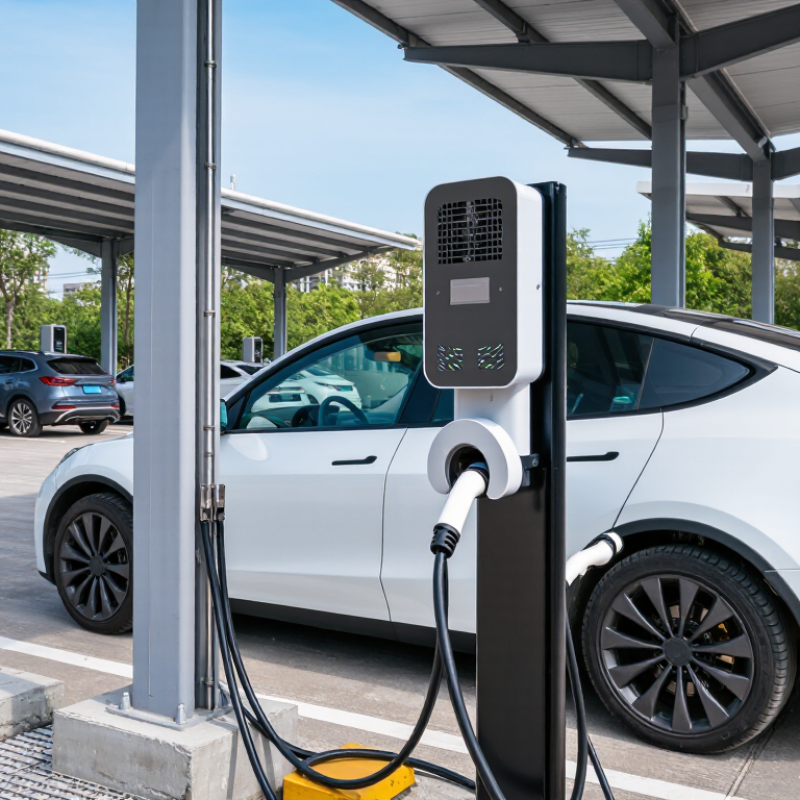
What Is a China DC EV Charger and How Does It Work?

A China Dc Ev Charger is a direct-current charging system designed to transfer energy quickly from the power grid to an electric vehicle battery. Unlike an AC wall charger, it converts electricity inside the charging unit, not mainly inside the car. This difference can reduce charging time, especially at highways, workshops, and busy commercial parking areas.

The label can mislead.

China manufactures many DC chargers for domestic and international markets. However, quality, connector type, software, and electrical ratings can vary greatly. A reliable unit usually includes a power module, cooling system, communication controller, safety sensors, and a vehicle connector. The charger checks battery conditions before increasing current. It can then adjust voltage as the battery approaches its upper limit.

For example, a driver may connect a GB/T, CCS, or CHAdeMO plug, depending on the vehicle and region. Compatibility must be verified before installation. A 60 kW charger may deliver strong performance, but the vehicle might accept only 40 kW. The result depends on battery temperature, state of charge, cable capacity, and grid stability.

From an engineering perspective, safe operation matters as much as charging speed. Proper grounding, overcurrent protection, insulation monitoring, and scheduled maintenance support dependable use. Field experience also shows a less convenient truth: attractive specifications do not guarantee real-world performance. Installation conditions, firmware support, and after-sales service deserve equal attention. This guide explains how a China Dc Ev Charger works, what its internal stages do, and how buyers can evaluate one responsibly.

What Is a China DC EV Charger and How Does It Work?

What Is a China DC EV Charger?

A China DC EV charger is a direct-current charging system manufactured in China. It delivers regulated DC power to an electric vehicle’s battery. Unlike an AC wall charger, it largely bypasses the vehicle’s onboard AC-to-DC converter. This difference enables higher charging power and shorter stops. The word “China” describes manufacturing origin, not one universal charger design. Output ratings, connectors, communication protocols, and safety approvals can vary widely.

Inside the cabinet, power modules convert grid electricity into controlled DC voltage. A control system communicates with the vehicle before energy flows. It checks battery voltage, temperature, charging limits, and connection status. When conditions are acceptable, the charger adjusts current as the battery requests. Cooling fans, liquid circuits, insulation monitoring, and emergency shutoff features help control heat and electrical risk. The process is automatic, but not careless. Installation quality still matters.

In practical use, a driver plugs in, authenticates if required, and starts a charging session. The vehicle usually reduces charging speed near a high state of charge. This helps protect battery life. A higher kilowatt rating does not guarantee faster charging. The vehicle, cable, temperature, and local power supply may become limiting factors. That point is easy to overlook. A careful assessment should verify connector compatibility, grid requirements, certification, maintenance access, and data security. Published peak performance is not always everyday performance. Field testing in heat, cold, and repeated daily use provides stronger evidence than a product sheet alone.

How Does a China DC EV Charger Work?

A China DC EV charger converts alternating current from the grid into direct current before it reaches the vehicle’s battery. Unlike an AC charger, it manages most power conversion outside the car. The charger and vehicle communicate through control signals, checking battery temperature, voltage, state of charge, and charging limits. Power then flows through the connector at a controlled rate. Charging usually slows near 80% to protect the battery. That final stage can feel frustrating, but it is technically necessary.

The International Energy Agency reported in Global EV Outlook 2024 that China held more than half of the world’s public charging points in 2023. Its fast-charging network has expanded quickly, supporting highways, taxi fleets, and urban parking areas. A typical high-power unit may deliver 60 kW to over 240 kW, depending on its design, grid capacity, and vehicle acceptance rate. The charger cannot force a car to accept more power. Heat, battery age, and software limits still matter. Real-world performance is less tidy than a product label suggests.

Tips: Check the vehicle’s maximum DC input before selecting a charger. Confirm the connector type and inspect the cable for damage. Avoid repeated high-power charging when the battery is already hot. The displayed power may also fluctuate. This is normal, not always a fault. Independent testing and local certification records offer stronger evidence than advertising claims.

What Are the Main Components of a China DC EV Charger?

A China DC EV charger converts grid electricity into controlled direct current for an electric vehicle. Its main components work together inside a compact metal enclosure. The input terminals receive three-phase AC power, while a rectifier changes it into DC electricity. Power factor correction improves stability and reduces unnecessary grid stress. High-frequency power modules then regulate voltage and current for different battery conditions.

The control board acts like the charger’s decision center. It communicates with the vehicle, checks charging requests, and controls contactors before power flows. Sensors monitor voltage, current, temperature, insulation, and connector status. A cooling system removes heat from the power modules, using fans or liquid circulation. The charging cable and connector must handle high current without excessive heating. Protection devices can stop charging during overcurrent, overheating, leakage, or communication failure. In practical inspections, a charger may appear powerful, yet weak cable connections can still reduce reliability. That detail is easy to overlook.

Tips: Check the cooling path, cable condition, emergency stop, and display accuracy during maintenance. Keep ventilation openings clean. Review fault records regularly. A small temperature rise can reveal a developing problem before a full shutdown. Technicians should also verify grounding and connector locking according to the installation requirements.

What Is a China DC EV Charger and How Does It Work?

A DC EV charger converts electricity from the AC grid into controlled direct current and sends it directly to an electric vehicle’s battery, bypassing the vehicle’s onboard AC charger.

Typical DC EV Charger Power Classes

The chart shows common non-branded DC charging power classes used for passenger electric vehicles. Actual charging speed depends on the vehicle battery, voltage, state of charge, and charger output limit.

  • Grid input and protection: Receives AC power and provides breakers, surge protection, and safety isolation.
  • Rectifier and power-factor correction: Converts AC electricity into a regulated DC intermediate supply.
  • DC/DC power module: Adjusts voltage and current to match the vehicle battery’s charging requirements.
  • Control and communication system: Exchanges charging commands and battery information with the vehicle.
  • Cooling system: Removes heat from power electronics, cables, and connectors.
  • Charging connector and cable: Transfers high-current DC power safely to the vehicle.
  • Metering and safety monitoring: Measures energy and checks temperature, insulation, current, and fault conditions.

How Is a DC EV Charger Installed and Operated?

A China DC EV charger is usually installed at a commercial parking site, service area, or fleet depot. Before delivery, a qualified electrician checks the available power capacity, cable route, grounding, and ventilation. The site survey also confirms vehicle access, drainage, lighting, and emergency clearance. This is not paperwork alone. Incorrect capacity planning can cause overheating, nuisance shutdowns, or expensive upgrades. Local electrical rules and inspection requirements must guide the work.

Technicians prepare the concrete base and mount the charger securely. They install correctly rated cables, protective devices, communication lines, and a reliable earth connection. The cabinet must remain level and free from standing water. After energizing the circuit, technicians test insulation, voltage, emergency stopping, connector locking, and charging communication. The vehicle connects through the DC plug, while the charger checks battery limits before delivering power. Charging power may change as the battery fills. Operators can monitor energy use, session time, alarms, and connector temperature through the control interface.

Keep the area clean.

Routine inspection is essential. Staff should check cables for cuts, connectors for heat damage, and screens for fault messages. Dust, moisture, and summer heat can reduce performance, especially at busy sites. A rushed installation may leave cable bends too tight or drainage poorly planned. That mistake is easy to miss. Maintenance records should include test dates, fault codes, component replacements, and electrical readings. When a serious alarm appears, staff should stop the session and isolate the equipment until qualified personnel investigate.

What Should You Consider When Choosing a China DC EV Charger?

A China DC EV charger converts AC electricity into controlled DC power before it reaches the vehicle battery. This process shortens charging time because the charger bypasses the car’s built-in AC converter. When choosing one, check output power, charging standards, voltage range, and connector compatibility. A 60 kW unit may suit a small parking area, while highway sites often need higher output. However, more power is not always better. Your electrical capacity, daily traffic, and installation space matter too.

Tips: Ask for independent test reports and clear technical specifications. Check efficiency, cooling performance, enclosure protection, and emergency-stop design. The charger should remain stable during hot summers and heavy rain. Confirm warranty support, spare-part availability, and software update procedures before ordering. A responsive technical team can prevent long downtime. Do not rely on attractive photographs alone.

Pay close attention to communication protocols and payment integration. The charger should exchange accurate data with the vehicle and management platform. Review load balancing if several units will operate together. Cable length also matters; a short cable can frustrate drivers beside awkward parking spaces. Inspect the installation manual carefully. It should show grounding, ventilation, foundation, and maintenance requirements. A lower price may look convincing, but unclear documentation can create expensive delays. I would compare total ownership cost, not only the purchase quote. Some specifications may still need verification through a sample test.

What Is a China DC EV Charger and How Does It Work? What Should You Consider When Choosing One?

A practical comparison of typical China-manufactured DC fast chargers and the key factors to evaluate before purchase.

Evaluation Dimension Typical Data or Specification How a China DC EV Charger Works What to Consider Before Choosing
1. Basic Definition and Charging Principle
Product Definition Direct-current fast-charging equipment designed to supply controlled DC power directly to an electric vehicle battery. The charger converts grid AC electricity into regulated DC electricity. The vehicle battery management system controls charging limits through communication with the charger. Confirm that the charger supports the vehicle types, battery systems, charging protocols, and electrical standards required in the target market.
AC Versus DC Charging DC Fast Charging Power conversion is performed inside the charger rather than inside the vehicle. Because the vehicle’s onboard AC charger is bypassed, substantially higher charging power can be delivered than with ordinary AC charging. DC charging is suitable for public stations, highways, fleets, workplaces with short dwell times, and commercial parking facilities.
Typical Charging Time Approximately 20–60 minutes to add a substantial amount of range, depending on battery capacity, charger power, vehicle acceptance rate, temperature, and state of charge. Charging power is normally reduced as the battery approaches a high state of charge to protect battery cells and manage heat. Do not judge performance only by the maximum rated power. Compare the vehicle’s actual charging curve and expected average power.
2. Electrical and Performance Specifications
Rated Output Power Common commercial configurations include approximately 20–60 kW, 60–180 kW, and 180–480 kW. Exact ratings vary by model and installation. Power modules operate in parallel or are dynamically allocated between charging connectors. Select power according to vehicle traffic, parking duration, available grid capacity, and utility connection cost. Higher power is not always the most economical option.
DC Output Voltage Typical operating ranges are approximately 200–750 V DC or 200–1000 V DC, depending on the equipment design. Power electronics adjust output voltage to match the battery pack while maintaining communication and safety limits. Check compatibility with both lower-voltage and high-voltage vehicle platforms. The vehicle, not only the charger, determines the final charging voltage.
Maximum Output Current Common ratings range from approximately 100 A to 600 A. High-current operation may require liquid-cooled charging cables. The charger regulates current according to battery temperature, state of charge, vehicle demand, cable capability, and safety conditions. Verify continuous current capability, not just short-duration peak current. Consider cable weight and ease of handling for daily users.
Input Supply Commercial units commonly use three-phase AC input, often in the 380–415 V range for applicable electrical systems. An input rectifier and power-factor-correction stage convert grid AC into a stable DC link for the charging power modules. Confirm local grid voltage, frequency, transformer capacity, phase balance, grounding method, and utility approval requirements.
Power Factor Well-designed commercial chargers commonly target a power factor of approximately 0.99 at rated load. Power-factor-correction circuits reduce reactive power and improve the use of available grid capacity. Request test data at different load levels, because performance at partial load may differ from the rated-load value.
Conversion Efficiency Typical full-load efficiency is often approximately 94%–97%, depending on the power module, cooling system, and operating conditions. Energy losses occur in rectifiers, switching devices, filters, cables, cooling systems, and control electronics. Compare efficiency curves, standby consumption, thermal performance, and the expected annual energy cost.
3. Connector, Communication, and Control
Charging Connector Common DC connector families include CCS and GB/T. Some markets also use other regional connector standards. The connector transfers DC power and enables control-pilot or digital communication between the vehicle and charger. Choose the connector required by the local vehicle population. Dual-connector configurations may improve coverage but can increase cost and complexity.
Vehicle-Charger Communication Communication may use regional DC charging protocols, including ISO-based systems or other market-specific protocols. The vehicle and charger exchange battery voltage, requested current, temperature-related limits, charging status, and fault information. Require documented interoperability testing with the vehicle models expected at the site.
Network Communication Ethernet, cellular communication, Wi-Fi, or other network connections may be available for remote monitoring and management. A backend platform can receive operating data, authorize sessions, issue commands, and send software updates. Check network coverage, cybersecurity controls, data ownership, remote diagnostics, and compatibility with the selected charging management system.
Charging Authorization and Payment Possible methods include RFID cards, mobile applications, QR codes, plug-and-charge functions, or local payment integration. The charger or backend system verifies the user, starts the session, records energy use, and ends charging according to configured rules. Confirm support for local payment methods, tariffs, invoices, roaming, and offline operation if the network connection is interrupted.
Load Management Dynamic power allocation can distribute available capacity between multiple charging connectors or site loads. The control system reduces or reallocates charger output when the site approaches its electrical limit. Load management can reduce demand charges and avoid an oversized grid connection, especially at fleet or multi-charger sites.
4. Safety, Environmental, and Installation Requirements
Electrical Protection Typical protection functions include overvoltage, undervoltage, overcurrent, short-circuit, overtemperature, leakage, surge, and emergency-stop protection. Sensors and control software continuously monitor electrical and thermal conditions and disconnect power when unsafe conditions are detected. Check the protection design, fault response time, emergency-stop arrangement, residual-current requirements, and applicable local electrical codes.
Ingress Protection Outdoor commercial enclosures are commonly specified around IP54–IP55 or higher, depending on design and certification. Sealed cabinets, gaskets, drainage paths, and filtered ventilation help protect internal components from dust and water. Verify the certified rating for the complete installed product, not only individual components. A higher rating does not replace proper site drainage and shelter.
Operating Temperature Many outdoor chargers are designed for approximately −20°C to +50°C, while power derating may occur at temperature extremes. Temperature sensors and cooling systems protect power modules, cables, connectors, and control boards. Consider local climate, solar exposure, humidity, salt mist, altitude, snow, and ventilation. Ask for the derating curve.
Cooling Method Air cooling is common for lower and medium power. Forced-air or liquid cooling may be used for high-power systems. Fans, heat exchangers, or liquid loops remove heat generated by power conversion and cable resistance. Compare noise, filter maintenance, coolant service requirements, reliability, and cable weight before selecting a cooling method.
Installation Requirements Installation may require a foundation, protective bollards, trenching, distribution equipment, grounding, communications, and weather protection. The charger is connected to the site electrical distribution system and commissioned through hardware and software tests. Assess civil works, cable distance, transformer capacity, fire safety, accessibility, lighting, drainage, and future expansion space.
Noise Level Fan-cooled units may produce audible operating noise; the actual level depends on fan speed, cabinet design, and load. Cooling fans increase speed as internal temperature or output power rises. Check measured sound pressure data and local noise limits when the charger will be installed near homes, offices, or hospitals.
5. Compliance, Reliability, and Total Cost
Standards and Certification Relevant requirements may include IEC or equivalent national standards, electromagnetic compatibility rules, electrical safety rules, and regional grid regulations. Testing and certification demonstrate that the equipment meets specified safety, electromagnetic, environmental, and performance requirements. Confirm certificates are valid for the exact model, power rating, connector configuration, and destination market. Request test reports where appropriate.
Reliability and Availability Operational availability depends on component quality, preventive maintenance, network uptime, climate, installation quality, and repair response. Modular power architecture can allow a failed module to be isolated while the remaining modules continue operating at reduced power. Ask for warranty terms, spare-parts availability, remote diagnostics, mean-time-to-repair targets, and local technical support.
Power Module Architecture Modular designs commonly use multiple replaceable power modules rather than one single high-power conversion assembly. Modules share the charging load and can be added, replaced, or derated independently in some designs. Evaluate module replacement time, hot-swap capability, compatibility between module revisions, and long-term supply assurance.
Warranty and Service Life Commercial warranty periods commonly range from 12 to 36 months, while expected service life depends on operating conditions and maintenance. Service programs may cover software updates, preventive maintenance, replacement parts, and remote technical assistance. Compare warranty exclusions, response times, travel costs, consumables, software fees, and post-warranty service pricing.
Purchase and Installation Cost Total project cost includes the charger, shipping, duties, foundation, cabling, switchgear, transformer upgrades, installation, commissioning, and software services. The charger is only one part of the complete charging infrastructure and may not be the largest cost item at a constrained site. Request a complete project quotation rather than comparing charger purchase prices alone.
Energy and Demand Cost Operating expenses include electricity consumption, network services, maintenance, cooling energy, and possible utility demand charges. Higher peak power may shorten charging time but can increase demand on the grid and raise demand-related charges. Model utilization, energy tariffs, peak demand, charging schedules, and expected revenue before selecting the rated power.
Best-Fit Application Typical applications include highway stops, public charging hubs, fleet depots, logistics facilities, workplaces, retail parking, and service areas. The charger converts grid electricity into vehicle-compatible DC power while coordinating safety, communication, payment, and energy management. Match the charger to dwell time, daily charging sessions, vehicle mix, site power availability, expansion plans, and local regulations.
Important: The specifications shown are typical ranges for commercial DC EV chargers and are not universal. Always verify the exact model datasheet, local certification, vehicle compatibility, installation requirements, and utility conditions before purchase.
Scroll to Top