
Best China Spa Chiller Supplier for Global Buyers?

Choosing the Best China Spa Chiller Supplier for Global Buyers requires more than comparing online prices. Spa operators need stable water temperatures, quiet operation, efficient controls, and dependable after-sales support. A small temperature swing can affect guest comfort, treatment quality, and daily operating costs. The Spa Chiller must also match pool volume, ambient conditions, filtration flow, and installation space.

Industry data shows why efficiency deserves close attention. The International Energy Agency’s The Future of Cooling report projects that global cooling demand could more than triple by 2050. Its findings highlight the growing importance of efficient equipment and responsible system design. The U.S. Department of Energy also emphasizes proper sizing, maintenance, and controls as practical ways to reduce cooling energy use. These principles apply directly to commercial spas, wellness resorts, and hydrotherapy facilities.

China offers a broad manufacturing base, but quality is not uniform. Some suppliers provide strong engineering support, while others mainly compete on low purchase prices. That difference becomes visible through compressor selection, heat-exchanger materials, controller accuracy, noise levels, and spare-parts availability. Buyers should request performance data under realistic water and air temperatures. They should also review factory quality systems, testing records, warranty terms, and compliance with relevant standards, such as AHRI 550/590 or EN 14511 where applicable.

There is no perfect supplier for every project. A coastal resort may need corrosion-resistant materials, while an urban spa may prioritize low noise. This article examines leading Chinese suppliers through technical capability, export experience, customization, documentation, and service reliability. The assessment is practical, but not absolute. Real performance still depends on installation quality, water treatment, and regular maintenance.
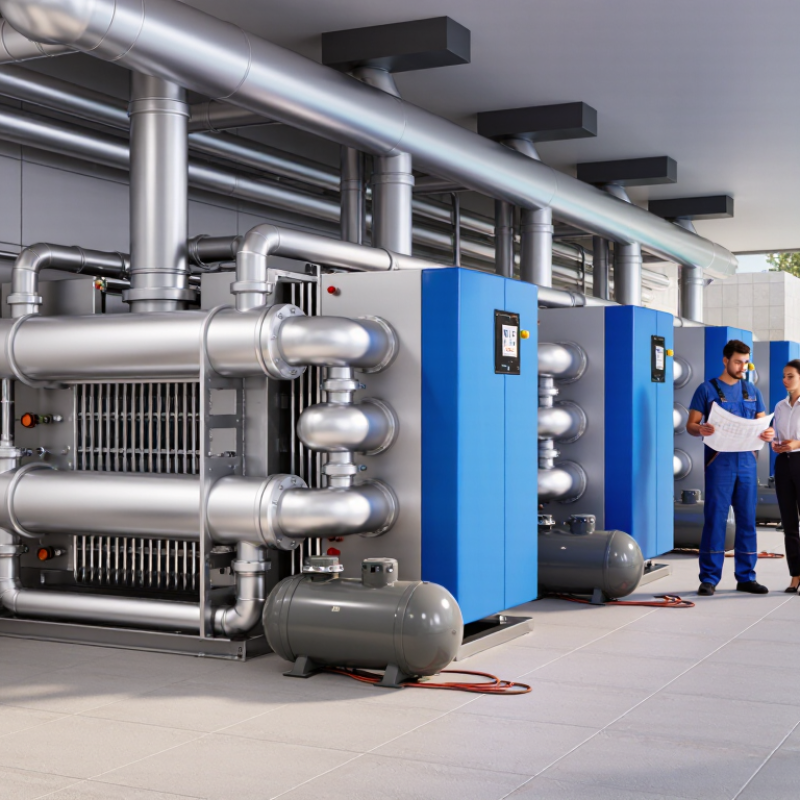
Best China Spa Chiller Supplier for Global Buyers?

What Is a Spa Chiller and Why Does Supplier Choice Matter?

A spa chiller is a temperature-control system that removes heat from spa water. It usually uses a refrigeration circuit, heat exchanger, pump connection, and digital controller. Unlike a household air conditioner, it must handle constant water flow, humidity, chemicals, and changing outdoor temperatures. The right capacity depends on water volume, target temperature, insulation, usage frequency, and local climate. An undersized chiller may run continuously without reaching the desired temperature. Performance matters.

Supplier choice affects far more than the purchase price. An experienced supplier should provide cooling-capacity data, recommended flow rates, electrical requirements, installation drawings, and maintenance instructions. Ask how performance was tested and under which ambient conditions. Request clear warranty terms, spare-part availability, response times, and technician support. These details reveal whether the supplier understands real spa applications. Paper promises are not enough.

In practical installations, poor ventilation can reduce cooling efficiency and shorten compressor life. Salt, moisture, and cleaning chemicals can also accelerate corrosion when materials are poorly selected. A reliable supplier should explain compatible filters, water treatment limits, noise levels, and safe operating procedures. I would inspect production quality, testing records, and communication before comparing quotations. A lower price can hide weaker components or delayed support. That lesson is easy to overlook. The best supplier is not always the cheapest, and even a strong specification needs careful installation.

Best China Spa Chiller Supplier for Global Buyers?

What Is a Spa Chiller and Why Does Supplier Choice Matter?

The chart shows the theoretical energy required to reduce spa water temperature by 1°C at different water volumes. Values are calculated using water's specific heat capacity of 4.186 kJ/kg·°C and exclude ambient heat gain, plumbing losses, and pull-down time. A capable supplier should use these factors when recommending chiller capacity.

Key Features of a Reliable China Spa Chiller Supplier

A reliable China spa chiller supplier should show more than a competitive quotation. Cooling performance must match the spa’s water volume, ambient temperature, and daily operating hours. Ask for tested capacity data, not only catalogue figures. A dependable supplier explains compressor selection, refrigerant type, heat exchanger material, and control accuracy in clear language. Stainless steel and titanium components can improve durability, especially where water chemistry changes frequently.

Build quality appears in small details. Look for insulated water lines, corrosion-resistant cabinets, accessible filters, and controllers that display temperature and fault codes. Factory inspection records, electrical test reports, and internationally accepted certifications also support supplier credibility. However, documents should match the actual model being shipped. Generic files are not enough. Request photographs, serial tracking, and a pre-shipment inspection when the order is important.

After-sales support matters when a chiller stops during a busy season. The supplier should provide wiring diagrams, installation guidance, spare-parts availability, and response targets. Technical staff should understand pump flow, ventilation, and local voltage requirements. Communication may not always be perfect, so confirm every specification in writing. A lower price can hide weaker insulation or limited support. That deserves careful reflection. A reliable partnership grows through transparent testing, honest limitations, and steady service after delivery.

How to Evaluate Spa Chiller Quality, Capacity, and Efficiency

For global spa buyers, chiller quality begins with operating evidence, not polished photographs. Inspect the frame, condenser coils, insulation, pump, and electrical enclosure. Look for corrosion-resistant materials, clean welds, sealed wiring, and accessible service panels. Ask for factory test records showing cooling output, water flow, power draw, and noise. Numbers can mislead. A rated capacity measured under mild conditions may fall sharply in a hot installation room.

Match capacity to the spa’s water volume, target temperature, ambient heat, and cover usage. A unit that cools 2,000 liters in a controlled test may struggle with open-air therapy sessions. Request performance data at realistic conditions, such as 30°C ambient temperature and 12°C inlet water. Confirm the required flow rate and pipe size before purchase. Too much capacity can cause short cycling; too little capacity means long recovery and higher operating stress. Leave a sensible margin, but avoid paying for unused capacity.

Efficiency deserves more than a low wattage figure. Compare cooling capacity against input power under consistent test conditions. Check compressor controls, heat rejection, standby consumption, and automatic protection functions. Ask whether spare parts, manuals, remote support, and service training are available in your market. Check the noise. A quieter chiller may matter beside guest rooms or treatment areas. I would also record actual power use during commissioning, because estimated figures can disappoint. That small verification step is often missed.

Best China Spa Chiller Supplier for Global Buyers? - How to Evaluate Spa Chiller Quality, Capacity, and Efficiency

Typical Commercial Spa Chiller Specification Bands

Evaluation Dimension Small Spa Chiller Medium Spa Chiller Large Spa Chiller What Global Buyers Should Verify
Typical Cooling Capacity 3–8 kW
10,200–27,300 BTU/h
9–20 kW
30,700–68,200 BTU/h
21–50 kW
71,700–170,600 BTU/h
Confirm whether capacity is measured at the same entering-water and outdoor-air temperatures used at the installation site.
Recommended Spa Water Volume 1,000–4,000 L 3,000–10,000 L 8,000–25,000 L Size according to water volume, desired pull-down time, insulation, cover usage, ambient temperature, and bather load.
Typical Water Temperature Range 8–40°C 8–40°C 8–40°C Check the supplier’s actual operating range, minimum flow requirement, and whether heating operation is included.
Nominal Water Flow 2–5 m³/h 4–10 m³/h 8–20 m³/h Match the required flow to the heat exchanger, pump curve, pipe diameter, filter resistance, and installation height.
Typical Cooling COP 3.0–4.5 3.2–4.8 3.5–5.0 Request the test condition. COP varies with entering-water temperature, outdoor-air temperature, fan speed, and compressor load.
Compressor Control Fixed-speed or inverter Fixed-speed or inverter Fixed-speed, tandem, or inverter Inverter control can reduce cycling and improve part-load efficiency, but the control range and serviceability must be confirmed.
Common Refrigerants R32, R410A, or R290 R32, R410A, or R290 R32, R410A, or R290 Check local regulations, refrigerant safety classification, charge quantity, technician requirements, and long-term availability.
Heat Exchanger Material Titanium preferred Titanium preferred Titanium preferred Titanium is widely selected for chlorinated or salt-containing water because of its corrosion resistance. Confirm tube grade and construction.
Electrical Supply Options 220–240 V, single-phase 220–240 V single-phase or 380–415 V three-phase 380–415 V, three-phase is common Verify voltage, frequency, phase, maximum current, circuit-breaker rating, and regional electrical certification.
Noise Level Target Approximately 48–58 dB(A) Approximately 50–62 dB(A) Approximately 55–68 dB(A) Noise figures are meaningful only when the distance, test environment, fan speed, and operating condition are stated.
Control Functions Digital setpoint, timer, fault display Digital setpoint, timer, flow protection, anti-freeze protection Digital control, remote monitoring option, alarm history, cascade control Confirm sensor accuracy, password protection, communication protocol, and whether remote monitoring requires additional hardware.
Protection Features High/low pressure, flow switch, overload protection High/low pressure, flow switch, overload, anti-freeze protection All medium-unit protections plus phase-loss and phase-sequence protection Request a complete protection list and verify that safety devices are tested during factory inspection.
Outdoor Installation Suitability Weather-resistant enclosure recommended Weather-resistant enclosure recommended Weather-resistant enclosure recommended Check enclosure rating, corrosion protection, operating ambient range, drainage, ventilation clearance, and snow or rain exposure.
Efficiency Documentation Capacity, input power, COP test data Capacity, input power, COP test data Capacity, input power, COP and part-load data Prefer test reports that identify test conditions, measurement uncertainty, refrigerant, water flow, and electrical input.
Quality Inspection Points Leak test, electrical test, flow test Leak test, electrical test, flow test, control verification Full-load test, part-load test, vibration check, control verification Use a pre-shipment inspection covering refrigerant leakage, insulation resistance, current draw, water flow, alarms, and packaging.
Best Application Fit Private spa, small wellness room, plunge pool Hotel spa, fitness center, therapy pool Large commercial spa, wellness center, multi-tank system Choose capacity based on the complete thermal load rather than water volume alone.

Supplier Evaluation Checklist

Procurement Area Minimum Evidence to Request Strong Evaluation Result
Capacity Accuracy Rated cooling capacity, input power, water flow, and test temperatures Complete test conditions
Energy Efficiency Cooling COP at rated load plus part-load or seasonal performance data Transparent performance data
Material Durability Titanium heat-exchanger specification, cabinet coating details, and corrosion-resistance information Spa-water-compatible construction
Electrical Safety Wiring diagram, component ratings, insulation test record, grounding arrangement, and applicable conformity documents Traceable electrical documentation
Reliability Factory test procedure, alarm records, compressor protection logic, and operating temperature limits Documented quality control
After-Sales Support Spare-parts list, troubleshooting guide, warranty terms, response time, and service contact process Defined service system
Export Readiness Packaging specification, installation manual, product labeling, shipping dimensions, and destination-market requirements Prepared for international delivery

Technical note: The figures above are practical industry reference ranges for preliminary supplier comparison, not guaranteed ratings for every unit. Final selection should be based on verified performance data at the project’s actual water temperature, ambient temperature, flow rate, electrical supply, and water-treatment conditions.

Global Compliance, Customization, and Export Support Requirements

Global buyers choosing a China-based spa chiller supplier need more than a low quotation. Compliance, customization, and export support directly affect operating risk. UNEP’s 2023 Cooling Emissions and Policy Synthesis Report projects global cooling demand to more than triple by 2050. This pressure makes efficient, serviceable equipment increasingly important.

A capable supplier should provide test records, refrigerant details, electrical ratings, wiring diagrams, and clear installation manuals. Buyers should check alignment with IEC 60335 requirements, EN 378, ISO 5149, or ASHRAE 15, depending on the destination market. CE, UKCA, or other declarations may support market entry, but a declaration alone does not prove every configuration is compliant. That point is often missed.

Customization should cover voltage, frequency, water flow, inlet temperature, ambient conditions, noise limits, and local water quality. A 220–240 V, 50 Hz unit may not suit a 60 Hz project. Titanium heat exchangers can help in saline or chemically treated water, but material selection still needs engineering review. Small details matter.

Export support should include pre-shipment testing, serial-number records, moisture-resistant packaging, spare-parts lists, and remote commissioning guidance. The International Energy Agency reports that cooling already represents a significant share of global electricity use, so poor efficiency can become a long-term cost. A factory inspection helps, although it cannot replace independent verification. I would also request performance data at actual spa conditions, not only ideal laboratory points. That is where many purchasing decisions become less certain.

How to Select the Best China Spa Chiller Supplier for Your Market

Best China Spa Chiller Supplier for Global Buyers?

How to Select the Best China Spa Chiller Supplier for Your Market

Selecting a China spa chiller supplier requires more than comparing prices. Check cooling capacity, water-flow requirements, noise levels, and operating temperatures. Match these details with your local spa designs and climate. A unit tested in a factory may perform differently beside a humid outdoor pool. Ask for performance data under conditions similar to your market. Request clear technical drawings, wiring details, and maintenance instructions. Small omissions can create expensive installation delays.

Tips: Confirm production capacity, quality-control procedures, and relevant market approvals. Request a sample or factory video inspection before placing a large order. Review warranty terms, spare-parts availability, and response times in writing. Ask whether the supplier supports customized voltage, controls, and packaging. Keep questions specific.

A reliable supplier should provide traceable test records and explain how defects are handled. Check whether each unit receives electrical, pressure, and cooling tests before shipment. A polished brochure is not enough. Speak with recent international customers when possible. Compare the supplier’s answers with its documents. Some details may still remain unclear, and that deserves attention. No supplier gets every detail right, but responsible communication shows professional maturity. Pay attention to export experience, protective packaging, loading methods, and after-sales training. A lower quotation can become costly when replacement parts arrive slowly or technical support stops after delivery.

Article Source:

Scroll to Top