What Are China Top 10 Biosafety Isolator Manufacturers?
China’s Biosafety Isolator market is expanding alongside pharmaceutical manufacturing, sterile compounding, and advanced biological research. Industry reports from MarketsandMarkets and Grand View Research indicate sustained growth in global containment equipment demand, although their figures differ. The reason is simple: some reports include biological safety cabinets, while others count isolators separately.
This distinction matters.
A Biosafety Isolator is not merely a sealed stainless-steel enclosure. It combines controlled airflow, pressure monitoring, high-efficiency filtration, glove integrity, transfer systems, and validated cleaning procedures. In a working facility, one weak glove port can matter more than a polished exterior. That practical detail is often underexplained.
Dr. David L. Heymann, a widely recognized infectious-disease and public-health expert, has emphasized a central principle: “The best way to prevent the spread of disease is to stop it at its source.” This idea supports careful containment design, but it should not replace documented testing or site-specific risk assessment.
Our review of China’s top ten Biosafety Isolator manufacturers will examine engineering experience, product customization, filtration systems, certification practices, after-sales support, and export performance. Public rankings can be imperfect. Company websites may present limited technical evidence, and market reports do not always use consistent definitions. Therefore, buyers should compare validation documents, airflow records, glove-leak testing, and installation references—not slogans.
The strongest manufacturer is not always the largest. Reliability appears in small details: stable pressure readings, clear alarm logic, accessible filters, and technicians who respond after commissioning.
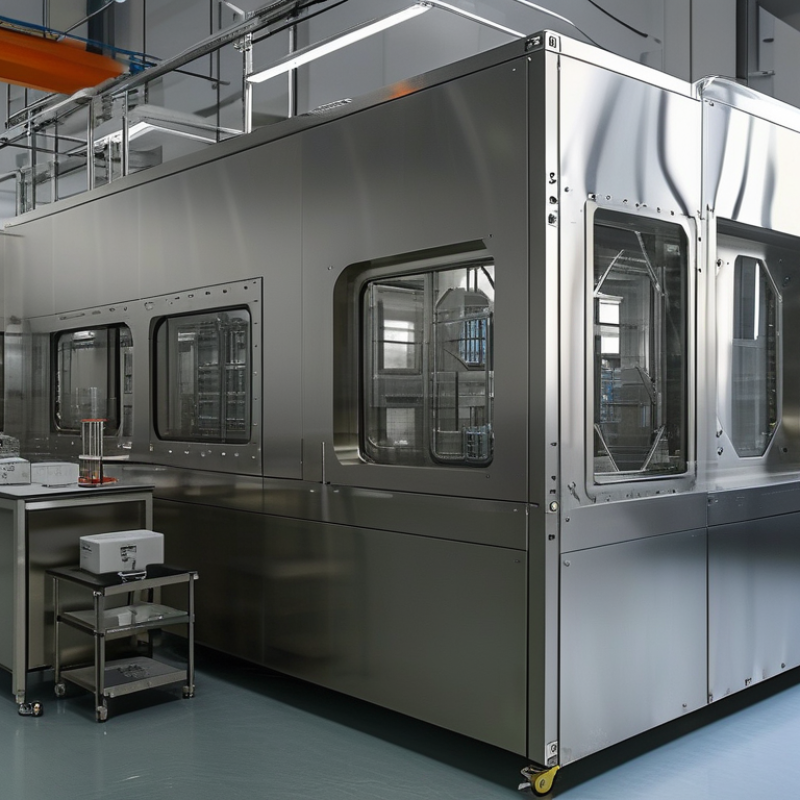
Definition and Role of Biosafety Isolators
A biosafety isolator is a sealed enclosure designed to control hazardous biological work through physical separation and managed airflow. Operators handle materials through glove ports, while sealed transfer systems reduce unnecessary exposure. HEPA filtration helps remove airborne particles before air leaves the enclosure. Some systems maintain negative pressure for containment, while others use pressure balance suited to the process.
In China’s biosafety equipment market, isolators support laboratories, hospitals, pharmaceutical facilities, and research centers. Their role is broader than simple containment. They help protect personnel, nearby environments, and sensitive samples from cross-contamination. A well-designed unit may include pressure alarms, airflow monitoring, interlocked doors, decontamination functions, and viewing panels. These details matter during long procedures, when fatigue can lead to small handling errors.
Reliable performance depends on more than the cabinet itself. Users should review leak testing, filter integrity results, airflow visualization, cleaning procedures, and maintenance records. Staff training is equally important. No isolator is perfect. Glove damage, poor transfer habits, or delayed alarm responses can weaken protection. This point is easy to underestimate. In practice, selection should match the biological risk, work volume, room layout, and validation requirements. Independent testing and clear documentation provide stronger evidence than impressive specifications alone. A careful manufacturer should explain both capabilities and operating limits, because safety claims without measurable verification deserve reflection.
Biosafety Isolator Design: Protection Functions by Containment Class
Biosafety isolators are designed to separate hazardous materials from operators and the surrounding environment. Based on CDC biosafety cabinet classifications, Class I units protect personnel and the environment, Class II units protect personnel, products, and the environment, while Class III units provide the highest level of containment through a fully enclosed, gas-tight design.
How China’s Biosafety Isolator Market Has Developed
China’s biosafety isolator market has moved from basic enclosure production to integrated containment engineering. Early suppliers mainly adapted glove boxes for laboratories and sterile production rooms. Demand later grew in hospitals, diagnostic centers, vaccine facilities, and pharmaceutical plants. Local manufacturers now design airflow paths, pressure control, HEPA filtration, alarms, and transfer chambers as one system.
The top ten manufacturers generally compete through customization rather than identical catalog products. Some focus on compact isolators for research benches. Others build large systems for continuous production. Engineers increasingly use smoke studies, pressure-decay tests, filter integrity checks, and documented cleaning trials. These details matter because a stable negative-pressure reading does not prove complete protection. Operator training, maintenance access, and emergency procedures also affect real performance.
Domestic supply chains have shortened delivery times for cabinets, sensors, controls, and stainless-steel parts. Digital monitoring is becoming more common, although software validation can remain uneven. Export projects have encouraged better documentation and clearer factory testing. Yet the market still has weak points. Smaller suppliers may lack long-term service teams or independent performance data. Buyers should compare validation records, response times, and lifecycle costs, not only purchase prices. The sector is developing quickly, but “advanced” should not be accepted without measurable evidence.
Selection Criteria for the Top 10 Manufacturers
Selecting China’s top 10 biosafety isolator manufacturers requires more than comparing product photos or factory size. A reliable review should examine containment performance, pressure stability, HEPA filtration, leak testing, and material compatibility. Manufacturers should provide clear validation records, factory quality controls, and practical evidence from installed systems. A polished brochure is not proof. Ask for test methods, acceptance limits, and maintenance records.
Technical experience also matters. Assess whether the manufacturer understands aseptic transfer, glove integrity, decontamination cycles, and operator ergonomics. Check the isolator’s viewing panel, alarm response, access ports, and cleaning points. Strong suppliers usually offer installation guidance, staff training, spare parts, and documented after-sales support. Their designs should match the user’s process, not force every laboratory into one standard layout. Cost matters, but a lower purchase price may hide difficult servicing or frequent filter replacement.
Tips: Build a weighted scorecard before contacting suppliers. Give higher scores to verified testing, responsive engineering, and transparent documentation. Request a live factory demonstration when possible. Speak with existing users, but question overly positive feedback. No scorecard is perfect. Recheck unclear claims, especially those involving protection levels, delivery timelines, and long-term operating costs. A careful selection process should remain evidence-based, practical, and open to revision.
Applications, Standards, and Future Industry Trends
What Are China’s Top 10 Biosafety Isolator Manufacturers?
China’s leading biosafety isolator manufacturers serve pharmaceutical, hospital, laboratory, and cell-processing applications. Their systems support sterile filling, powder handling, sampling, and high-containment transfer. In practice, performance depends on more than enclosure design. Stable negative pressure, reliable HEPA filtration, glove integrity, and controlled airflow are essential. Some projects also require rapid transfer ports, integrated decontamination, or customized interfaces. A top-ten list should therefore consider verified installations, validation records, engineering support, and long-term maintenance. Rankings can change quickly.
Standards guide both design and acceptance testing. Buyers commonly review GMP expectations, ISO 14644 cleanroom principles, electrical safety rules, pressure controls, and documented leak-testing methods. Decontamination cycles need evidence, not attractive software screens. Testing should cover airflow visualization, filter integrity, recovery time, alarms, and material compatibility. Future industry trends include smarter sensors, remote diagnostics, lower energy consumption, and modular isolator platforms. Digital records may improve traceability, but automation still needs human review. This point is often underestimated.
Tips: Request factory acceptance testing and site acceptance testing. Check calibration certificates and service response times. Ask for user references with similar applications. Do not accept “fully compliant” without defined test methods. A small design mistake can become an expensive operational problem. Some manufacturers may offer excellent engineering but limited after-sales capacity, so evaluate both carefully.