How to Choose the Best Regulated Power Supply for Your Needs?
Choosing the right Regulated Power Supply can feel overwhelming. The options are vast, and each application varies widely. A regulated power supply is crucial for ensuring stable voltage and current. It maintains performance, especially when devices fluctuate in demand.
When selecting one, consider your specific needs. What devices will you power? Is stability a priority? For example, audio equipment requires minimal noise, while LEDs may need a constant current. Think about the power range too. A supply that can't meet the output you need will be frustrating at best.
Some users overlook the importance of quality. A low-cost supply might seem appealing, but reliability often comes with a price. You may find that investing in a trusted brand pays off in the long run. Don't forget to evaluate form factors, too. A compact supply could save space, but might sacrifice features. Reflect on your priorities to make the best choice.
Understanding the Different Types of Regulated Power Supplies Available
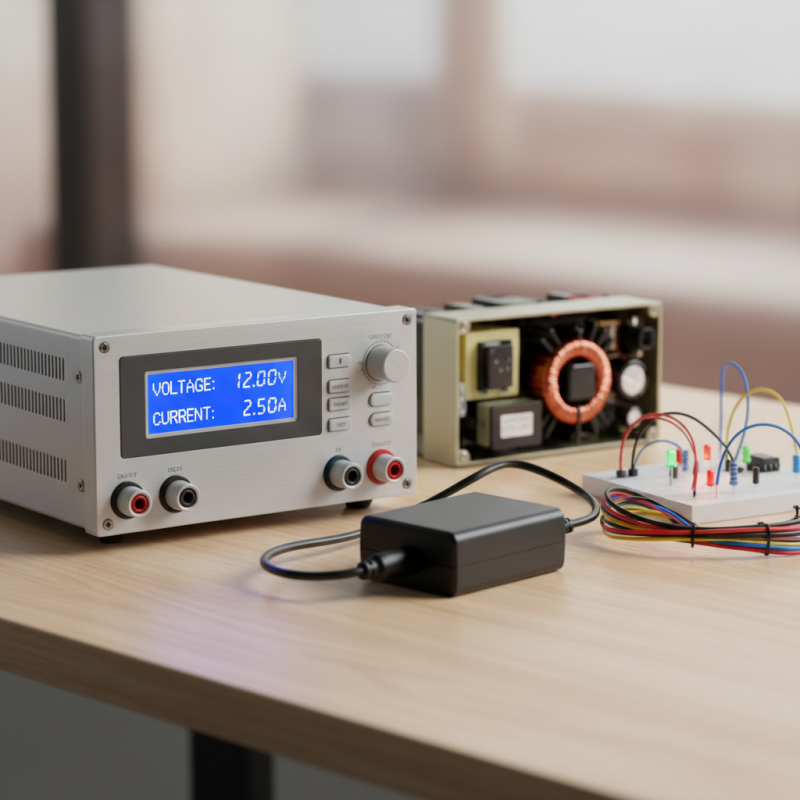
Choosing the right regulated power supply is crucial for various applications. There are several types available, and understanding each can help you make informed decisions.
Linear power supplies are known for providing clean, stable voltage. They work well with sensitive electronic devices. However, they can be bulky and inefficient.
Switching power supplies are another option. They are lightweight and efficient. These supplies convert electrical power and can handle a wider input voltage range. They are great for powering devices that require a different voltage. On the flip side, they can produce electrical noise, which may affect sensitive circuits.
Tips: Consider the required output voltage and current. Always check the specifications before making a purchase. Look for a power supply that offers overcurrent protection for safety. A well-protected supply can prevent damage to your connected devices.
Don’t overlook the importance of heat dissipation. Some power supplies can overheat during use. Too much heat may damage the unit. It’s worth considering the environment where you plan to use it. Inadequately ventilated spaces can lead to performance issues. Take your time assessing these factors before making your final choice.
Key Specifications to Consider When Selecting a Power Supply
When selecting a regulated power supply, pay close attention to key specifications. Voltage output is crucial. Look for options that offer adjustable voltage settings. This allows you to tailor the output to your specific needs. Current capacity also matters. A supply with a higher current rating can handle more demanding devices. Ensure the power supply can provide stable output under varying loads.
Efficiency is another factor to consider. Higher efficiency means less energy waste. It leads to lower electricity bills. However, be aware that efficiency ratings can sometimes be misleading. Real-world performance might not match the label.
Cooling features should not be overlooked. A power supply that runs too hot can lead to failures. Look for models with built-in cooling systems. Lastly, consider safety features. Overvoltage and short-circuit protection can save your equipment. Yet, don’t assume all power supplies come with these protections. Do your research, and ensure the safety measures meet your requirements.
Evaluating Output Voltage and Current Ratings for Your Application
When selecting a regulated power supply, understanding the output voltage and current ratings is crucial. Voltage should match your application requirements. For sensitive electronics, precise voltage regulation is vital. A mismatch can lead to malfunction or damage. For instance, a microcontroller may require 5V. Supplying 12V could permanently harm it.
Current ratings matter just as much. Assess the maximum load connected to the power supply. If the load exceeds the power supply's rating, it can overheat and fail. It’s often overlooked, but using a power supply rated slightly higher than needed offers a safety margin. However, too high a rating can be wasteful and inefficient.
Finding the perfect balance takes time. Potential users may struggle with these ratings. It's essential to consider both the expected voltage and current needs. Adjustments may be necessary if the actual load varies. Researching specifications and testing may be required. Understanding these factors helps avoid costly mistakes in your setup.
Importance of Efficiency Ratings in Regulated Power Supplies
Efficiency ratings are crucial when selecting a regulated power supply. Higher efficiency means less energy waste. This is essential for both cost savings and environmental impact. A power supply that converts more input energy into usable output reduces electricity bills. It also generates less heat, minimizing cooling requirements.
Consider the efficiency ratings stated in terms of percentages. A power supply rated at 90% is more efficient than one rated at 80%. However, these ratings can sometimes be misleading. They might only reflect performance under specific conditions. It's vital to understand your usage patterns to determine if those ratings hold true for your needs.
Another point to remember is that while high efficiency is desirable, it often comes with a higher price tag. You may need to balance cost and efficiency. Sometimes, a cheaper model with a lower efficiency rating may better serve your short-term needs. Finding the right balance is not always straightforward. Evaluating real-world performance against specifications can be challenging but is necessary for smart purchasing.
How to Choose the Best Regulated Power Supply for Your Needs? - Importance of Efficiency Ratings in Regulated Power Supplies
| Power Supply Type | Voltage Output | Current Output | Efficiency Rating | Applications |
| Linear Regulated | 5V - 30V | 1A - 10A | 80% - 90% | Audio Equipment, Low-noise Applications |
| Switching Regulated | 3V - 48V | 0.5A - 30A | 85% - 95% | Computers, Telecommunication Equipment |
| Programmable Regulated | 0V - 30V | 0A - 10A | 90% - 95% | Research and Development, Testing Labs |
| Bench Top Regulated | 0V - 30V | 0A - 20A | 85% - 90% | General Prototyping, Education |
Assessing Reliability and Safety Standards in Power Supply Selection
When selecting a regulated power supply, reliability and safety standards are crucial. According to industry reports, over 30% of electrical failures stem from poor quality power supplies. Therefore, choosing one that meets established safety standards is necessary. Regulatory bodies like UL and IEC provide certifications to help identify reliable products. Investigating these certifications offers peace of mind.
**Tip:** Always check for certifications. Look for UL, CE, or IEC marks before purchasing.
Safety features should not be overlooked. Current limiting, thermal protection, and short-circuit protection are vital. These features help prevent damage to both the power supply and connected devices. Shockingly, nearly 25% of device failures result from power supply issues. You want to avoid costly downtime and repairs.
**Tip:** Look for power supplies with built-in safety features. They are worth the investment.
Real-world testing data shows that power supplies with rigorous safety standards exhibit less than 1% failure rate over two years. While prices can differ, the long-term savings from reliable operation cannot be ignored. Make sure to balance cost with quality to minimize future headaches.
How to Choose the Best Regulated Power Supply for Your Needs?
This bar chart displays the average reliability ratings and safety certifications of different types of regulated power supplies. The ratings are based on user feedback and safety compliance standards.