How to Choose a Permanent Magnet DC Motor 90V?

Choosing the right motor for your application is crucial. A permanent magnet DC motor 90V can be an excellent choice for many tasks. These motors are known for their efficiency and performance in various settings.

When selecting a permanent magnet DC motor 90V, consider the specifications carefully. Look into power ratings, torque requirements, and speed ranges. These factors impact how well the motor performs. You may find the perfect motor, but it might not fit your specific need. Always double-check compatibility with your systems.

Keep in mind that not all motors are created equal. Some may fall short of your expectations. Testing different models can provide valuable insights. Don't rely solely on numbers and specs. Real-world performance often tells a different story. Take your time to choose wisely.
How to Choose a Permanent Magnet DC Motor 90V?

Understanding the Basics of Permanent Magnet DC Motors

Permanent magnet DC motors are widely used in various applications. They are known for their simplicity and efficiency. Understanding their basic components is crucial for selecting the right motor.
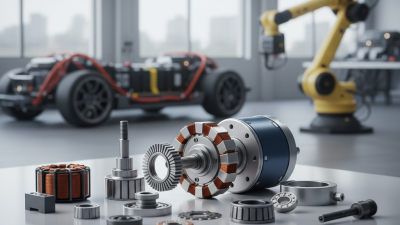
The core parts include the rotor, stator, and commutator. The rotor is the rotating part, while the stator provides a magnetic field. This interaction creates motion. It's essential to consider torque and speed when choosing a motor. These factors affect how the motor performs under load. Proper calculations can prevent future issues. If not done carefully, you might face operational failures.

Another point to reflect on is motor size and weight. A motor that is too large may not fit in the intended space. Conversely, too small a motor will struggle to meet performance needs. Evaluating your requirements is critical. Every project has unique demands, and a one-size-fits-all approach may lead to disappointment.

Key Specifications to Consider for 90V Permanent Magnet DC Motors

When selecting a permanent magnet DC motor rated at 90V, a few key specifications are crucial. Voltage rating directly affects performance. A 90V motor enables efficient operation at high speeds. This is particularly important in applications requiring rapid acceleration. According to industry reports, motors operating at 90V can achieve speeds exceeding 4000 RPM.

Torque rating is another vital consideration. It determines the motor's ability to perform tasks effectively. For instance, a motor with about 1.5 Nm torque is often suitable for light industrial applications. However, heavy-duty tasks might require motors with 3 Nm or higher. An optimal balance between torque and speed maximizes operational efficiency. But, selecting a motor with too high a torque rating can lead to excess energy consumption.

Special attention should also be given to efficiency ratings. High-efficiency motors reduce energy costs, making them more desirable. Many motors today achieve over 85% efficiency. However, it is worth noting that efficiency can vary based on operating conditions. In some scenarios, efficiency might drop below expected levels. Proper testing and selection can mitigate these issues. Thus, it is essential to evaluate these specifications carefully.

How to Choose a Permanent Magnet DC Motor 90V? - Key Specifications to Consider for 90V Permanent Magnet DC Motors

Specification Description
Voltage Rating 90V DC
Power Output Up to 2.5 kW
No-load Speed 3000 RPM
Rated Torque 1.5 Nm
Efficiency 85% - 90%
Insulation Class Class F (155°C)
Weight Approx. 5 kg
Dimensions Length: 300 mm, Diameter: 80 mm
Control Type PWM Compatible

Evaluating Performance Factors for DC Motors in Your Application

How to Choose a Permanent Magnet DC Motor 90V?

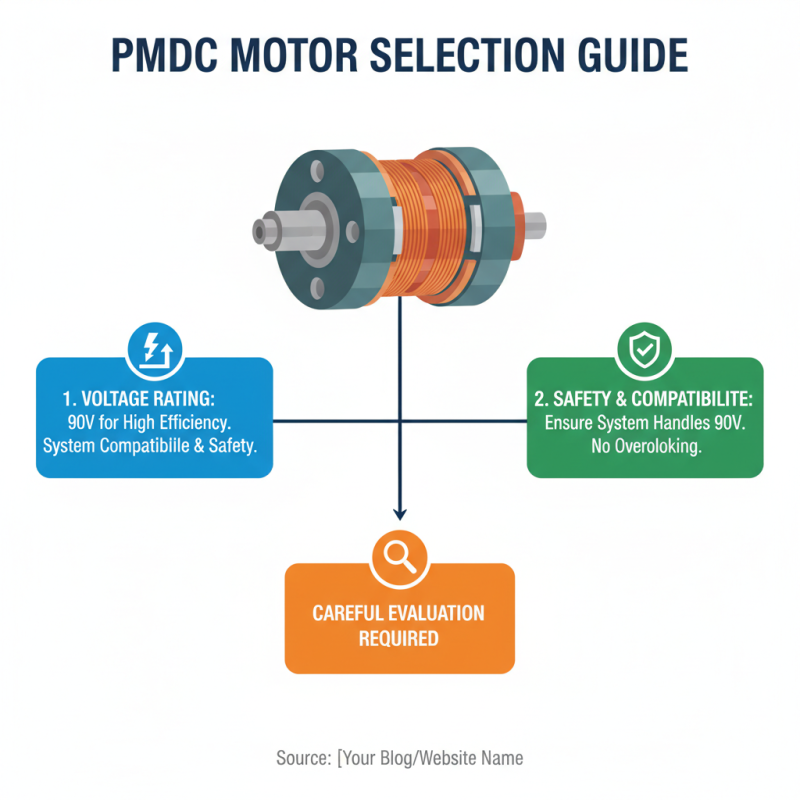
Choosing a permanent magnet DC motor for your application requires careful evaluation of several performance factors. Voltage rating is crucial. A 90V motor provides high efficiency for many applications. However, ensure your system can handle this voltage. Safety and compatibility cannot be overlooked.

Torque is another important factor. Higher torque means better performance in heavy-duty scenarios. Yet, many users underestimate the torque requirements. You might think a smaller motor suffices, but that could lead to issues later. Analyze the load carefully. A mismatch can cause inefficiency.

Speed is equally significant. Some applications demand high speeds, while others prioritize torque at lower speeds. Understand your needs. Additionally, consider heat dissipation during operation. Motors can overheat if not monitored. This could impact longevity. Refining these choices enhances overall performance. Evaluate continuously to ensure the selected motor meets your evolving needs.

Assessing Quality and Reliability in Motor Selection

When selecting a permanent magnet DC motor rated at 90V, quality and reliability play crucial roles. Studies show that up to 30% of motors fail due to poor manufacturing processes. Ensuring high build quality can substantially reduce this risk. For instance, a comprehensive assessment of motor lifecycle tests can reveal insights into longevity and performance. Durability tests must be conducted under various operating conditions, simulating real-world applications.

Moreover, it is vital to analyze performance data. According to recent industry reports, motors that adhere to international quality standards exhibit a failure rate 15% lower than those that do not. This indicates the importance of certification. However, even certified motors can fail; thus, it's essential to monitor operational parameters continuously. Regular data collection on temperature, torque, and speed can help identify potential issues before they escalate.

Lastly, consider the manufacturer’s reputation. A vendor's historical performance can serve as an indicator. It's worth noting that newer manufacturers may offer competitive pricing but could lack reliability data. The balance between cost and reliability is delicate. Decision-makers must critically reflect on these factors to avoid costly mistakes in operational efficiency.

Cost Considerations and Budgeting for Your Motor Purchase

How to Choose a Permanent Magnet DC Motor 90V?

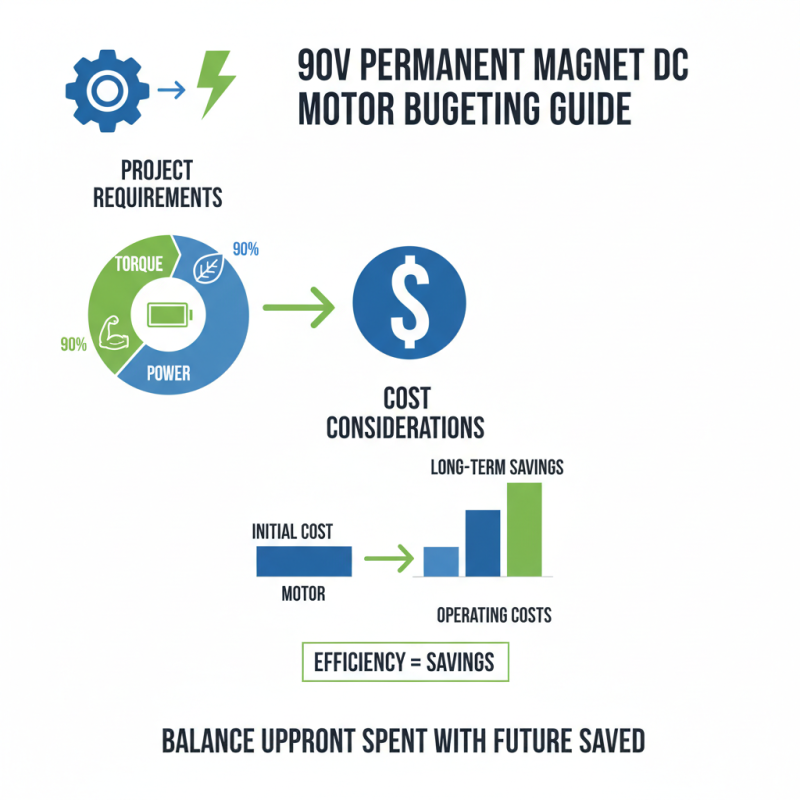
When considering a permanent magnet DC motor at 90V, budgeting is crucial. Start by identifying your project's requirements. Think about power needs. Do you know the torque required? It's important to consider efficiency as well. More efficient motors may have higher initial costs but save money long term.

Explore various suppliers to find competitive pricing. Compare specifications and ensure you're not compromising quality for lower costs. Additionally, factor in hidden expenses. Shipping and installation can add significantly to your overall budget. A cheap motor may turn into an expensive regret when maintenance issues arise.

Consider potential upgrades or expansions. Will your project increase in scale? It's wise to choose a motor that meets future needs. Balancing cost and quality is tricky. Sometimes, choosing a slightly more expensive option can save you headaches later. Reflect on your choices as you plan your purchase.

Scroll to Top