
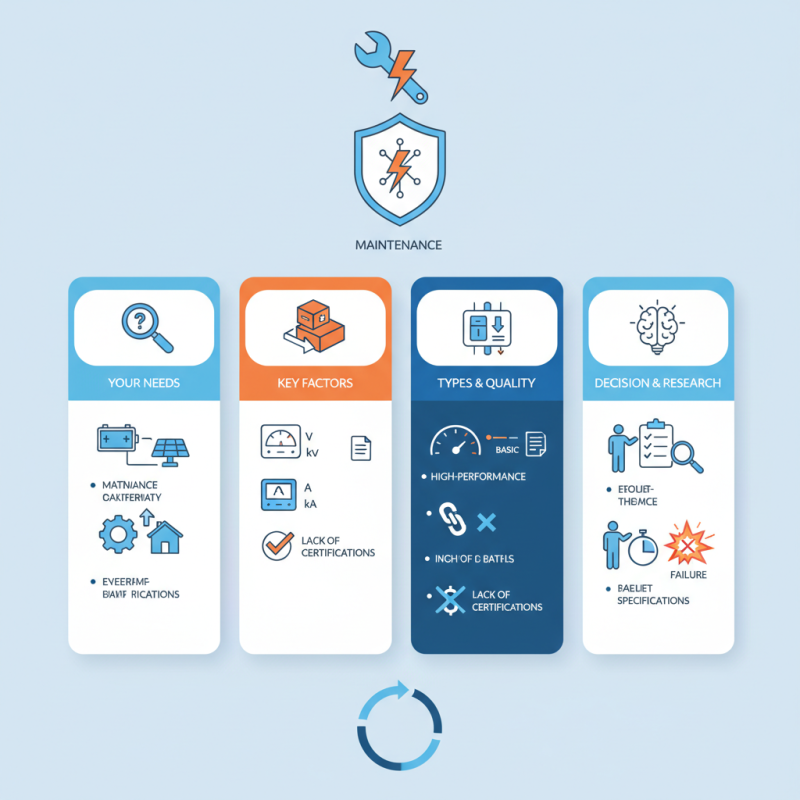
Choosing the right DC Isolation Switch can be a daunting task. With various options available, it’s crucial to understand your specific needs. A DC Isolation Switch is essential for protecting both equipment and personnel. These switches help isolate electrical sources during maintenance or emergencies.
When selecting one, consider factors like voltage ratings and current capacity. Not all DC Isolation Switches are made equal. Some are designed for high-performance situations, while others suit basic applications. You may find that some products lack important certifications.
Reflect on your requirements carefully. An inappropriate switch can lead to failures in operation. Look closely at the manufacturer’s specifications. A little research can save you from significant issues later. Remember, making a hasty decision might cost you more in the long run.
When selecting a DC isolation switch, it’s crucial to understand its fundamentals. A DC isolation switch serves as a critical safety device. It disconnects the power source from the load. This function protects equipment and personnel during maintenance.
Different types of switches exist, including manual and automatic versions. Manual switches require physical operation. They may lead to human error. Automatic switches typically monitor the system and act accordingly. The choice often depends on the specific application. For example, a solar power system may favor automatic switches for efficiency.
Consider the voltage and current ratings. These ensure the switch can handle your system's requirements. Misjudging these values can lead to failures. Environmental factors also matter. Some switches are better suited for harsh conditions, while others need protection. Evaluating your environment is essential. Take time to reflect on your needs. A simple oversight can cause significant issues down the line.
Choosing the right DC isolation switch begins with understanding your specific application needs. Each application possesses unique requirements. It’s crucial to consider factors like voltage ratings, load types, and environmental conditions. For instance, outdoor applications may need switches designed for higher weather resistance. Conversely, indoor setups might focus on space-saving designs.
Evaluate the current requirements too. High-current applications need robust switches. They must handle the maximum load without overheating. Always think about safety features as well. A reliable switch should prevent backflow of current. This can safeguard equipment and enhance system longevity.
Don’t overlook the ease of operation. Some switches are complex and may confuse users. A simpler interface could lead to fewer mistakes. Check if the switch allows for easy manual operation or remote control. Identifying these specific needs can significantly impact your choice. Regularly reassess your requirements, as applications may evolve over time.
When selecting a DC isolation switch, understanding key features is critical. One must consider criteria like voltage rating, current rating, and breaking capacity. According to a recent industry report, over 70% of failures in electrical systems are linked to insufficient isolation. This statistic underscores the importance of a reliable switch in solar and electric vehicle applications.
Durability is another essential feature. Many DC isolation switches are exposed to harsh environmental conditions. Reports suggest that switches with IP-rated enclosures can last 20% longer in these environments. However, users sometimes overlook the impact of thermal management. Temperature fluctuations can affect performance and longevity. Installing devices that can handle high temperatures is vital for reliable operation.
Finally, user-friendliness cannot be ignored. Ease of installation and maintenance often reflect on the overall efficiency of your system. Some users find complex designs daunting, which can lead to errors during setup. In a survey, 45% of technicians reported difficulties with installation due to complicated mechanisms. This indicates a need for well-designed, straightforward products in the market to enhance user experience.
When selecting a DC isolation switch, it’s essential to compare the various types available. There are several designs on the market, each with unique benefits and limitations. For instance, a knife switch is simple and effective. It provides a straightforward method for disconnecting circuits, suitable for low-voltage applications. However, its manual operation may not be ideal for high-frequency needs.
On the other hand, rotary switches offer a compact solution. They can be used in confined spaces and provide a great visual indication of the circuit status. Unfortunately, maintenance on rotary switches can become cumbersome over time. The durability of components is often questioned. Some switches may fail in harsh environments, making it necessary to regularly evaluate their functioning.
Moreover, fuse disconnect switches combine isolation with protective functionality. They can provide an added layer of safety during maintenance. However, the upfront cost can be higher than simpler switch types. Users must weigh the benefits against their budget constraints. Clearly defining the application needs is crucial in making the right choice. Being mindful of the operating environment can help guide this decision and lead to better reliability in the long run.
When selecting a DC isolation switch, safety and compliance are paramount. Standards vary by region and application. Understanding the specific requirements is crucial. For instance, UL, IEC, and CE markings offer insights into safety measures. You'll want to ensure your switch meets these regulations to protect users and equipment.
Consider the operational environment as well. An outdoor switch should withstand harsh weather. Look for features like weatherproof enclosures and corrosion resistance. Also, evaluate the required voltage and current ratings. Insufficient ratings can lead to failure and hazards.
Reflecting on possible oversights is important. Many overlook maintenance needs when making a choice. Regular checks can prevent malfunction and ensure long-term reliability. Not all switches are created equal, and choosing hastily may lead to regret. Awareness of your exact needs and environment will help you make a more informed choice.