How to Choose a Permanent Magnet Electric Motor?

Choosing a permanent magnet electric motor requires more than comparing rated power and purchase price. The motor must match the machine’s real operating conditions. Consider speed, continuous torque, peak torque, duty cycle, voltage, cooling, and available installation space. A motor rated at 10 kW may perform poorly if it repeatedly starts under heavy loads. Small details matter.

A practical selection begins with measured data. Record the load profile, shaft speed, starting frequency, ambient temperature, and expected operating hours. Check the manufacturer’s torque-speed curves, efficiency maps, insulation class, bearing limits, and protection rating. Do not rely on marketing claims alone. Independent test reports and recognized standards can strengthen confidence, although published results may use ideal conditions. Reality is less tidy.

Control compatibility also deserves attention. Verify the inverter’s current range, feedback requirements, braking method, and software settings. A well-matched motor and drive can reduce heat, noise, and wasted energy. Poor tuning can create vibration or unstable operation. It happens.

Look beyond the motor itself. Examine magnet protection, demagnetization limits, service access, spare-part availability, warranty terms, and supplier support. In dusty factories or humid facilities, sealing and corrosion resistance may matter more than maximum efficiency. A lifecycle estimate should include installation, electricity, maintenance, downtime, and eventual replacement. The cheapest unit is not always the economical choice.

This guide compares these factors in a practical order. It also highlights common selection mistakes and questions worth asking suppliers. Some recommendations may need adjustment for your application. Measure twice. Choose once.
How to Choose a Permanent Magnet Electric Motor?

Understand Permanent Magnet Motor Types and Operating Principles

How to Choose a Permanent Magnet Electric Motor?

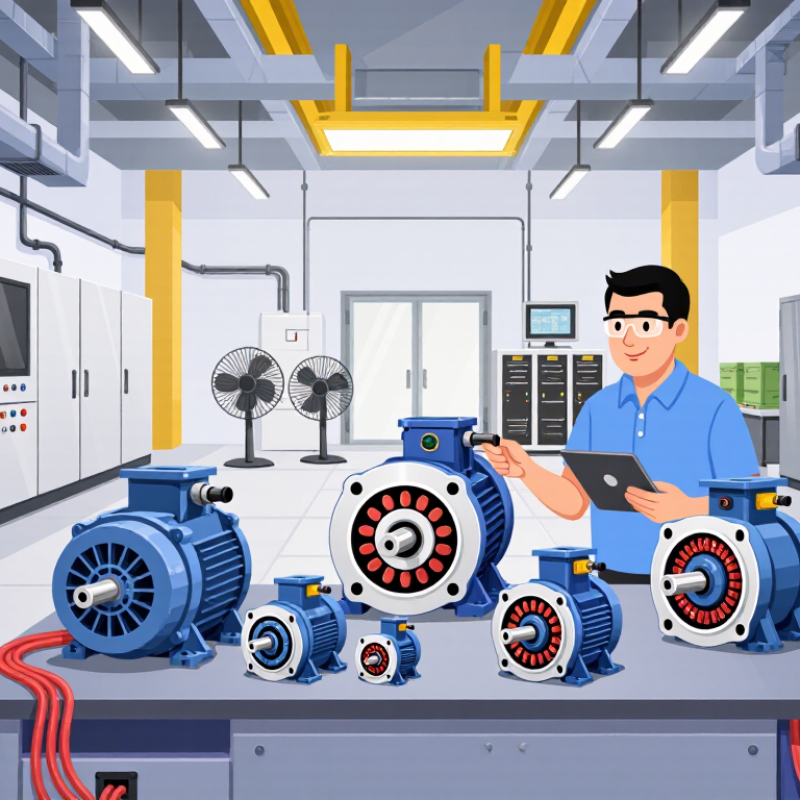
Permanent magnet motors create a rotor field with magnets rather than rotor windings. Current in the stator windings produces a second magnetic field. Their interaction creates torque. The basic idea is simple. Control matters.

A brushed permanent magnet DC motor uses a mechanical commutator to switch current as the rotor turns. It can be straightforward to control, but brushes wear and may need replacement. A brushless DC motor, or BLDC motor, uses electronic switching instead. Sensors or controller estimates help time the current changes. These motors often suit compact drives that need responsive speed control.

A permanent magnet synchronous motor, or PMSM, also relies on electronic control, but typically uses smoothly varying, sinusoidal phase currents. This can support quiet, efficient operation when the controller is matched to the motor. Radial-flux designs send magnetic flux across the air gap; axial-flux designs send it along the shaft direction. Geometry affects packaging and cooling, not just performance figures. Check the motor’s torque and speed range against the real load, including startup and heat buildup. A specification sheet rarely captures every operating condition. The distinction between motor types can also blur in practice, depending on control strategy.

Define the Application’s Load, Speed, and Torque Requirements

Before choosing a permanent magnet motor, measure the load across its real operating cycle—not just at its peak. Record shaft speed, continuous torque, starting torque, and short overloads. A conveyor may need steady torque at low speed; a pump may spend much of the day below its rated flow. These differences affect motor sizing, cooling, and drive selection. A motor sized only for peak demand can run inefficiently during ordinary operation.

The U.S. Department of Energy’s 2014 Improving Motor and Drive System Performance sourcebook reports that motor-driven systems use about 68% of electricity in U.S. manufacturing. That figure makes accurate load assessment more than a sizing detail. Compare measured demand with the motor’s torque-speed curve, and check whether the required speed range is continuous. Also allow for gearbox losses, temperature, and duty cycle. Field measurements are best; estimates can miss brief but demanding starts.

Tips: Log speed and current during a representative shift, then verify torque at the shaft when possible. Keep units consistent. A quick spreadsheet helps, though it may not capture every transient. Recheck assumptions before ordering.

Compare Motor Ratings, Efficiency, and Control Compatibility

Choosing a permanent magnet electric motor starts with the load, not the catalog. In field commissioning, I check continuous torque, peak torque, speed range, and duty cycle. A motor rated for 10 kW may not deliver that power continuously in a hot enclosure. Temperature changes the decision. Confirm ambient temperature, mounting position, cooling method, and allowable overload time. Ratings need context.

Efficiency deserves more than one headline percentage. Ask for efficiency maps across actual speed and torque points. A motor can appear efficient near its rated point yet waste energy during frequent low-load operation. Compare copper loss, iron loss, inverter loss, and standby consumption. Measure the complete drive system when possible. A handheld power meter can reveal surprises. The first estimate is often wrong. Leave margin, but avoid excessive oversizing, because a lightly loaded motor may operate inefficiently.

Control compatibility is equally practical. Verify DC-bus voltage, peak current, feedback type, commutation method, braking requirements, and communication interfaces. The controller must handle the motor’s back EMF across the full speed range. Check startup behavior under load, especially with high-inertia fans or conveyors. During testing, record acceleration time, temperature rise, noise, and fault events. Documentation matters. If the supplier cannot provide clear limits and test conditions, comparison becomes guesswork. I would rather choose a slightly less powerful motor with verified control data than a larger unit with uncertain behavior.

Assess Size, Cooling, Environment, and Installation Constraints

Choosing a permanent magnet electric motor starts with the space it must occupy. Measure the mounting footprint, shaft height, and clearance around the housing, then compare them with the motor’s dimensional drawing. Leave room for cable bends and service access; a motor that fits on paper may be awkward to reach after installation. Check the load’s speed and torque across its full operating range, not only at startup. A small mismatch can cause excess heat or poor performance.

Cooling needs depend on how hard and how long the motor runs. In a dusty workshop, exposed cooling passages may collect debris, while a sealed enclosure can limit airflow. Review the stated ambient temperature, duty cycle, and any cooling method required by the motor. Keep vents clear. Also consider nearby heat sources, moisture, vibration, and corrosive vapors. These details are easy to overlook. They can shorten service life.

Installation constraints deserve a careful site check. Confirm the available lifting access, foundation strength, alignment tolerance, and electrical connection location before ordering. For example, a narrow machine bay may prevent a straight cable route or routine bearing inspection. Compare the motor’s mass and mounting orientation with the support structure, and verify that guards will not block airflow. Specifications help, but the real installation can still surprise you. Recheck measurements on site.

Verify Reliability, Certifications, and Supplier Support

A permanent magnet motor should prove its reliability under conditions close to your actual application. Ask for endurance-test results, rated operating limits, and clear definitions of test conditions. A smooth sample-run is useful, but it cannot predict every issue in a hot cabinet or under repeated starts. Check how the motor handles your load, speed range, vibration, and expected duty cycle. Small details matter.

Tips: Request certificates relevant to your market and application, then verify their scope and validity. Ask for material traceability and inspection records for magnets, windings, and bearings. Confirm whether test data covers the exact motor configuration you plan to buy. Keep the answers in writing.

Supplier support is part of reliability, too. Before ordering, ask who handles technical questions, how quickly they respond, and what information they need to diagnose a fault. A capable supplier can explain limits without promising that nothing will ever fail. Request installation guidance, wiring details, maintenance recommendations, and a realistic process for replacement parts. If responses are vague, treat that as a signal to investigate further. Even good documentation can miss a detail; review it with your engineering team and test a sample in the intended setup before committing to a large order.

Scroll to Top