
What Is an Electrical Cabinet and What Types Are There?

An Electrical Cabinet is more than a metal enclosure. It protects electrical components, organizes wiring, and gives technicians controlled access to equipment. Inside, rows of breakers, terminals, relays, and cable ducts must work together without creating unnecessary heat or obstructing maintenance. Small design choices matter: a poorly placed cable gland can complicate installation, while inadequate ventilation can shorten component life.

The need for dependable electrical infrastructure is growing. The International Energy Agency’s Electricity 2024 report projects global electricity demand growth of close to 4% annually through 2027. That outlook makes cabinet design and selection increasingly important across factories, buildings, and energy systems. IEC 61439 also provides a recognized framework for low-voltage switchgear and controlgear assemblies, including requirements related to construction and verification. Standards help, but they do not replace careful application-specific design.

This guide explains what an Electrical Cabinet is and compares common types, from control and distribution cabinets to outdoor and modular enclosures. One limitation deserves attention: no source material was supplied to verify a named specialist’s quotation, so attributing a direct quote would risk inventing one. The same caution applies to market-size figures, which can vary by research scope. A cabinet may look like a simple box. It is not.
What Is an Electrical Cabinet and What Types Are There?

Definition and Core Purpose of an Electrical Cabinet

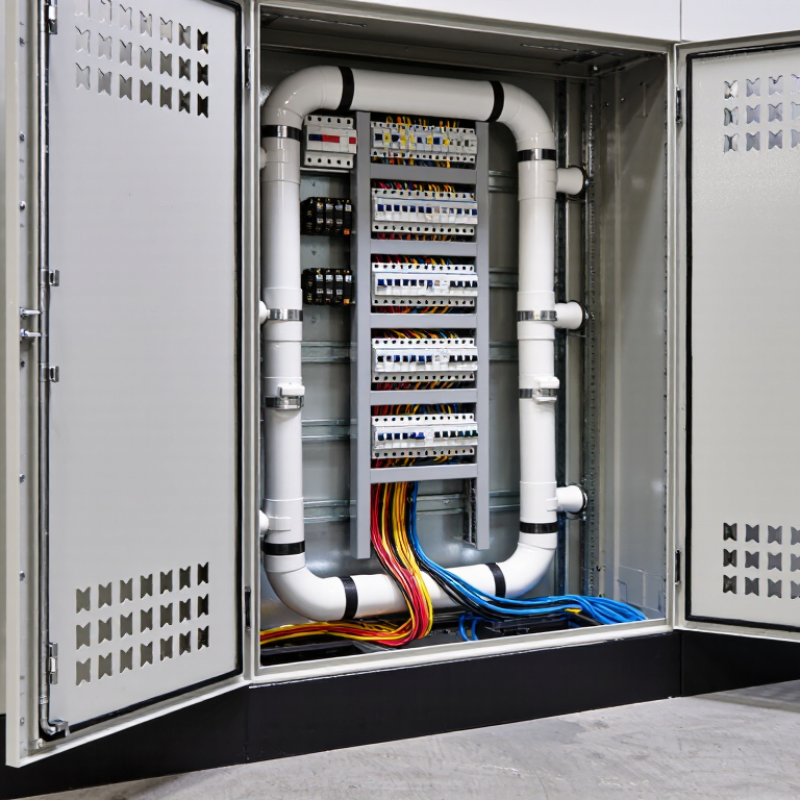
An electrical cabinet is a protective enclosure that houses electrical and control components, such as circuit breakers, relays, terminals, and wiring. It creates a defined space for equipment that would otherwise be exposed to dust, accidental contact, or physical damage. In a workshop, this may be a steel box mounted beside a machine, with labeled switches inside and cables entering through sealed openings. The cabinet also helps technicians locate components and carry out maintenance more safely. It is not merely a box. Its design affects access, heat removal, and equipment life.

The cabinet’s core purpose is to protect both people and electrical systems while supporting reliable operation. Its enclosure, door, seals, and cable entries should suit the surrounding conditions. A dusty production area may need better sealing than a clean control room. Components also produce heat, so ventilation or cooling may be needed. Too little airflow can shorten equipment life; too much can admit contaminants. Choosing an enclosure without considering its location is an easy mistake, and one worth reviewing before installation.

Tips: Check the cabinet’s dimensions, mounting space, and cable-entry locations before choosing components. Keep labels readable, leave room for service work, and avoid tightly packing devices. A little spare space helps. Inspect seals and door closures periodically, especially where dust or moisture is present.

Main Components and How an Electrical Cabinet Works

An electrical cabinet is the protective enclosure and control point for a machine or building system. Inside, a main isolator disconnects incoming power, while circuit breakers or fuses interrupt excessive current. Contactors switch loads; relays and a programmable controller manage operating sequences. A variable-frequency drive may adjust motor speed. Wiring ducts keep conductors organized, and a grounding bar provides a defined fault-current path. The arrangement matters: poor airflow can heat components, while loose terminals may cause intermittent faults.

The U.S. Department of Energy’s 2014 report, Improving Motor and Drive System Performance, estimates that motor-driven systems use about 68% of electricity consumed by U.S. manufacturing. That figure helps explain why cabinets often include motor starters or drives, and why heat management deserves attention. Fans, filters, or air conditioning may be needed, depending on load and ambient conditions. IEC 60529 defines IP protection ratings using two numerals: one for solid-object access and dust, and one for water ingress. Choose an enclosure rating for the actual location, not just its appearance. A cabinet is not magic; incorrect sizing can leave components exposed to heat, dust, or moisture.

Tips: Leave clear space around hot devices, label wires at both ends, and check that doors close without pinching cables. Revisit the layout after installation—field changes can make a neat drawing misleading.

What Is an Electrical Cabinet and What Types Are There? — Main Components and How an Electrical Cabinet Works
Category Type or Component Purpose and Typical Features How It Works or Where It Is Used
Definition Electrical cabinet An enclosure that houses electrical or electronic equipment and helps protect it from contact, dust, moisture, impact, and other environmental conditions. It provides a defined space for mounting, wiring, operating, and maintaining equipment. The required enclosure construction depends on the installation environment and applicable electrical codes.
Cabinet type Power distribution cabinet Contains devices such as circuit breakers, busbars, and distribution terminals. Receives electrical power and divides it into protected outgoing circuits for loads within a building or facility.
Cabinet type Motor control cabinet Houses motor starters, contactors, overload protection, and, where required, variable-frequency drives. Switches and protects motors and can control motor starting, stopping, speed, or operating sequence.
Cabinet type Control or automation cabinet Typically contains a programmable logic controller (PLC), input/output modules, relays, and control power supplies. Receives signals from sensors, processes control logic, and sends commands to machines, valves, motors, or other equipment.
Cabinet type Instrument cabinet Houses measurement, signal-conditioning, and communication equipment. Collects and routes signals from instruments such as temperature, pressure, or flow sensors to monitoring or control systems.
Cabinet type Outdoor electrical cabinet Designed for outdoor exposure, with suitable environmental protection, materials, seals, and sometimes heating or cooling. Protects electrical equipment against site conditions such as rain, dust, sunlight, temperature changes, or corrosion, according to its specified rating.
Main component Enclosure, door, and seals Form the cabinet body and access opening; seals help limit entry of dust or water when properly installed. The enclosure provides a physical barrier. Its protection level depends on its design, installation, and the applicable IP or NEMA rating.
Main component Mounting plate, rails, and supports Provide a secure surface or structure for installing electrical devices and wiring accessories. Components are fixed to the mounting system so they remain organized and mechanically supported during operation and maintenance.
Main component Circuit breaker or fuse Provides overcurrent protection; a circuit breaker can be reset after a fault is cleared, while a fuse must be replaced after it operates. Interrupts a circuit when current exceeds its designed limits, helping protect conductors and equipment from damage.
Main component Busbar and terminal blocks Provide connection points for distributing power and terminating conductors. Busbars carry and distribute current between devices; terminal blocks provide organized connection points for field and internal wiring.
Main component Contactor and overload relay A contactor switches a load, commonly a motor; an overload relay detects sustained motor overcurrent. A control signal energizes the contactor coil to open or close its power contacts. The overload relay can initiate disconnection if a motor remains overloaded.
Main component PLC and input/output modules Provide programmable control and connections for field signals. Input modules read sensor or switch states; the PLC executes its programmed logic; output modules command devices such as relays, contactors, or indicators.
Main component Power supply and transformer Provide the voltage required by control circuits and electronic devices. A power supply converts incoming power to a suitable DC output, while a transformer changes AC voltage for equipment designed to use a different AC level.
Main component Grounding and protective bonding Connect conductive cabinet parts and designated circuits to the protective earthing system. Provides a path for fault current so protective devices can operate and exposed metal parts are less likely to remain at a hazardous voltage.
Main component Cooling and ventilation equipment May include vents, filters, fans, or heat exchangers, selected for the cabinet’s heat load and environment. Removes or manages heat produced by electrical equipment to help keep components within their specified operating temperatures.
Operating sequence Power entry, protection, control, and output Equipment is arranged so power and control signals can be routed through the appropriate devices. Incoming power passes through protective and distribution devices; control equipment processes signals and operates switching devices; outgoing circuits supply connected loads.

Common Types of Electrical Cabinets

Common electrical cabinet types are designed around where equipment sits and what it must withstand. Wall-mounted cabinets suit compact control gear in workshops or utility rooms. They keep components off the floor, but limited depth can make wiring awkward. Leave room for cable bends and maintenance access.

Floor-standing cabinets hold larger assemblies, such as motor controls, drives, and distribution equipment. Their broad interior can separate power and control components, while a plinth helps route cables from below. Modular cabinets use connected sections, allowing a system to expand as equipment needs change. They can simplify upgrades, though added sections require careful alignment and consistent sealing. Small details matter.

Junction cabinets protect terminal blocks where cables meet or branch. Control cabinets house devices such as relays, controllers, and operator interfaces. Outdoor cabinets need weather-resistant construction, suitable seals, and attention to heat buildup; direct sun can warm the interior more than expected. A cabinet’s label alone does not guarantee suitability. Check its dimensions, access points, ventilation, and environmental rating against the actual installation. Even experienced installers sometimes underestimate future cable additions. A little spare space is useful.

How Electrical Cabinets Differ by Application and Environment

An electrical cabinet protects control equipment, wiring, and connections, but its surroundings shape its design. A cabinet beside a production line may need resistance to dust, vibration, and occasional washdown. One installed outdoors faces rain, sunlight, temperature swings, and possibly corrosive air. These conditions affect enclosure materials, seals, cooling, and cable entry points.

The application matters just as much. A control cabinet may need space for drives and clear separation between power and signal wiring. A communications cabinet may prioritize airflow and organized cable routing. In a damp area, sealed construction can help keep moisture out, yet it may also trap heat. That trade-off is easy to overlook. Ventilation, cooling, and protection should be considered together, not chosen independently.

Before selecting a cabinet, check the site’s actual conditions: expected temperature range, cleaning methods, airborne particles, and available service space. An enclosure rating can guide selection, but it does not replace a careful review of how the cabinet will be installed and maintained. Measurements from one area may not represent the whole facility. Details matter.

Electrical Cabinet IP Ratings by Environment

IP ratings describe protection against solid objects and water under specified test conditions. The first digit rates solid-object protection; the second rates water protection.

Examples: IP54 offers dust protection and protection against water splashes; IP65 is dust-tight and protected against water jets; IP66 is protected against powerful water jets; IP67 and IP68 cover immersion tests, with IP68 conditions specified by agreement. Choose a cabinet rating that matches the actual installation and exposure.

Key Factors for Selecting an Electrical Cabinet

What Is an Electrical Cabinet and What Types Are There?

Key Factors for Selecting an Electrical Cabinet

Selecting an electrical cabinet starts with its environment and the equipment it must protect. A cabinet beside a washdown line needs stronger water protection than one in a dry control room. Check the required ingress protection rating against IEC 60529, then consider dust, moisture, corrosive chemicals, and impact risks. Temperature matters too. Drives and power supplies can create concentrated heat, so review component heat loads and ventilation needs before choosing a size. A cabinet that looks spacious on paper may become cramped once wiring ducts and service clearances are added.

Uptime Institute’s 2024 Global Data Center Survey reported an average data center PUE of 1.56 for 2023. PUE is not a cabinet rating, but it highlights the value of managing heat and energy across electrical systems. For cabinet selection, assess heat dissipation, cooling method, door access, mounting space, and future expansion. Also confirm voltage, short-circuit requirements, and the enclosure material with a qualified electrical professional. Small oversights can complicate installation.

Tips: Measure the actual equipment, including cable bend space. Leave room for inspection and maintenance, not just initial assembly. Match the enclosure rating to the real site conditions; “indoor” does not always mean clean or dry. Recheck the layout after installation, because field conditions sometimes expose assumptions that drawings miss.

Scroll to Top