
Top 10 Handheld Portable UV Lamps for Global Buyers

A Handheld Portable Uv Lamp can make close-up inspection easier in workshops, laboratories, and field settings. The best choice depends on the task, not just brightness or price. Buyers should compare wavelength, beam coverage, battery life, charging options, and operating instructions. A narrow beam may suit detailed checks, while a wider beam can cover larger surfaces.

Specifications deserve careful attention. Confirm that the stated wavelength and output match the intended application, and ask suppliers for clear product documentation. A label alone may not answer every practical question. Even a polished spec sheet can leave gaps about performance under everyday conditions. That uncertainty matters.

This guide reviews ten portable options for global buyers, with attention to usability, build quality, and available technical information. It also considers details that are easy to overlook, such as grip comfort, switch placement, and whether the lamp stays steady during repeated use. Small details matter. Regional standards and import requirements can differ, so buyers should check applicable local guidance before ordering. UV exposure can harm eyes and skin; follow the manufacturer’s safety instructions and use suitable protective measures. Never aim a lamp at people or animals.

No single model fits every user. A lower-priced lamp may be adequate for occasional work, while frequent use can justify stronger support and clearer documentation. Compare the evidence, not only the marketing claims. The rankings are a starting point, not a substitute for checking the product against your specific needs.
Top 10 Handheld Portable UV Lamps for Global Buyers

What Handheld Portable UV Lamps Are and How They Work

Handheld portable UV lamps are compact light sources that direct ultraviolet energy toward a nearby surface or object. Many use rechargeable batteries and small LEDs, while some models contain a tube. UV light is invisible; a violet glow does not prove that a lamp delivers a useful UV dose. Its output depends on the device and wavelength. UV-A is common in fluorescence inspection, while UV-C is used in some disinfection equipment. These purposes are not interchangeable.

A lamp’s effect depends on wavelength, intensity, distance, exposure time, and direct line of sight. Dust, folds, and shadows can block exposure, so a quick pass does not guarantee a clean or disinfected surface. Check the product’s specifications and intended use rather than relying on appearance alone. In practice, that can feel less straightforward than expected.

Safety matters: some UV wavelengths can harm eyes and skin. Never point a lamp at people or animals, and follow the manufacturer’s instructions for protective equipment and use. Results may vary.

UV-A, UV-B, and UV-C: Types and Common Applications

Handheld UV lamps may look similar, but their wavelengths serve different purposes. UV-A spans roughly 315–400 nanometers and is common in fluorescence inspection. It can reveal certain residues, security marks, or leaks when paired with the right viewing method. Some UV-A lamps also cure compatible materials. The result depends on the material and exposure time. A bright glow does not prove that a surface is clean.

UV-B, generally around 280–315 nanometers, is used in specialized applications, including supervised phototherapy and some scientific work. It can affect skin and eyes, so treatment devices require careful dose control and qualified guidance. UV-C, commonly around 100–280 nanometers, can reduce microbes on exposed surfaces or in designed air and water systems. Shadows matter. So does distance. Dust or residue can also limit performance, and a handheld lamp is not automatically a reliable disinfection system.

For buyers, wavelength and intended use should be checked alongside output, exposure time, and safety instructions. UV-C should never be aimed at people or animals. UV-B and UV-A also warrant suitable eye and skin protection. A label alone is not enough. Specifications can be easy to misread, and real-world performance may differ from a quick demonstration.

Key Features for Comparing Portable UV Lamps

Compare wavelength, measured irradiance, and exposure time together; wavelength alone cannot establish performance. CIE’s 2003 report, Ultraviolet Air Disinfection, places peak germicidal effectiveness near 265 nm. Numbers need context. A handheld lamp’s delivered dose changes with distance, angle, and surface texture. Ask whether test results specify these conditions, rather than relying on a broad “kills germs” claim.

Check practical details you can verify: battery runtime at full output, charging time, weight, and whether the timer is easy to use with gloves. A clear irradiance reading is more useful than a large power claim. For example, compare readings at the intended working distance, not directly at the lamp. FDA guidance warns that some UV-C lamps can injure eyes or skin after brief exposure. That matters. Look for shielding, a stable grip, and clear operating instructions; never direct UV-C toward people or animals.

Also consider the task. Shadows and narrow gaps can leave surfaces untreated, so a compact lamp may need careful repositioning. It is not a shortcut for cleaning. CIE guidance emphasizes that UV effectiveness depends on delivered exposure, while real surfaces vary. I would treat unsupported test claims cautiously, even when the device feels powerful. Compare independent test methods, wavelength data, and safety information before choosing a model for travel or routine use.

Top 10 Handheld Portable UV Lamps for Global Buyers - Key Features for Comparing Portable UV Lamps

This is a comparison of ten common handheld UV lamp categories, not a ranking of specific products. Wavelengths and features shown are typical; actual specifications vary by model. Check the product label and technical datasheet before purchase.

No. Lamp Category Typical Wavelength Common Use Key Comparison Points Safety and Buying Notes
1 UV-A Inspection Lamp Usually 365 nm or 395 nm Fluorescence inspection, surface checks, and general-purpose UV-A tasks Compare peak wavelength, irradiance, beam uniformity, filter options, and battery runtime. Use eye protection appropriate to the wavelength and task. A 365 nm model may produce less visible violet light than a 395 nm model.
2 UV-A Blacklight Commonly around 395 nm; some models use 365 nm Making fluorescent materials visible for demonstrations, inspection, or display Check illuminated area, beam angle, output consistency, housing durability, and charging method. Confirm that the product is a UV-A lamp and review its stated output; visible violet brightness alone does not measure UV output.
3 Document and Security-Feature Checker Often 365 nm or 395 nm UV-A Viewing UV-responsive security features on selected documents or materials Compare wavelength, viewing window or filter, light coverage, and compatibility with the materials being checked. UV response varies by document and feature. A lamp is not, by itself, proof that a document is genuine.
4 Mineral and Gem Fluorescence Lamp Commonly 365 nm or 395 nm UV-A Observing fluorescence in minerals, gemstones, and other UV-responsive samples Check wavelength accuracy, optical filter, output, beam focus, and whether the intended samples respond at that wavelength. Different materials fluoresce differently; verify the required wavelength for the specimens being examined.
5 Fluorescent Leak-Detection Lamp Often 365 nm UV-A Locating compatible fluorescent dyes used in some automotive, HVAC, and industrial leak inspections Compare compatibility with the dye, irradiance at the working distance, beam coverage, and battery capacity. Use only dyes and procedures suitable for the system being inspected. Follow the dye and equipment instructions.
6 UV-A Adhesive or Coating Curing Lamp Commonly 365–395 nm, depending on the curing material Curing compatible UV-curable adhesives, coatings, or resins in targeted applications Match the lamp's wavelength and irradiance to the material datasheet; also compare working distance, exposure area, and duty cycle. Curing time depends on the material, layer thickness, distance, and delivered irradiance. Follow the material manufacturer's instructions.
7 Portable Nail-Curing Lamp Typically uses UV-A LEDs around 365 nm and/or 395 nm Curing nail products specifically formulated for UV or LED lamps Check product compatibility, LED layout, curing area, timer settings, and the nail product's specified curing time. Use according to the nail product instructions. Avoid unnecessary skin and eye exposure, and do not assume every formula works with every lamp.
8 UV-C Mercury-Lamp Handheld Unit Commonly 254 nm from a low-pressure mercury source Specialized UV-C irradiation tasks where the device and procedure are explicitly designed and validated for the purpose Check the stated wavelength, measured irradiance, exposure-time guidance, lamp life, and any interlock or shielding features. UV-C can injure eyes and skin. Do not expose people or animals; follow the device's safety instructions and applicable regulations.
9 UV-C LED Handheld Unit Commonly within 265–280 nm Specialized UV-C applications using LED emitters Compare the specified peak wavelength, irradiance, beam coverage, thermal management, battery performance, and test data. UV-C exposure is hazardous to eyes and skin. Disinfection performance depends on delivered dose, surface conditions, distance, and validated procedures.
10 Narrowband UV-B Phototherapy Device Commonly around 311–313 nm Prescribed phototherapy for specific skin conditions under medical supervision Check wavelength specification, treatment-area size, timer controls, dose guidance, and medical-device documentation for the target market. Use only under qualified medical guidance. UV-B can cause skin and eye injury; follow prescribed exposure limits and protective measures.

Top 10 Handheld UV Lamps: Designs and Intended Uses

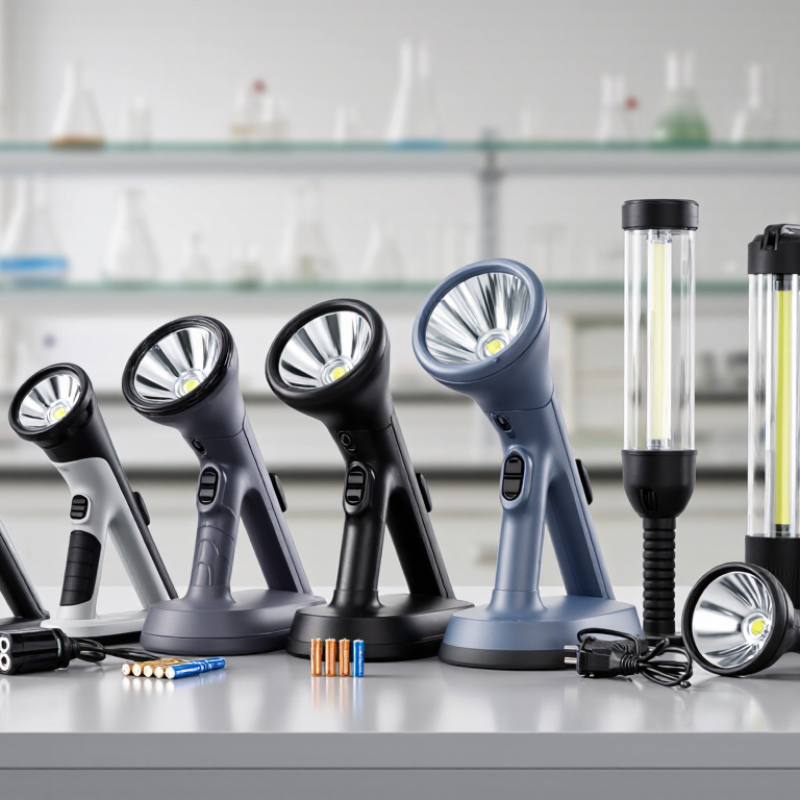
Handheld UV lamps vary more than their small housings suggest. A pocket-sized inspection light suits close checks for fluorescent markings or residue. A narrow-beam model concentrates light on small areas, while a wider flood design helps inspect larger surfaces. Flexible-neck lamps reach behind equipment. Magnetic-base versions stay put on metal benches, though they are less useful on other materials. Adjustable-head models aim light around corners. Ergonomic grips help during repeated inspections. Rechargeable designs reduce spare-battery handling; replaceable-battery models can be practical away from outlets. Water-resistant housings suit damp work areas, but resistance ratings should be checked rather than assumed.

These designs serve different tasks, not one universal purpose. UV-A lamps can reveal fluorescence or help cure materials specifically formulated for that wavelength. Check the material instructions and the lamp’s wavelength and output before relying on a result. Some lamps are made for specialized UV-C applications, but they require stricter controls and should never be treated as casual household tools. Keep light away from eyes and exposed skin, and follow the device instructions. Small details matter. A bright-looking beam does not prove effective curing or disinfection, and working distance changes results. Even a useful lamp can disappoint when its output is poorly matched to the job.

Safety Standards and Buying Considerations for Global Buyers

For global buyers, a handheld UV lamp’s wavelength matters more than its color or compact shape. UV-A devices and UV-C devices serve different purposes and carry different risks. Check the stated wavelength, measured output, and test conditions—not just claims on the package. Labels can mislead. A test report should identify the model tested and explain how results were measured.

Safety requirements differ by destination, so ask for documentation relevant to the market where the lamp will be sold. Look for electrical safety evidence and photobiological risk information from a qualified testing body. UV-C exposure can injure eyes and skin, even when the lamp appears dim. Avoid direct exposure, and favor designs with a shield, motion sensor, or automatic shutoff. If the device may produce ozone, verify that risk in its specifications and instructions.

Practical details matter, too. Compare battery runtime, charging method, temperature limits, and replacement-part availability. Distance and shadows affect UV delivery; a narrow beam may miss the underside of an object. Not always obvious. Ask whether output has been checked at a useful working distance, not only at the lamp surface. Instructions should state safe operating steps and limitations in a language buyers can understand. No checklist removes every uncertainty, and that deserves a second look before purchase.

Scroll to Top