
How to Choose an Electric Three Wheeler Cargo Vehicle?
Choosing an Electric Three Wheeler Cargo vehicle is no longer a simple price comparison. It is a route, payload, and uptime decision.
The International Energy Agency’s Global EV Outlook 2024 reported strong electric three-wheeler growth in India, with sales exceeding 580,000 units in 2023. Electric three-wheelers also represented more than half of new three-wheeler sales there. These figures show momentum, not guaranteed profitability. A vehicle may look efficient in a showroom and struggle on steep roads, broken surfaces, or overloaded routes.
Suman Mishra, Managing Director and CEO of Mahindra Last Mile Mobility, has said, “Last-mile mobility is not just about moving people; it is about moving livelihoods.” That perspective matters for cargo operators. The right vehicle must protect daily income, not merely display a larger battery.
This guide examines battery capacity, real-world range, motor performance, charging time, cargo-box dimensions, braking, warranty coverage, and service availability. The World Bank’s electric mobility research also emphasizes total cost of ownership, infrastructure readiness, and reliable maintenance when evaluating commercial electrification. Look beyond advertised range. A 150-kilometer claim can shrink under heavy cargo, heat, traffic, and frequent stops.
The uncomfortable question is simple: will the vehicle complete your busiest route without expensive downtime? Perhaps not every fleet needs the largest battery. Sometimes, a smaller payload and faster charging schedule work better. That is where careful testing becomes more valuable than optimistic brochures.
This article explains how to compare an Electric Three Wheeler Cargo vehicle with practical evidence, professional benchmarks, and honest limitations.
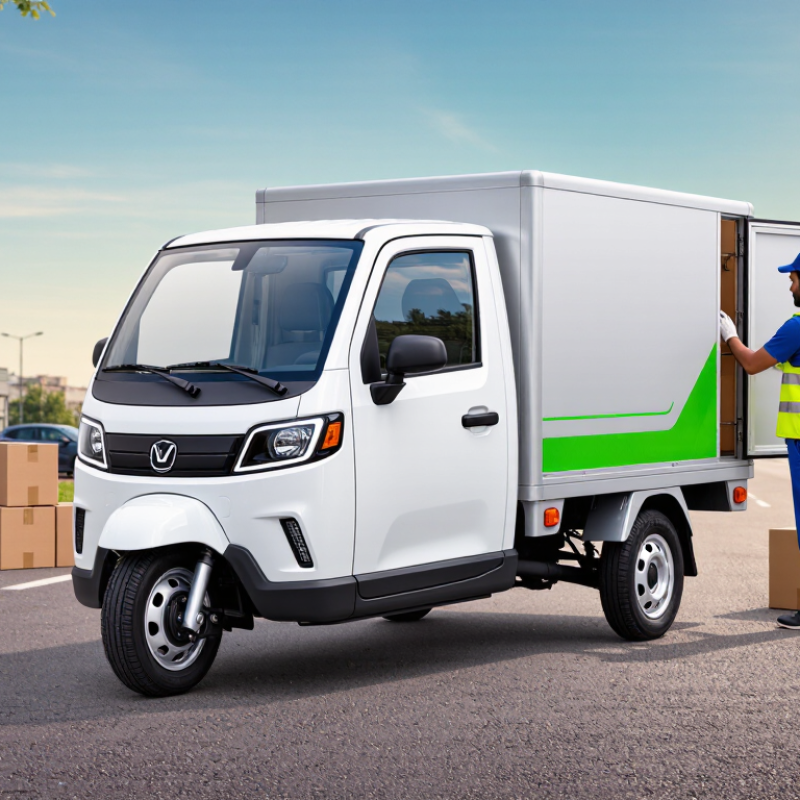
Define the Cargo Transport Requirements
Choosing an electric three wheeler cargo vehicle starts with a clear transport definition. Measure the usual load, not the maximum load on an unusually busy day. Record weight, length, width, height, and how often goods arrive. A 400-kilogram payload needs different equipment from small parcel work. So does a fragile load.
Map the daily route carefully. Note road surfaces, slopes, turning spaces, traffic speed, and delivery distance. A vehicle carrying 300 kilograms uphill will use energy faster than one on flat roads. Include return trips, waiting time, and winter temperatures. These details affect battery capacity and working range. Range claims may use ideal conditions. Real work is less tidy.
Examine the cargo area before choosing a model. Check floor strength, side access, weather protection, tie-down points, and loading height. A low platform can save repeated lifting. A covered compartment can protect cartons during sudden rain. Measure your narrowest gate. It is easy to forget. Also define the work schedule: daily mileage, charging location, charging hours, and driver changes. If charging is available only overnight, battery recovery time matters. Keep a small margin for extra cargo and route changes, but avoid buying excessive capacity. It raises cost and may reduce efficiency. A spreadsheet helps, although it can still miss muddy yards, crowded alleys, or uneven loading. Test the vehicle on a representative route before making the final decision.
How to Choose an Electric Three Wheeler Cargo Vehicle? - Define the Cargo Transport Requirements
| Requirement Dimension | Questions to Define | Data to Record | Illustrative Requirement Example | Vehicle Selection Implication |
|---|---|---|---|---|
| Cargo Type | What materials will be transported, and are they fragile, liquid, temperature-sensitive, or hazardous? | Cargo category, packaging, handling method, spill or weather exposure risk. | Sealed cartons, grocery bags, parcels, tools, and dry goods. | Select a flatbed, box body, or enclosed cargo compartment according to protection and loading needs. |
| Payload Weight | What is the normal load, and what is the maximum load on the busiest route? | Average payload, peak payload, number of loads per day, and weight distribution. | Typical load: 250 kg; peak load: 400 kg. | Choose a rated payload above the maximum planned load and maintain compliance with the vehicle's gross vehicle weight rating. |
| Cargo Volume | Does the cargo reach the weight limit before the cargo compartment is full? | Cargo length, width, height, cubic volume, pallet or container dimensions. | Required usable space: approximately 2.5 m³; longest item: 1.8 m. | Compare internal body dimensions, door opening size, floor area, and payload capacity rather than relying only on external dimensions. |
| Loading and Unloading | Where and how will cargo be loaded and delivered? | Loading height, dock height, door arrangement, lifting equipment, loading frequency. | Manual loading from ground level at 20 delivery points per day. | Prioritize a low floor, wide rear or side access, secure tie-down points, and easy-to-clean surfaces. |
| Daily Distance | How far does the vehicle travel in one operating day? | Daily route distance, number of trips, detours, and return-to-base distance. | Approximately 70 km per day with a return to the depot. | Use route data from actual operations and include a practical energy reserve instead of selecting a battery solely from the advertised maximum range. |
| Range and Energy Reserve | How much range is required under real load, traffic, slopes, and weather conditions? | Required range, minimum state of charge at return, terrain, temperature, and payload. | Required route range: 70 km; planning reserve: 15–20%. | A vehicle tested for the route should generally provide at least 82–88 km of usable planning range for this example. |
| Road and Terrain | Will the vehicle operate on flat roads, steep grades, rough surfaces, or mixed roads? | Maximum gradient, road surface, potholes, ground clearance, and seasonal conditions. | Urban roads with short grades up to 8% and occasional uneven surfaces. | Verify gradeability at maximum payload, traction, suspension capacity, braking performance, and clearance. |
| Operating Speed | What speed is appropriate and legally permitted on the routes? | Urban speed limits, average route speed, traffic conditions, and delivery time targets. | Average travel speed: 25–35 km/h in a dense urban area. | Match the vehicle's permitted maximum speed and braking system to local regulations and route conditions. |
| Route Access | Can the vehicle enter alleys, markets, pedestrian zones, or restricted streets? | Road width, turning space, height restrictions, parking restrictions, and access permits. | Minimum access width: 2.5 m; frequent stops on narrow streets. | Check overall width, turning radius, vehicle height, mirror clearance, and maneuverability at full load. |
| Charging Schedule | When and where can the vehicle be charged? | Available charging hours, electrical supply, charger location, and daily operating shifts. | Charging available for 10 hours overnight at the depot. | Select a battery and charger that can restore the required energy within the available parking window. |
| Battery and Weather | Will heat, cold, rain, dust, or flooding affect daily operation? | Temperature range, rainfall, dust exposure, water crossings, battery protection, and storage conditions. | Outdoor operation in temperatures from 5°C to 35°C with seasonal rain. | Confirm battery operating limits, water and dust protection, charging precautions, and sheltered parking requirements. |
| Duty Cycle | How many hours, trips, and stops are completed each day? | Operating hours, stop frequency, idle time, shift pattern, and annual working days. | 8-hour shift, 20 stops, and 300 operating days per year. | Evaluate battery durability, brake and tire wear, service intervals, and total cost over the planned service life. |
| Safety Requirements | What safety risks exist for the driver, pedestrians, and cargo? | Seat belts, mirrors, lights, reversing visibility, load restraint, braking, and stability requirements. | Frequent pedestrian interaction and mixed traffic during daytime deliveries. | Require effective brakes, lighting, reflectors, warning systems, secure cargo restraints, and compliance with applicable regulations. |
| Legal and Registration | What vehicle classification and operating permissions apply? | Local registration category, driving licence, insurance, inspection, and payload restrictions. | Commercial operation on public roads within one municipality. | Confirm local requirements before purchase because permitted speed, dimensions, equipment, and driver qualifications vary by jurisdiction. |
| Total Cost of Ownership | What operating cost target must the vehicle meet? | Purchase price, electricity use, maintenance, insurance, financing, battery replacement, and residual value. | Cost comparison over 5 years and 90,000 km of planned operation. | Compare cost per kilometre and cost per delivered order, not only the initial purchase price. |