
How to Choose the Right Flexible Wire?

Choosing the right Flexible Wire starts with its real job, not its label. Will it sit inside a control cabinet, flex beside a moving machine, or run through a warm, oily workshop? Each setting changes the demands on the conductor, insulation, and jacket. A cable that bends easily in your hand may still fatigue under repeated motion. Small details matter.

The International Energy Agency’s Electricity 2024 report projects global electricity demand growth averaging 3.4% annually through 2026. IEA Executive Director Fatih Birol captured the wider shift in a public statement: “The Age of Electricity is here.” That growth makes dependable wiring choices more consequential, though it does not tell you which cable fits a particular machine. For conductor flexibility, IEC 60228 distinguishes stranded conductor classes, including Classes 5 and 6. Check the product documentation for its stated class, conductor size, voltage rating, temperature range, and intended use.

Then inspect the installation itself. Measure the bend radius. Note whether the wire moves continuously or only during servicing. Check exposure to heat, abrasion, chemicals, and vibration. Match those conditions to the manufacturer’s specifications, and confirm compatibility with terminals and connectors. A lower purchase price can look attractive. Replacing a wire that cracked near a moving joint is not.

There is no universal best choice. Even experienced buyers can overlook motion frequency or ambient heat. A careful selection starts with measurable conditions, verified product data, and a little humility about what the datasheet cannot predict.
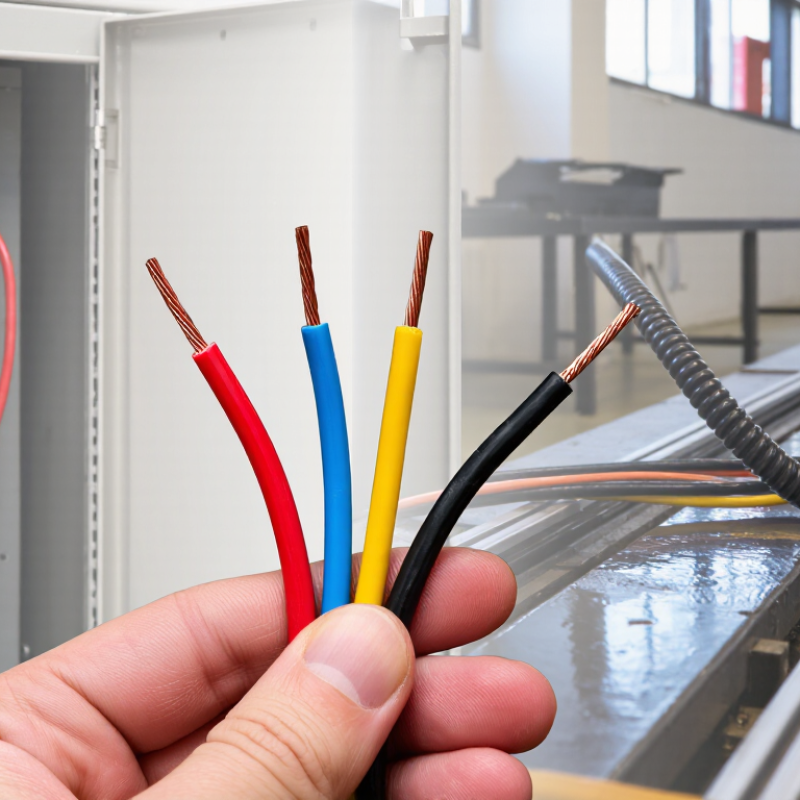
How to Choose the Right Flexible Wire?

Define the Application and Required Wire Movement

Define the job before comparing wire constructions. Is the wire fixed after installation, flexing in a machine, or traveling repeatedly through a cable carrier? Note the route, travel distance, speed, bend radius, and any twisting. Add operating temperature, oil or coolant exposure, and expected daily cycles. Small details matter: a cable bending around a 50-millimeter pulley faces a different duty than one moving straight across a machine bed.

Estimate the movement honestly. Record cycles per shift and likely service life, then ask the cable supplier for a flex-life rating under comparable conditions. The International Federation of Robotics’ World Robotics 2023 report counted 553,052 industrial robots installed worldwide in 2022, illustrating how common moving connections are in automation. That figure does not predict a cable’s life; the motion profile does. I would treat early cycle estimates as provisional, not as test results.

Conductor construction is another screening point. IEC 60228 classifies flexible stranded conductors as Class 5 or Class 6, with Class 6 using finer strands. Finer strands can suit repeated movement, but strand class alone does not guarantee a long service life. Check the finished cable’s stated bend radius and flex-test conditions. Then compare those values with the actual path, including tight entry points and occasional torsion. A little uncertainty is normal. Test the assembly if failure would stop production.

Compare Conductor Materials and Stranding Options

Conductor material affects resistance, weight, and the space a cable needs. Copper Development Association conductivity tables use annealed copper as the 100% IACS reference; common electrical-grade aluminum is roughly 61% IACS. At equal cross-section, aluminum therefore has higher resistance. It is lighter, but may need a larger conductor for the same electrical performance. That can complicate a compact terminal or a crowded control cabinet. Check the cable’s rated resistance and confirm that its terminals accept the selected conductor material.

Stranding matters when a wire bends repeatedly or must pass through a narrow cable track. IEC 60228:2023 defines conductor classes, including Class 5 and Class 6 flexible constructions, using strand dimensions and resistance limits. More, finer strands generally make a conductor easier to bend, but “more flexible” does not automatically mean longer service life. Match the class to the actual motion, bend radius, and installation conditions. A stationary lead may need less flexibility than a cable on a moving machine. The trade-off is rarely tidy. I would also check whether the connection method suits fine-stranded wire; a screw terminal can damage strands if used without the specified termination.

Select Wire Gauge for Current and Voltage Needs

Flexible wire sizing starts with the load’s maximum current, not the appliance’s usual draw. Check the equipment specifications, then choose a conductor gauge rated for that current under the actual installation conditions. Thicker conductors have lower resistance and usually run cooler, but the required size also depends on wire length, insulation temperature rating, and whether cables are bundled. A gauge that works in open air may not suit a warm, crowded enclosure.

Voltage needs matter in two ways. The insulation must be rated for the system voltage, while conductor size affects voltage drop along the wire. Long runs and low-voltage systems can be especially sensitive: even modest resistance may reduce the voltage reaching a motor or light. Use an appropriate voltage-drop calculation, and compare the result with the equipment’s allowable range. It is easy to focus on amperage and overlook the return path; include both conductors when calculating a circuit’s total length.

Tips: Check the wire’s datasheet and installation rating, not just a generic gauge chart. Leave room for startup surges when the load requires it. Keep connections secure, and inspect for warmth during a controlled test. If the result seems borderline, verify the assumptions before installation; real layouts rarely match a neat chart perfectly.

Match Insulation to Temperature and Environmental Conditions

Flexible wire selection starts with the insulation, not the color or feel of the jacket. Check the cable’s rated temperature against both the surrounding air and the heat generated by its load. A wire near a warm motor may run hotter than one in an open room. Heat changes everything. The conductor’s temperature limit and the insulation’s rating both matter; the lower limit governs safe operation. Confirm ratings in the cable’s technical documentation rather than relying on appearance.

Then consider what the jacket will meet. Damp areas call for insulation rated for moisture exposure, while sunlight can degrade some materials over time. Oil, cleaning fluids, sharp edges, and repeated bending each create different demands. PVC may suit many indoor uses, while silicone often handles higher temperatures and polyurethane can resist abrasion well. These are tendencies, not guarantees. Check the specific product data for the exact exposure and temperature range.

Think about the real installation, including brief temperature peaks and how often the wire flexes. A cable that bends easily on a bench may stiffen in cold conditions. Not always. A tidy checklist can still miss a detail, such as a nearby heater or a jacket rubbing against metal. Revisit the choice after installation, and replace wire if its insulation cracks, softens, or becomes damaged.

How to Choose the Right Flexible Wire? — Match Insulation to Temperature and Environmental Conditions

Compare common insulation materials by their typical temperature capability, flexibility, and resistance to environmental exposure. Choose based on the complete operating conditions—not temperature alone.

Insulation Material Typical Continuous Temperature Range Flexibility Characteristics Environmental Resistance Common Applications Key Considerations
PVC (Polyvinyl Chloride) Common grades are rated around 70°C or 90°C. Generally flexible; low-temperature flexibility depends on the formulation. Often provides good resistance to moisture, abrasion, and many everyday chemicals. UV and oil resistance vary by grade. Appliance leads, control wiring, and general-purpose flexible cables in moderate environments. Check the grade’s temperature and cold-flex ratings. PVC may become stiff in cold conditions and is not suitable for every chemical or outdoor exposure.
XLPE (Cross-Linked Polyethylene) Common cable ratings are around 90°C continuous operation. Usually less supple than silicone or some elastomeric materials; stranded conductors improve cable flexibility. Typically offers good moisture, heat, and abrasion resistance. Performance against oils, solvents, and UV depends on the cable construction. Power and control cables where higher heat capability and durable insulation are needed. XLPE is an insulation material, not a guarantee of flexibility. Confirm the cable’s bend radius and whether its jacket is suitable for the environment.
Silicone Rubber Many wire constructions are rated for approximately 150°C to 200°C continuous use. Highly flexible over a broad temperature range, including many low-temperature applications. Good heat and moisture performance; generally resistant to ozone and weathering. It can have lower cut and abrasion resistance than tougher compounds. Heated equipment, appliances, lighting, and wiring that must remain flexible near heat sources. Check mechanical protection and chemical compatibility. Temperature ratings vary, and some silicone constructions require an outer protective jacket.
PTFE (Polytetrafluoroethylene) Common wire constructions may be rated up to approximately 260°C continuous use. Can be made into small, flexible wires, but the finished cable’s flexibility depends on conductor stranding and construction. Excellent resistance to many chemicals and high temperatures; low friction and good electrical properties. High-temperature equipment, demanding chemical environments, and compact electrical assemblies. Usually more costly than general-purpose insulation. Verify mechanical requirements, installation bend radius, and the rating of the complete wire assembly.
TPE (Thermoplastic Elastomer) Common grades are often rated around 90°C to 105°C, with grade-specific variation. Often offers a supple feel and good flex life; cold performance depends on the compound. Can provide good resistance to abrasion, moisture, and oils, depending on formulation. UV and chemical resistance should be verified for the specific grade. Flexible equipment leads, portable tools, and applications involving repeated movement. TPE is a broad material family. Request the manufacturer’s specific temperature, oil, UV, and cold-flex data before selection.

Selection note: Temperature ranges are typical examples, not universal limits. The applicable rating depends on the material grade, wire construction, governing standard, and installation conditions. Check the cable datasheet for ambient temperature, conductor temperature, voltage rating, bend radius, chemical exposure, UV exposure, and any required approvals.

Check Bend Radius, Safety Ratings, and Installation Requirements

How to Choose the Right Flexible Wire?

Check Bend Radius, Safety Ratings, and Installation Requirements

A flexible wire must bend without stressing its conductors or damaging its insulation. Check the cable’s specified minimum bend radius; it varies with construction and whether the cable moves repeatedly or stays fixed. A tight turn behind a machine may look harmless, yet cause early wear.

NFPA’s 2012–2016 analysis estimated 45,210 U.S. home structure fires per year involved electrical failure or malfunction. That figure is not specific to flexible wire, but it underscores why correct selection and installation matter.

Match the wire’s voltage and temperature ratings to the actual operating conditions. Also check whether its jacket is rated for moisture, oil, abrasion, or outdoor exposure. Then review installation requirements, including permitted pulling tension, support spacing, conduit capacity, and terminal compatibility. A wire can have suitable ratings and still fail if it is pinched, sharply bent, or poorly terminated. Details are easy to miss.

Tips

Measure the available route before ordering. Keep bends broad, especially near connectors, and follow the cable’s documentation rather than relying on a universal radius. If the route changes during installation, pause and reassess; a neat-looking fit is not always a safe one.

NFPA, Electrical Fires in U.S. Home Structures, 2012–2016.

Scroll to Top