
How to Inspect Food Packaging for Quality and Safety?
Food Packaging Inspection begins with a simple question: does the package still protect the food inside? A careful check looks beyond a neat label or attractive print. Inspectors examine seals, seams, closures, and surfaces for leaks, tears, dents, swelling, or signs of contamination. They also check whether printed information is readable and whether the packaging matches the product and its intended storage conditions. Small clues matter. A pouch with a lifted corner or a jar lid that no longer sits flat deserves attention.
Packaging scholar Gordon L. Robertson’s work on food packaging emphasizes its role in protecting food and preserving quality. In practical terms, that means a package must do more than look intact. It should provide an appropriate barrier and remain sound through handling and storage. This introduction outlines how to inspect packaging systematically, document visible defects, and decide when a package needs further evaluation. Clear records help teams spot recurring problems, such as weak seals in one production batch. Not every mark signals a safety issue, though. That distinction takes judgment, and visual checks alone cannot confirm every hazard. A useful inspection combines careful observation with relevant product specifications and established quality procedures. Start with the details you can verify.
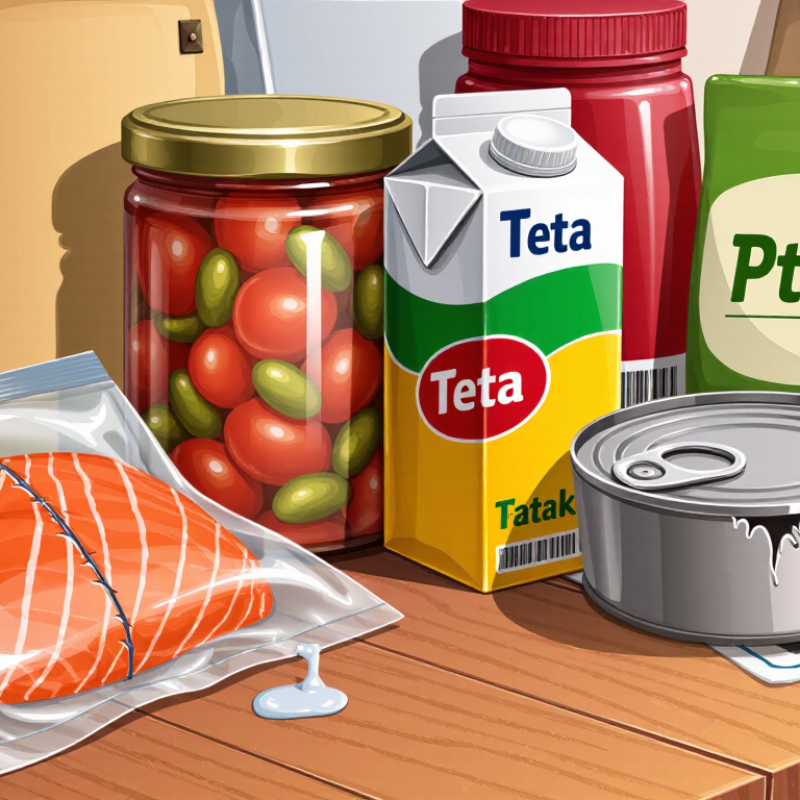
Understanding the Role of Food Packaging in Quality and Safety
Food packaging is more than a container. It helps limit exposure to moisture, oxygen, light, and microbes, while keeping handling and storage conditions visible. A sound seal matters: a tiny gap along a pouch seam can let air or liquid enter, even when the outside looks clean. Check for punctures, swelling, leaks, damaged closures, and unreadable date or batch information. Also confirm that the packaging is intended for the food and storage conditions involved. Appearance alone is not proof of safety.
The scale of food loss makes these checks practical, not cosmetic. The FAO’s 2019 State of Food and Agriculture report estimated that 14% of food is lost between harvest and retail. Suitable packaging can help protect food during storage and transport, though it cannot prevent every cause of loss. The WHO’s 2015 estimates attributed about 600 million illnesses and 420,000 deaths each year to contaminated food. Packaging is only one safeguard, but a damaged barrier can weaken others. I still catch myself trusting a neat-looking pack too quickly. That is a poor shortcut. Inspect the seal and product together, and treat unusual odor, residue, or moisture as a reason to pause rather than guess.
| Inspection Dimension | What to Check | Practical Inspection Method | Quality or Safety Significance | Action if a Problem Is Found |
|---|---|---|---|---|
| Packaging condition | Look for tears, punctures, cracks, crushed areas, swollen packs, or damaged closures. | Visually inspect packages under good lighting; examine corners, seams, and closures. | Damage can compromise the barrier and allow contamination, leakage, or product deterioration. | Segregate affected units and assess whether the package barrier or product may have been compromised. |
| Seal integrity | Check that heat seals, lids, caps, and other closures are continuous and securely attached. | Inspect the full seal area for gaps, wrinkles, product trapped in the seal, or signs of lifting; use an appropriate validated leak test when required. | A defective seal can permit leaks or entry of contaminants and may shorten shelf life. | Hold the affected lot and investigate sealing conditions and the extent of the defect. |
| Leaks and contamination | Check for wetness, residue, unusual odors, visible foreign material, or evidence of tampering. | Examine the exterior and closure area without opening the package; follow hygiene procedures during sampling. | These signs may indicate a damaged package, product leakage, or loss of hygienic protection. | Do not use packages with suspected contamination or tampering; follow site procedures for isolation and assessment. |
| Material suitability | Confirm that the packaging material is intended for the food and conditions of use, such as food type, contact time, and temperature. | Review supplier specifications and applicable food-contact compliance documentation for the intended use. | Food-contact materials must be suitable for their intended conditions; suitability cannot be confirmed by appearance alone. | Place material on hold if required documentation or intended-use information is missing or unclear. |
| Label and product identification | Check that the product name, required ingredient and allergen information, net quantity, and storage instructions are legible and consistent with the product. | Compare the printed label with the approved product specification and applicable local requirements. | Incorrect or unreadable information can mislead consumers and may create allergen or handling risks. | Hold incorrectly labeled product for review and correction under applicable procedures. |
| Date and traceability codes | Verify that required date marks and lot or batch codes are present, readable, and correctly applied. | Check code placement and legibility; compare codes with production and traceability records. | Clear coding supports stock rotation, product tracking, and effective withdrawal or recall actions. | Hold packages with missing, unreadable, or mismatched codes until traceability is confirmed. |
| Tamper evidence | Where the packaging design includes tamper-evident features, confirm that seals, bands, or indicators are intact. | Check that the feature is present and has not been broken, removed, or altered. | Intact features help reveal certain forms of package interference; they do not replace safe handling or other controls. | Reject or isolate units with broken or suspicious tamper-evident features and follow site procedures. |
| Packaging cleanliness | Look for dust, grease, moisture, pests, or other visible contamination on packages and in the packaging area. | Visually inspect incoming packaging and finished units; check storage conditions and handling practices. | Clean packaging and hygienic handling help reduce the risk of transferring contamination to food or contact surfaces. | Isolate affected packaging, assess possible exposure, and address the source before use continues. |
| Modified-atmosphere or vacuum packs | Check for loss of vacuum, unexpected swelling, loose film, or leakage when the package design is intended to maintain a controlled atmosphere. | Compare the package with the specified appearance and, where required, use validated gas or leak testing. | Package condition can affect the intended atmosphere and product quality; appearance alone does not establish food safety. | Hold abnormal packs for assessment against product-specific specifications and food-safety procedures. |
| Storage and handling conditions | Confirm that packaged food has been stored and transported under the conditions specified for that product. | Review temperature or other monitoring records where applicable; inspect for condensation, heat damage, or freezing damage. | Packaging does not replace required temperature control or other product-specific storage measures. | Assess any excursion using the product’s validated limits and established food-safety procedures. |
Note: Inspection limits and test methods should be based on the product specification, packaging design, applicable regulations, and validated site procedures. Visual inspection alone cannot verify material migration safety, microbial safety, or every type of seal defect.