What is a permanent magnet stepper motor and how does it work?

The permanent magnet stepper motor stands as a significant advancement in the realm of motion control technology. With the global stepper motor market projected to reach $5.29 billion by 2026, according to a recent research report, the role of permanent magnet stepper motors is increasingly critical. These motors utilize magnetic fields from permanent magnets to achieve precise control of rotational positioning, making them vital in industries like robotics, automation, and CNC machinery.

By incorporating advanced design features, permanent magnet stepper motors enhance efficiency and reliability. They offer high torque at low speeds and maintain excellent accuracy. However, their performance can be affected by factors such as temperature and load variations. Understanding these nuances is essential for optimizing their application in real-world scenarios. As the demand for precise motion control rises, engineers and designers must continually evaluate the capabilities and limitations of permanent magnet stepper motors. This ongoing assessment is crucial for pushing the boundaries of technology and achieving superior performance in various applications.
What is a permanent magnet stepper motor and how does it work?

Definition and Characteristics of Permanent Magnet Stepper Motors

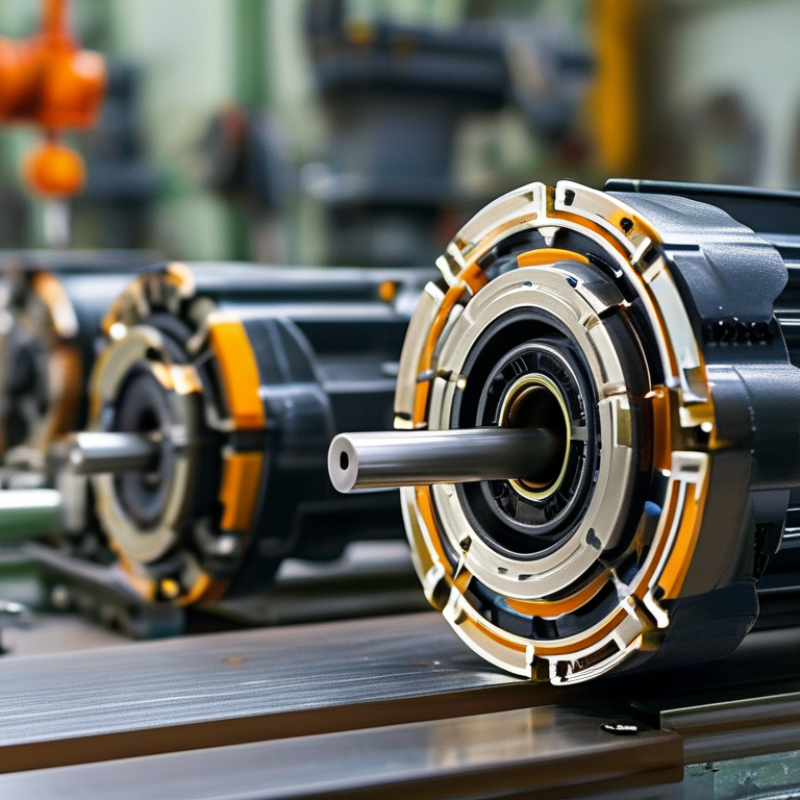
Permanent magnet stepper motors are widely used in various applications due to their unique characteristics. They contain permanent magnets in the rotor, which creates a strong magnetic field. This design enhances the motor's efficiency, allowing silent and precise operation. The stator consists of windings that are energized in a specific sequence, making the rotor move step by step.

One notable feature is their ability to hold position without power. When power is cut, the rotor retains its last position, making these motors reliable for applications requiring stability. However, their performance might be influenced by temperature and magnetic interference. It's essential to consider the operating environment when choosing a motor.

These motors are prevalent in printers, robotics, and CNC machines for precise movements. Despite their advantages, they can exhibit resonance at certain speeds, causing vibrations. This can lead to inefficiencies and noise. Users must calibrate systems carefully to mitigate these issues. A good understanding of their characteristics and potential challenges is vital for optimal performance.

What is a permanent magnet stepper motor and how does it work? - Definition and Characteristics of Permanent Magnet Stepper Motors

Characteristic Description
Type Permanent Magnet Stepper Motor
Operating Principle Utilizes magnetic fields created by permanent magnets to produce rotational movement
Step Angle Commonly ranges from 0.9° to 7.5°
Torque High holding torque, suitable for applications requiring precise positioning
Control Method Controlled by electrical pulses to the motor coils
Applications Robotics, CNC machines, 3D printers, and camera platforms
Advantages Simple control, reliable performance, and lesser mechanical wear
Disadvantages Limited speed range and potential resonance issues

Basic Components and Their Functions in Stepper Motors

Stepper motors are popular in various applications due to their precise control and reliability. Understanding their basic components can demystify their operation. At the heart of a permanent magnet stepper motor, you’ll find the rotor. This component consists of permanent magnets. They create a magnetic field that interacts with the stator. The stator, fitted with coils, generates magnetic forces that attract or repel the rotor.

When electricity flows through the coils, the stator creates changing magnetic fields. This interaction makes the rotor turn in fixed increments. Each pulse of electricity represents a step. The control system sends these pulses, allowing for precise movement. This capability is essential in robotics, CNC machinery, and 3D printers.

Tips: Regular maintenance can enhance motor performance. Check for dust or debris in the components. Even minor obstructions can affect overall efficiency. Additionally, understanding the load conditions can guide you in selecting the right motor. Misjudging load requirements might lead to performance issues.

Operating Principles of Permanent Magnet Stepper Motors

Permanent magnet stepper motors (PMSMs) have gained popularity due to their precise control and reliability. The operating principle centers on the interaction between a stator with multiple windings and a rotor made from permanent magnets. As the stator coils are energized in sequence, the magnetic fields created cause the rotor to move in fixed steps. This design allows for accurate positioning without needing feedback systems.

In a PMSM, the step angle is determined by the number of stator poles and rotor teeth. Typical step angles range from 1.8 degrees to 5 degrees, enabling very fine control over positioning. According to industry reports, PMSMs are utilized in applications where precision matters, such as CNC machines and robotics. The global market for these motors is expected to reach approximately $6.2 billion by 2027, highlighting their growing significance in automation.

However, PMSMs are not without limitations. Factors such as resonance issues can impact performance, especially at higher speeds. Moreover, the torque generated can decrease significantly at higher RPMs. Addressing these challenges requires careful design considerations. Understanding these nuances is vital for engineers and designers in the field, ensuring optimized performance for specific applications.

control Methods for Precision Movement in Stepper Motors

Stepper motors, particularly permanent magnet stepper motors, rely on precise control for effective operation. These motors utilize magnetic fields generated by permanent magnets, allowing for accurate positioning in mechanical systems. Each step or increment in rotation is carefully controlled, facilitating smooth motion. To achieve this precision, various control methods are employed.

Control methods include open-loop and closed-loop systems. Open-loop control provides simple operation without feedback, making it easy to implement. However, this method can fall short in applications requiring high accuracy. Closed-loop systems, on the other hand, utilize sensors to provide real-time feedback. This enhances reliability, as systems can adjust to any discrepancies. While more complex, these systems are often more effective in ensuring precision.

There’s a delicate balance between simplicity and complexity in control methods. Some users may overlook the need for feedback in less demanding applications. This can lead to errors and unexpected movement. Reflecting on the choice of control method is crucial. The right approach depends on the specific requirements of the task at hand, and an overreliance on one method can limit performance.

Applications and Advantages of Permanent Magnet Stepper Motors

Permanent magnet stepper motors are widely used in various applications. Their design allows for precise control of movement, making them ideal for robotics, CNC machines, and automated systems. These motors operate by dividing a full rotation into multiple steps, enabling accurate positioning without the need for feedback mechanisms.

In industrial settings, permanent magnet stepper motors are valued for their reliability. They maintain their position without continuous power, which saves energy. Their robust construction is suited for harsh environments. Applications include 3D printers, medical devices, and packaging machines where precision and efficiency are crucial.

When selecting a permanent magnet stepper motor, consider the load requirements and the desired speed. Ensure the motor's specifications align with your project's needs. Testing can uncover potential issues. Monitoring temperatures and vibrations during operation can help maintain optimal performance. This proactive approach can save costs in the long run.

Scroll to Top