What is a PM Motor and How Does it Work?
In recent years, the demand for PM motors has surged significantly. These motors, known for their efficiency and compact design, are dominating various industries. A report from the International Electromechanical Society estimates that the market for PM motors is expected to grow by 10% annually over the next five years. This growth highlights their essential role in energy-saving applications.
Dr. Emily Tran, a leading expert in electric motor technologies, emphasizes, “PM motors are revolutionizing energy efficiency standards globally.” This transformation comes as industries strive to reduce their carbon footprint. However, while PM motors present many advantages, there are challenges involved. High production costs and limited electrical supply options can hinder widespread adoption. These factors raise questions about the scalability of PM motors in diverse applications.
Understanding how a PM motor operates is crucial for leveraging its benefits fully. As we delve deeper into the technology behind PM motors, we must also acknowledge the ongoing research needed to address their limitations. The journey toward innovation in this field is ongoing, and it requires us to balance efficiency with practicality.
Definition and Overview of PM Motors
Permanent Magnet (PM) motors are essential components in many modern machines. They utilize permanent magnets to generate magnetic fields. This technology differs markedly from traditional motors, which typically rely on windings. PM motors are efficient and compact, often found in electric vehicles and industrial applications.
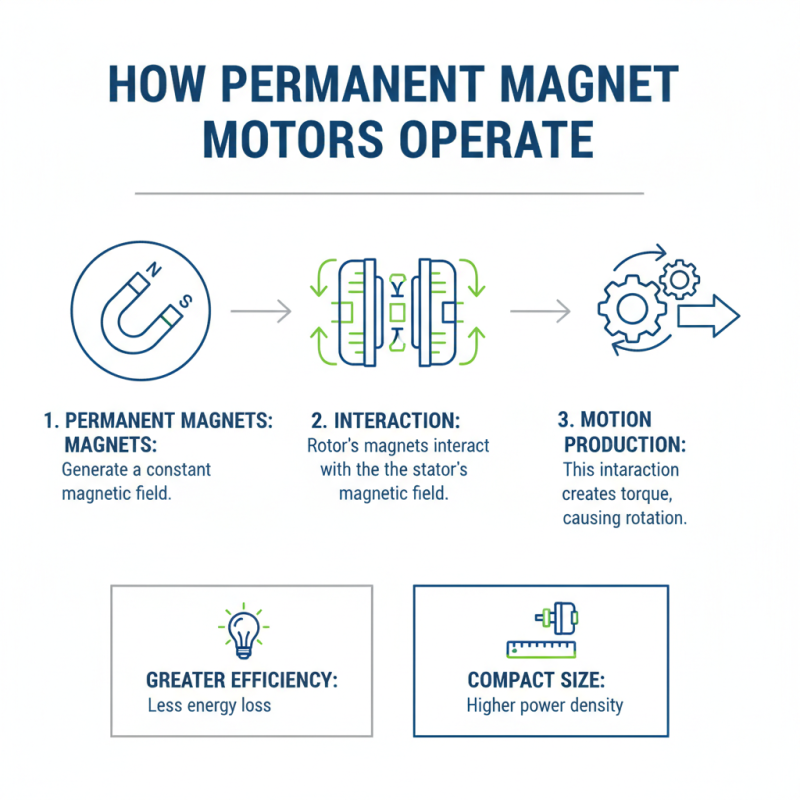
The operation of a PM motor is simple yet effective. When electrical current flows through the windings, it interacts with the magnetic field of the permanent magnets. This interaction creates torque, allowing the motor to rotate. PM motors tend to have high power density, meaning they can produce significant output in a smaller form factor. They also offer high efficiency and reliability, making them a preferred choice in various applications.
Although PM motors have numerous advantages, they aren't without challenges. The use of permanent magnets can increase costs, particularly with rare-earth materials. Additionally, these motors can overheat under heavy loads, impacting performance. Designers must account for these factors when integrating PM motors into their systems. Balancing cost, efficiency, and performance requires careful planning and sometimes, trial and error.
What is a PM Motor and How Does it Work? - Definition and Overview of PM Motors
| Parameter |
Description |
| Motor Type |
Permanent Magnet (PM) Motor |
| Operation Principle |
Uses permanent magnets to create a magnetic field |
| Efficiency |
Typically more efficient than induction motors |
| Applications |
Used in electric vehicles, robotics, and HVAC systems |
| Advantages |
High torque density, compact size, and low maintenance |
| Disadvantages |
Higher initial cost and sensitivity to temperature |
| Control Methods |
Uses PWM and vector control techniques |
| Maintenance Requirements |
Minimal upkeep due to fewer moving parts |
Components of Permanent Magnet Motors
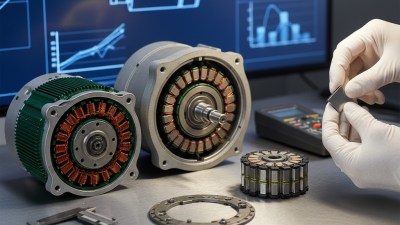
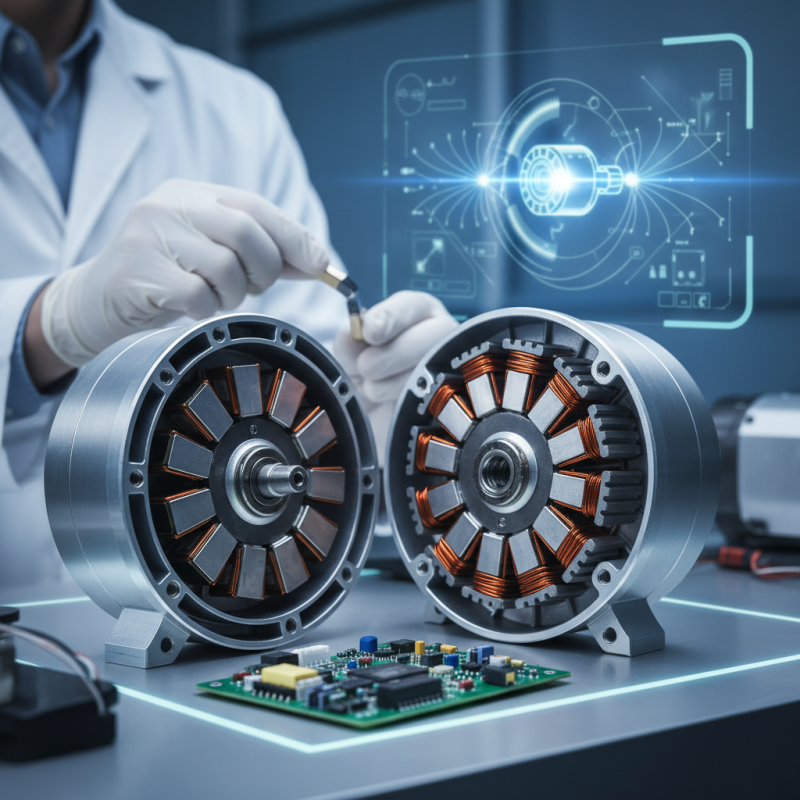
Permanent magnet motors (PM motors) are gaining popularity in various applications, thanks to their efficiency and reliability. To understand how these motors function, it is essential to look at their key components. The core parts include the stator, rotor, and permanent magnets, each playing a crucial role in the motor's operation.
The stator is the stationary part of the motor, housing the windings that create a rotating magnetic field when energized. This magnetic field interacts with the rotor, which is placed within the stator. The rotor typically has permanent magnets attached to it, producing a magnetic field of its own. This interplay between the stator's magnetic field and the rotor's magnets induces rotation. Understanding this interaction can help engineers optimize motor design.
Another vital part is the control system, which regulates the power supply to the windings. This system determines the motor's speed and torque, influencing how effectively it performs tasks. However, the complexity of such systems can lead to potential challenges. For instance, misconfigurations can cause inefficiencies or even motor failure. Considering the importance of each component can enhance the design and application of PM motors, ensuring better performance and reliability in real-world scenarios.
Performance Characteristics of Permanent Magnet Motors
This chart illustrates the performance characteristics of permanent magnet motors, showcasing their efficiency, torque, speed, and power ratings. Such metrics are critical for understanding the performance and applicability of PM motors in various applications.
How Permanent Magnet Motors Operate
Permanent magnet motors (PM motors) are an integral part of modern engineering. They utilize magnetic fields generated by permanent magnets to produce motion. This design differs from traditional electric motors, which rely on electromagnetic coils. Understanding how PM motors operate can reveal their advantages in efficiency and size.
In a PM motor, magnets are fixed to the rotor, creating a stable magnetic field. When an alternating current flows through the stator coils, it generates a rotating magnetic field. This magnetic field interacts with the rotor's permanent magnets, causing the rotor to turn. The result is smooth operation with minimal energy loss. The simplicity of this design eliminates the need for complex windings in the rotor, which can simplify construction and reduce weight.
Yet, there are challenges. For example, temperature fluctuations can affect the magnets' performance. Engineers must balance the magnetic strength with operational conditions. Additionally, PM motors can be sensitive to demagnetization, which is a critical factor in design. These aspects require careful consideration to optimize performance. Overall, understanding these intricacies allows for better implementation of PM motors in various applications.
Advantages of Using PM Motors
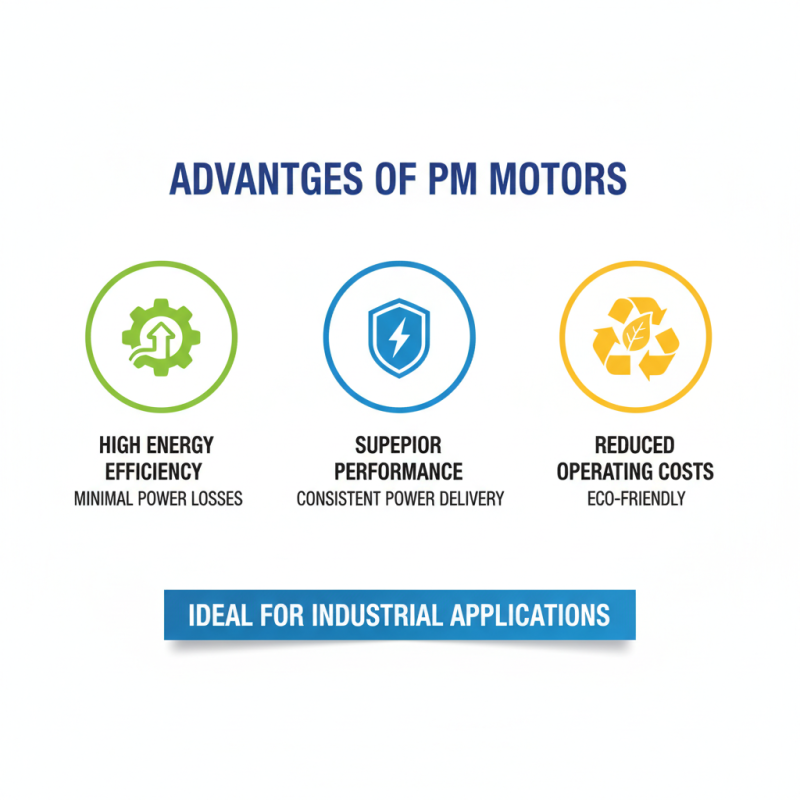
Permanent Magnet (PM) motors are gaining attention in various industries. They are known for their efficiency and performance. One significant advantage of PM motors is their energy efficiency. These motors convert electrical energy into mechanical energy with minimal losses. This is especially useful in applications where power consumption is a major concern.
Another advantage is their compact size and weight. PM motors are typically lighter than their counterparts. This makes them ideal for applications in small spaces, such as in electric vehicles and robotics. A lighter motor contributes to better overall performance. Tiny details like these can make a difference, particularly in competitive environments.
Tips: When considering PM motors, assess your application carefully. Not every job needs a PM motor. Sometimes, traditional motors may fulfill your requirements without added costs. Additionally, while maintenance is generally lower for PM motors, understanding their unique setups is crucial. Ensure that staff is properly trained to avoid issues later. Also, keep in mind that while PM motors are efficient, they can be sensitive to external magnetic fields.
Applications of PM Motors in Modern Technology
Permanent Magnet (PM) motors have gained traction in various modern applications due to their efficiency and compact design. In electric vehicles, PM motors are crucial. They convert electrical energy into mechanical energy with minimal loss. This efficiency translates to longer battery life and greater range. Their lightweight nature allows manufacturers to create more streamlined vehicle designs. Industrial automation also relies on PM motors. They often drive conveyor belts and robotic arms, enhancing precision and reducing energy costs.
Consumer electronics are another area where PM motors excel. These motors power everything from washing machines to drones. They offer compact solutions that do not compromise performance. However, the reliance on rare earth materials for magnets raises sustainability concerns. The environmental impact of sourcing these materials is significant. Engineers must seek alternatives that balance efficiency and eco-friendliness. As technology evolves, PM motors will likely continue to play a pivotal role, prompting further exploration into sustainable practices.