Essential Tips for Choosing the Right PMDC Motor?

Choosing the right PMDC motor can be a daunting task. These motors are crucial in various applications, from robotics to automotive. As industry expert Dr. James H. Collins once said, "Selecting the right PMDC motor can make or break your project's success." His insight emphasizes the need for careful consideration.

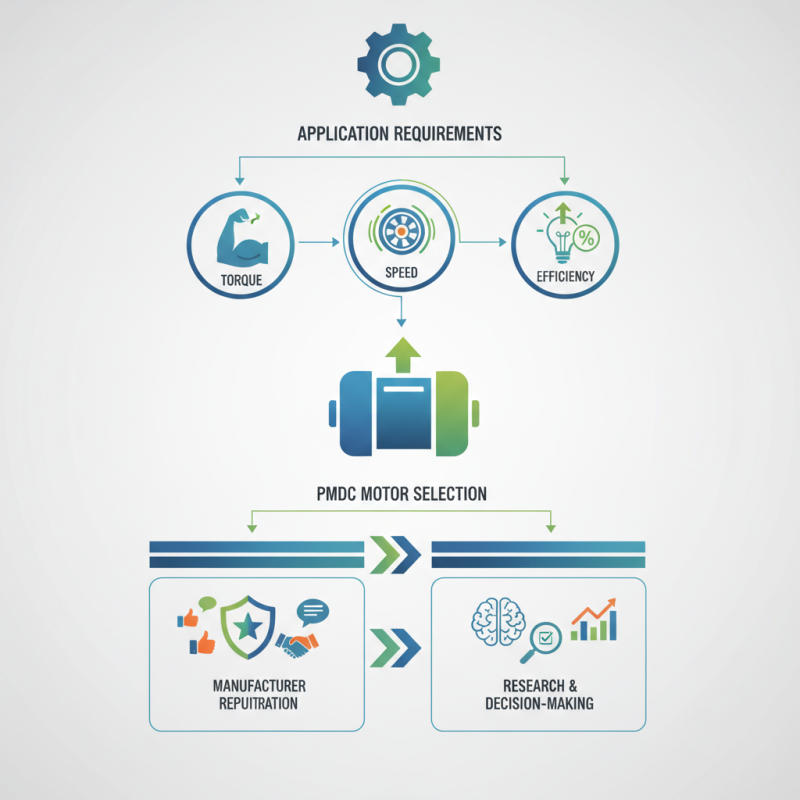
Understanding the specific requirements of your application is essential. PMDC motors come in various sizes and specifications, making it vital to match them with your project's needs. Factors such as torque, speed, and efficiency often dictate the selection process. Even small errors in choice can lead to operational inefficiencies.

Additionally, it is important to consider the manufacturer’s reputation. Reliable manufacturers provide not only quality but also essential technical support. Researching customer reviews can offer insights into a company's reliability. Reflecting on these factors can enhance your understanding and decision-making process.
Essential Tips for Choosing the Right PMDC Motor?

Key Factors to Consider When Selecting a PMDC Motor

Choosing the right PMDC motor involves several critical factors. Understanding your application's specific needs is essential. Consider factors like voltage requirements and performance specifications. The right voltage ensures optimal motor efficiency. Ignoring this can lead to poor performance or damage.

Next, evaluate the torque and speed ratings. These determine how well the motor will function in a particular setting. A motor with insufficient torque may struggle under load. Speed ratings indicate how quickly the motor can operate. Balancing these two factors is vital for achieving desired results.

Another important aspect is size and weight. The physical dimensions of the motor must fit your application. A motor that's too large can complicate installation. Additionally, assess thermal management features. Without proper heat dissipation, the motor may overheat, causing failure. Finding a reliable supplier with a solid reputation can also enhance your selection process.
Understanding the Different Types of PMDC Motors Available

When selecting a PMDC motor, understanding the different types available is crucial. PMDC stands for Permanent Magnet Direct Current motors. They are known for their efficiency and power density. These motors come in several configurations, including brushed and brushless types. Brushed PMDC motors often provide simplicity and cost-effectiveness. However, they may require more maintenance due to brush wear over time.

On the other hand, brushless PMDC motors offer robust performance and longer life. They reduce noise and increase efficiency, making them ideal for applications that require precision. It’s essential to consider the application's demands. Factors like torque, speed, and power supply must align with the motor specifications.

Some users may overlook the importance of cooling requirements or environmental factors. Selecting a motor without considering these aspects can lead to underperformance or failure. It's necessary to review your project’s unique needs thoroughly. Understanding each motor's specific characteristics can significantly impact the selection process. Engaging with experts or seeking advice can also enhance your decision-making journey.

Essential Tips for Choosing the Right PMDC Motor

Evaluating Performance Specifications for Your Application Needs

Essential Tips for Choosing the Right PMDC Motor?

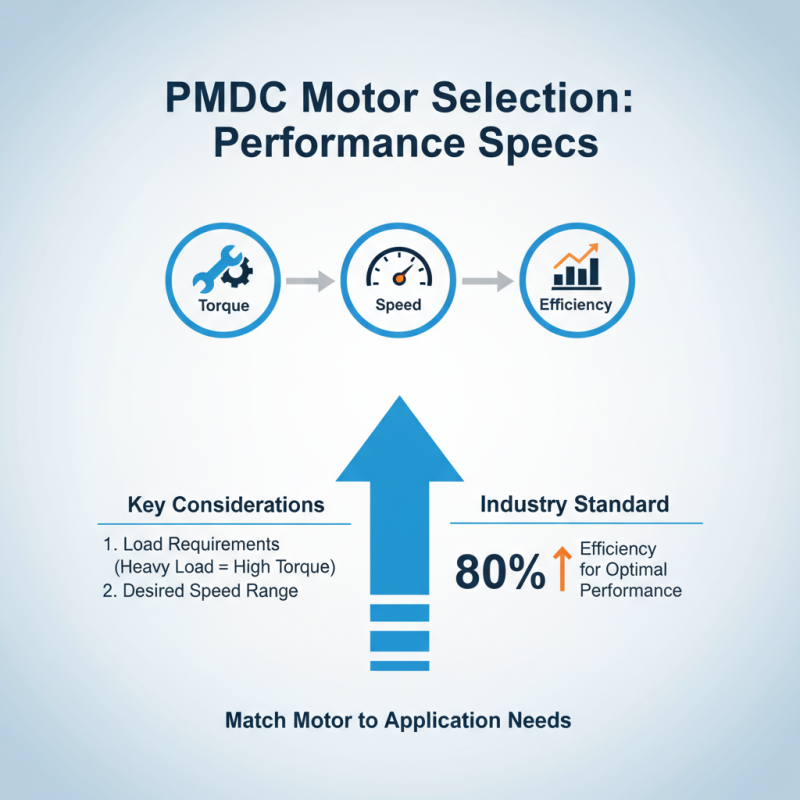
When choosing a PMDC motor, performance specifications are crucial. Torque, speed, and efficiency directly impact the motor's effectiveness in your application. A recent industry report highlights that most applications require motors with at least 80% efficiency for optimal performance. Understanding the load requirements and desired speed range is essential. For instance, a heavy load may need a motor with higher torque characteristics.

Temperature ratings are another critical aspect. PMDC motors typically operate within a range of 20°C to 150°C. Exceeding these limits can lead to premature failure. A study indicates that thermal stress can reduce lifespan by up to 50%. Evaluating the heat dissipation methods and environmental factors is necessary for reliable operation.

Noise levels matter too. In sensitive environments, a motor generating under 60 dB is ideal. However, many motors do not specify their noise output. This can lead to challenges in applications requiring quiet operation. Buyers should consider these gaps in product data to avoid unexpected disruptions. Determining the right PMDC motor is not just about specs; it involves a thorough assessment of the operational context.

Assessing Power Requirements and Efficiency of PMDC Motors

Essential Tips for Choosing the Right PMDC Motor?

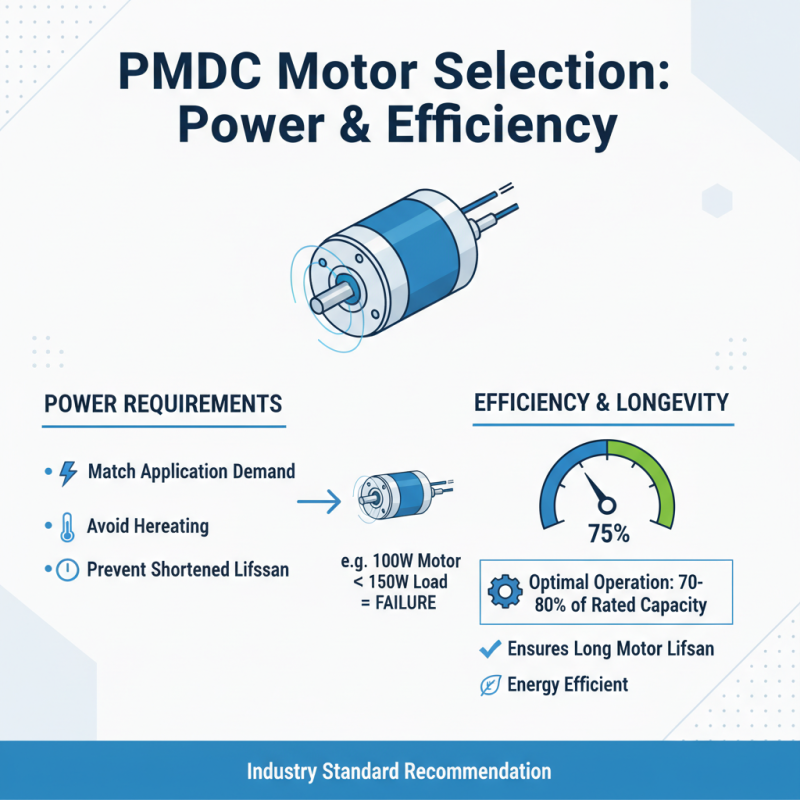
When selecting a Permanent Magnet Direct Current (PMDC) motor, assessing power requirements is crucial. A PMDC motor's power rating must match the application's demands. For example, a motor rated at 100 Watts may not suffice for applications requiring 150 Watts. The mismatch could lead to overheating and shortened lifespan. According to industry standards, motors should ideally operate at 70-80% of their rated capacity to ensure longevity.

Efficiency is another key factor to consider. PMDC motors display efficiency levels ranging from 60% to 95%, influenced by design and operational conditions. A report from the American National Standards Institute (ANSI) indicated that motors operating above 80% efficiency could lead to significant energy savings. In some applications, choosing a more efficient motor could reduce energy costs by up to 30%.

It's important to weigh the cost against performance. Higher efficiency motors may come with a higher upfront cost but can save money over time. However, not every application requires the most efficient motor available. Balancing the initial investment and long-term savings is often a reflective process in decision-making.

Examining Size and Mounting Options for Optimal Installation

When selecting the right PMDC motor, understanding size and mounting options is crucial. Correct sizing impacts performance. According to a study from the Electric Motor Association, improper sizing can lead to a 30% efficiency loss. A motor too small may overheat, while one that's too large can be inefficient.

Mounting options also affect installation flexibility and maintenance. Different applications require various configurations, such as face mounting or foot mounting. A report by The Motor & Generator Manufacturer's Association highlighted that improper mounting can lead to vibration issues, reducing motor lifespan by 25%. Proper installation techniques can mitigate such problems, allowing for smoother operations.

Consider the environment where the motor will be used. Factors like temperature, humidity, and contamination levels affect durability. These details matter, as a neglected installation can create unforeseen challenges, leading to higher operational costs. A focus on precise specifications will enhance overall reliability.

Essential Tips for Choosing the Right PMDC Motor - Examining Size and Mounting Options for Optimal Installation

Motor Size (inches) Power Rating (W) Mounting Type Voltage (V) Application
2.0 50 Bracket Mount 12 Small Appliances
3.0 100 Flange Mount 24 Robotics
4.0 200 Direct Mount 48 Conveyor Systems
5.0 300 Custom Mount 60 Industrial Equipment
6.0 400 Side Mount 72 Automated Systems
Scroll to Top