
Top Tips for Using a Towable Boom Lift Safely and Efficiently?

Using a Towable Boom Lift can significantly enhance your productivity on a job site. However, safety and efficiency must always come first. This type of lift allows for better access to high places, but improper use can lead to accidents.

When handling a Towable Boom Lift, it's crucial to understand the equipment fully. Knowing the working limits and weight capacity can prevent dangerous situations. Always inspect the lift before use. Look for mechanical issues that could affect performance. A thorough check can save time and prevent mishaps.

Many users overlook training. Familiarizing yourself with operational instructions is essential. Misunderstanding signals or controls can lead to mistakes. Always be aware of your surroundings while operating. Wind, weather, and surrounding structures can influence safety. Continuous learning and reflecting on your experiences can lead to better practices.
Top Tips for Using a Towable Boom Lift Safely and Efficiently?

Understanding the Mechanism: How Towable Boom Lifts Operate Efficiently

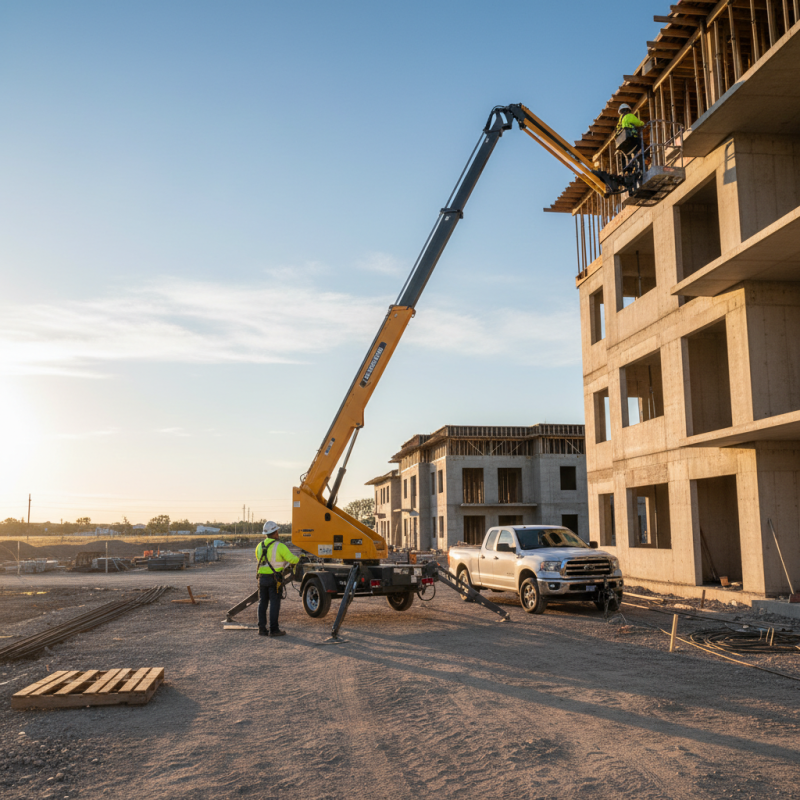
Towable boom lifts are a remarkable innovation in construction and other industries. They use a telescoping arm, allowing operators to reach high places with ease. This mechanism functions based on hydraulic systems that extend and retract the arm smoothly. The operator can maneuver the lift from the ground, providing control and precision.

Understanding how these lifts operate is essential for safety. The lift must be stable and level when in use. Small inclines can cause tipping. Operators often overlook this. It’s crucial to conduct routine checks on hydraulic fluids and mechanical parts. Neglecting these can lead to operational failures.

As powerful as they are, towable boom lifts have limitations. Wind can sway the boom, making tasks risky. If operating at high altitudes, it’s wise to consider weather conditions. Always wear harnesses when working at heights, despite feeling secure. These small steps can prevent accidents. Recognizing these factors is key to efficient and safe operation.

Key Safety Protocols: Preventing Accidents When Using Towable Boom Lifts

Towable boom lifts are widely used for various elevated tasks. However, safety protocols must be strictly followed to prevent accidents. According to the U.S. Occupational Safety and Health Administration (OSHA), falls are one of the leading causes of workplace injuries in construction. In fact, these incidents account for approximately 33% of fatalities. Proper training can significantly reduce these risks.

Before using a towable boom lift, operators should conduct a thorough inspection. This includes checking the lift's mechanical systems and ensuring that safety features function correctly. A recent industry report revealed that nearly 25% of equipment-related accidents were due to equipment failure. Ensuring that the lift is in good working condition is crucial. Operators should also be aware of their surroundings, especially in congested areas. Hazards like overhead power lines can pose severe risks.

Utilizing personal protective equipment (PPE) is essential. Hard hats and harnesses can help prevent serious injuries. In fact, according to the National Safety Council, wearing PPE can reduce the severity of accidents by 70%. Operators should ensure they are properly equipped before starting work. Reflecting on past incidents can reveal areas for improvement. Learning from mistakes is key to enhancing safety and efficiency in the field. Frequent safety meetings can reinforce these protocols and keep everyone alert.

Load Capacity Insights: Ensuring Safe Use of Boom Lifts Based on Industry Standards

When using a towable boom lift, understanding load capacity is crucial. Many industry reports highlight that exceeding the recommended load can lead to accidents. According to the Occupational Safety and Health Administration (OSHA), a typical boom lift has a load capacity ranging from 500 to 1,000 pounds. Operators must adhere to these limits to ensure safety.

Improper load distribution is a common issue. Many workers underestimate the impact of uneven weight on stability. An unbalanced load can cause the lift to tip over. Research indicates that about 44% of boom lift accidents result from improper load management. Hence, checking weight and balance before usage is essential.

Regular safety training is often overlooked. Employees sometimes assume they know enough without updated information. OSHA emphasizes that ongoing education can reduce workplace incidents significantly. Keeping abreast of industry standards helps workers make informed decisions. Ignoring this can result in costly mistakes. Remember, safety is a shared responsibility; everyone must stay vigilant.

Pre-Operation Checklist: Essential Steps Before Using a Towable Boom Lift

Before using a towable boom lift, conducting a thorough pre-operation checklist is crucial. Start by inspecting the equipment for any visible signs of damage or wear. Check the tires for proper inflation and ensure they are in good condition. Examine the boom’s hydraulic system for leaks. Inspect the safety features, like guardrails and emergency controls. Missing or malfunctioning parts can lead to serious accidents.

Next, ensure that all operators are trained and familiar with the lift's controls. Some may think they can figure it out on the job. However, this can be dangerous. Familiarize yourself with the space you’ll be working in. Look out for obstacles overhead, like power lines or tree branches. Assess the ground conditions, making sure the surface is stable. Slippery or uneven ground can create risks.

Finally, remember to follow local regulations and site-specific protocols. They are there for a reason. Many operators overlook this step. It’s vital for safety. Even a small oversight during the pre-operation phase can lead to significant problems later on. Take your time during this checklist. A few extra moments can prevent accidents and ensure a productive workday.

Best Practices for Maneuvering: Expert Techniques for Efficient Operation

When operating a towable boom lift, precise maneuvering is vital for safety and efficiency. According to the American National Standards Institute (ANSI), improper use contributes to many accidents. Careful planning is essential before you start. Assess the worksite for obstacles, overhead power lines, and uneven ground. Ensure the lift extends to the correct height without exceeding safe limits. The ability to maneuver smoothly affects overall productivity.

Using expert techniques can significantly enhance operation. Always keep the boom level, especially when turning. Shift weight carefully to prevent tipping. A survey by the Occupational Safety and Health Administration (OSHA) highlighted that better positioning reduces the risk of falls and injuries. Regular training on equipment use and site conditions helps operators remain vigilant.

Operators must reflect on their strategies frequently. Consider whether the chosen path was optimal. Were all safety protocols followed? These questions lead to better decision-making and fewer incidents. Efficient operation does not only mean speed; it involves calculated movements. Mistakes are part of the learning curve, but recognizing them is crucial for improvement. Always aim for a balance between speed and safety.

Scroll to Top