China Top 10 Ferrule Crimping Tool Manufacturers?
Choosing the China Top 10 Ferrule Crimping Tool Manufacturers requires more than comparing catalogue prices. Reliable selection depends on manufacturing experience, crimp consistency, material quality, and documented testing.
A professional manufacturer should explain its tool design clearly. Important details include compatible wire sizes, crimp profiles, ratchet performance, and handle ergonomics. In practical use, a good tool should produce a firm ferrule connection without cutting copper strands. The crimp should look even under close inspection. It should also release smoothly after reaching the correct pressure.
Small details matter.
This guide evaluates leading Chinese manufacturers through a practical purchasing lens. It considers factory experience, product range, quality-control systems, customization capability, and export service. Evidence may include ISO certifications, inspection records, laboratory testing, and feedback from distributors or industrial users. Where available, pull-force tests and repeated-cycle trials provide stronger confidence than promotional claims.
However, rankings are not permanent. Product lines change, factories expand, and quality may vary between production batches. Some companies publish limited technical information, making direct comparison difficult. That limitation deserves attention. Buyers should request samples, verify specifications, and confirm whether the quoted tool suits their wire terminals and working environment.
The manufacturers discussed here serve electrical installation, control-panel assembly, automation, maintenance, and related applications. Their tools may differ in ratchet mechanism, crimp geometry, adjustment design, and service support. Understanding these differences can reduce purchasing mistakes and improve connection reliability. A dependable Ferrule Crimping Tool is not merely a hand tool; it supports safer, cleaner, and more repeatable electrical assembly.
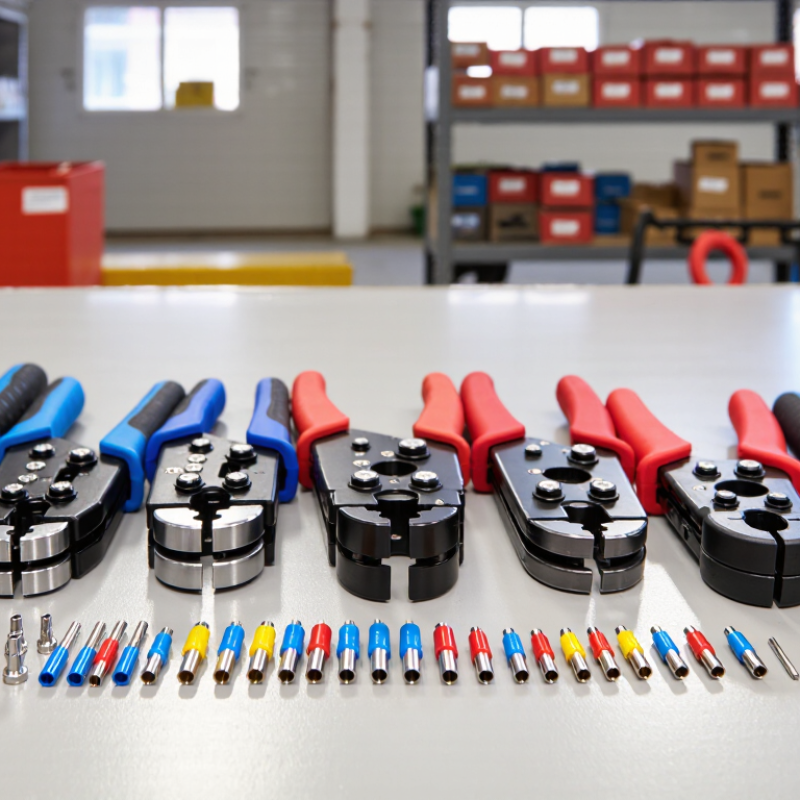
Ferrule Crimping Tools: Functions, Types, and Common Applications
Ferrule crimping tools create secure connections between wire strands and terminal blocks. They compress a metal ferrule around stripped copper conductors. This prevents strand spreading and improves insertion into cramped electrical terminals. In control cabinets, a clean crimp can save valuable inspection time. It also reduces loose strands that may cause unreliable contact.
Common types include square-crimp, hex-crimp, and trapezoid-crimp tools.
Ratchet handles provide consistent pressure and prevent early release. Self-adjusting models suit mixed wire sizes, while fixed-die tools can offer more predictable results for repeated work. Hydraulic versions handle larger conductors, but they may feel excessive for small panel wiring. A practical range often covers 0.5 to 6 mm² wires. Check the actual ferrule size, not only the tool label.
Applications include industrial control panels, building automation, appliance wiring, and low-voltage distribution equipment.
During assembly, the operator should strip insulation evenly and insert every strand fully. I have seen attractive crimps fail because one strand remained outside the ferrule. Visual checks matter. A gentle pull test can reveal weak compression, although it cannot replace formal testing. Chinese manufacturers serving the top-ten market should provide clear die markings, repeatable crimp geometry, and inspection records. Still, specifications can look better than daily performance. Buyers should test samples under real working conditions before approving regular supply.
China’s Top 10 Ferrule Crimping Tool Manufacturers
China’s Top 10 Ferrule Crimping Tool Manufacturers are often judged by more than production volume. Strong manufacturers control material selection, die accuracy, heat treatment, and final inspection. Their tools should create firm, even crimps on copper ferrules without cutting the conductor strands.
Workshop performance matters most. A reliable supplier can provide samples for different wire sizes, including 0.5, 1.5, 2.5, and 6 square millimeters.
Inspect each crimp under bright light. The ferrule should hold tightly, while the wire remains undamaged. Good manufacturers usually offer ratchet mechanisms, interchangeable dies, insulated handles, and clear adjustment instructions.
Small details matter.
Factory documentation also deserves attention. Ask for dimensional records, hardness checks, cycle testing, and traceable batch numbers. Export experience can indicate stronger process control, but it does not guarantee perfect tools.
I have found that polished packaging sometimes hides inconsistent die alignment. That needs honest review. Requesting trial samples is wiser than trusting a catalog alone.
The leading ten manufacturers may differ in specialization. Some focus on manual hand tools, while others produce pneumatic or battery-powered systems.
Compare crimp force, handle comfort, replacement parts, delivery stability, and after-sales response.
A tool that feels smooth during five crimps may become tiring after five hundred. Practical testing should reflect real work, not showroom conditions.
Comparing Product Quality, Certifications, and Production Capabilities
Selecting China’s top 10 ferrule crimping tool manufacturers requires more than comparing catalogue prices. Product quality should be checked through crimp-height consistency, pull-out force, jaw alignment, and cycle durability. IEC 60999-1 provides useful requirements for screw-type terminals, while DIN 46228 defines common wire-end ferrule dimensions. A reliable factory should test samples with calibrated gauges, record batch numbers, and retain inspection data.
Certification also needs careful review. ISO’s 2023 Survey recorded over 1.2 million valid ISO 9001 certificates worldwide, but certification alone does not guarantee strong tooling. Buyers should verify the certificate scope, issuing body, and audit validity. ISO/IEC 17025 accreditation is more meaningful for laboratories measuring force, hardness, or dimensional accuracy. Some suppliers show attractive documents. That is not enough. I would request recent test reports and compare them with independent samples.
Production capability separates serious manufacturers from assembly traders. Grand View Research valued the global hand tools market at approximately USD 24.7 billion in 2023, with continued growth expected through 2030. This broader figure signals demand, not ferrule-tool quality. A capable producer should operate CNC machining, heat treatment, surface finishing, and final calibration under one controlled system. I would also inspect tooling maintenance, operator training, spare-jaw availability, and monthly capacity. Factory claims can be optimistic. A small pilot order often reveals more than a long presentation.
How to Choose the Right Chinese Manufacturer for Your Needs
Choosing among China’s top 10 ferrule crimping tool manufacturers requires more than comparing prices. A reliable supplier should explain crimping range, jaw material, handle design, and testing methods clearly. Ask for samples covering common wire sizes, not only one ideal ferrule. The finished crimp should look even, tight, and free from damaged insulation. Small details matter.
Review the manufacturer’s production experience and quality controls. Request factory photos, inspection records, material specifications, and sample reports. A serious supplier can usually describe how it checks jaw alignment, spring strength, and surface treatment. Confirm whether the factory controls key parts internally or purchases them from several unknown sources. A polished website proves little. Documentation matters more.
Communication also reveals practical reliability. Test response speed with precise questions about tooling changes, minimum order quantities, packaging, and delivery schedules. Confirm whether the supplier can provide replacement parts and handle complaints with written procedures. Certifications may support credibility, but verify their scope and validity instead of accepting a copied file. I would compare at least three samples before choosing. That step costs time. It may prevent expensive rework later.
Not every low-cost tool is unsuitable, and not every premium quote guarantees better performance. Your actual wire range, usage frequency, operator comfort, and target market should guide the decision. One weakness can remain: some factories explain quality well but measure it inconsistently. Ask for repeat testing. Check the results yourself.