
China Top 10 Water Treatment Equipment Suppliers?

China’s water sector is expanding from municipal drinking water to industrial reuse, desalination, and wastewater recovery. Demand is becoming more technical.

The UN World Water Development Report 2024 states that roughly 2.2 billion people lacked safely managed drinking water in 2022. This figure shows why dependable treatment infrastructure matters beyond factory output. The World Bank also links water security with public health, economic productivity, and climate resilience. These pressures are creating opportunities for Chinese manufacturers with stronger engineering capabilities.

Market estimates differ. Grand View Research reported continued growth in the global water treatment systems market, supported by stricter discharge rules and industrial reuse. However, market size figures should be compared carefully. Definitions, exchange rates, and equipment categories can change the results.

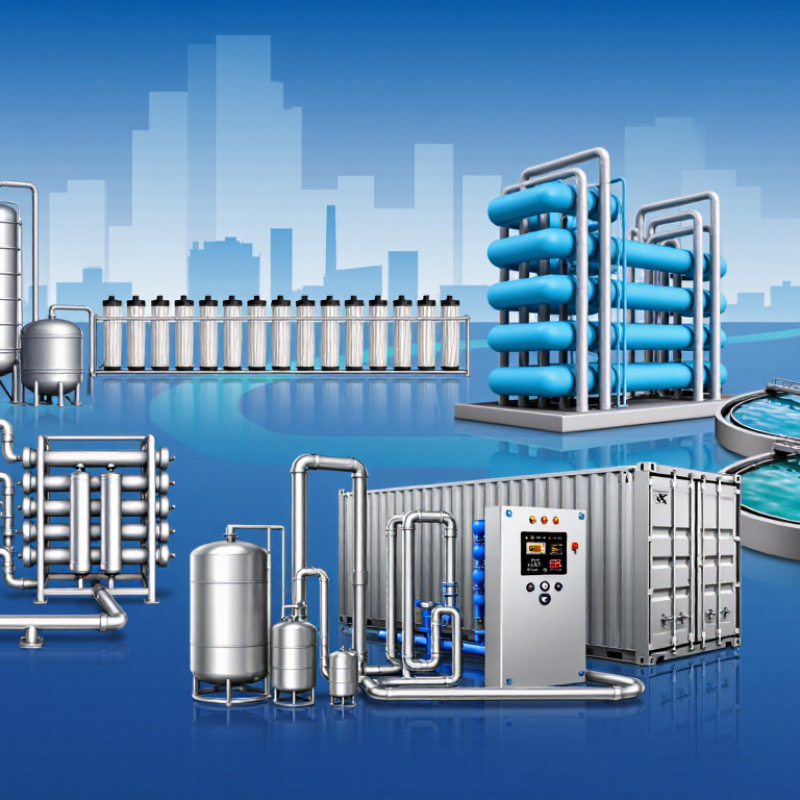
This guide examines China’s top 10 Water Treatment Equipment suppliers through practical criteria. These include process design, membrane quality, automation, energy consumption, certifications, project references, and after-sales support. A supplier may offer impressive stainless-steel skids, clear control panels, and compact containerized systems. Yet attractive equipment does not guarantee stable operation.

The ranking considers experience across municipal, industrial, and specialized applications. It also reviews technical documentation, commissioning support, maintenance access, and lifecycle costs. Independent verification remains important. Buyers should request test data, client references, and compliance records before signing contracts.

No ranking is perfect. Supplier strengths can change quickly. Still, this overview aims to provide a useful starting point for engineers, project owners, and international buyers seeking capable Chinese partners.
China Top 10 Water Treatment Equipment Suppliers?

Selection Criteria for China’s Leading Water Treatment Equipment Suppliers

Selecting among China’s top water treatment equipment suppliers requires more than comparing catalog prices. Start with proven engineering experience in your water type, flow rate, and operating environment. A supplier should explain pretreatment, filtration, disinfection, sludge handling, and automation clearly. Vague answers deserve caution.

Request factory records, process drawings, material specifications, and recent project references. Check whether pumps, membranes, tanks, and control systems match the promised capacity. Independent test results can confirm removal rates and energy consumption. A pilot test is valuable when wastewater quality changes seasonally. Small details matter.

Look for documented quality procedures, skilled technicians, and traceable inspection records. Ask how the supplier handles installation, spare parts, operator training, and remote support. Response time matters during a pump failure. So does local service access. Verify compliance with the destination market’s technical and environmental requirements.

Price alone misleads. Compare lifecycle costs, including electricity, chemicals, replacement parts, maintenance, and downtime. A low initial quote may conceal expensive consumables. That mistake is common. I would also inspect welds, cable protection, instrument calibration, and drainage around the equipment. Photos are useful, but they cannot replace a site visit. No evaluation is perfect; even experienced buyers can overvalue polished presentations and undervalue long-term service reliability.

Profiles of the Top 10 Chinese Water Treatment Equipment Suppliers

China’s top ten water treatment equipment suppliers differ in scale, engineering depth, and project experience. Their profiles should be judged by practical evidence, not attractive catalogs. Some specialize in reverse osmosis systems for factories. Others build ultrafiltration units for municipal plants. Several focus on sewage treatment, sludge dewatering, or containerized systems. One supplier may provide dosing equipment and control cabinets. Another may design complete industrial water recycling lines. Two suppliers may serve food, chemical, or pharmaceutical facilities. Their strongest advantage is often flexible customization. However, claimed capacity does not always equal field performance.

A reliable profile includes factory records, technical certifications, test reports, and after-sales coverage. Ask whether the supplier has operated equipment under similar water conditions. Request flow rates, recovery ratios, energy data, and replacement schedules. Site visits can reveal workshop organization, welding quality, and testing procedures. Real experience matters. Yet even a capable supplier may lack local service support. This detail is easy to overlook. A careful comparison should also examine installation training, spare-part availability, response time, and warranty terms. Rankings can change by application.

Tips: Send a detailed water analysis before requesting quotations. Include turbidity, hardness, conductivity, temperature, and daily flow. Compare complete operating costs, not only purchase prices. Ask for a pilot test when the water quality is unstable. Keep questions in writing. It prevents costly misunderstandings. Also, leave room for improvement; early specifications are sometimes incomplete.

Core Technologies and Equipment Offered by Each Supplier

China Top 10 Water Treatment Equipment Suppliers: Core Technologies and Equipment Offered

China’s leading water treatment suppliers usually specialize in different process strengths. Supplier 1 focuses on membrane systems, including ultrafiltration, nanofiltration, and reverse osmosis units. Supplier 2 provides dissolved air flotation equipment for oil, solids, and suspended pollutants. Supplier 3 develops mechanical filters, sand filters, and activated carbon vessels. Supplier 4 supplies sewage treatment packages using MBR, MBBR, and SBR processes. Supplier 5 manufactures chemical dosing skids, mixers, and online monitoring instruments. Supplier 6 offers sludge dewatering machines, such as belt presses and screw presses. Supplier 7 builds industrial evaporators and zero-liquid-discharge systems. Supplier 8 specializes in ultraviolet and ozone disinfection equipment. Supplier 9 provides containerized and mobile treatment plants. Supplier 10 integrates complete systems with PLC control panels and remote monitoring.

Practical selection requires more than comparing catalog prices. Check flow capacity, inlet water quality, recovery rate, energy use, and maintenance access. Ask for recent operating data from similar facilities. Stainless steel grades matter near coastal sites. Control accuracy matters even more. A polished brochure cannot replace a pilot test. That is where many projects become less certain.

Tips: Request a process diagram, equipment list, warranty scope, and spare-parts schedule. Confirm whether local technicians can service pumps, membranes, sensors, and control software. Leave space around filters and pumps for cleaning. Small layouts create large maintenance problems. Also question optimistic removal rates. Actual performance can change with temperature, chemical composition, and operator habits.

China Top 10 Water Treatment Equipment Suppliers? - Core Technologies and Equipment Offered by Each Supplier
Supplier Reference Primary Treatment Focus Core Technologies Main Equipment Offered Typical Water Applications Common Process Stages Typical System Format
Supplier 01 Membrane separation and desalination RO UF NF EDI
  • Reverse osmosis skids
  • Ultrafiltration modules
  • Cartridge filter housings
  • High-pressure pumps
  • Membrane cleaning systems
Seawater, brackish water, drinking water, process water and boiler make-up water Pretreatment, membrane separation, polishing and disinfection Skid-mounted and containerized systems
Supplier 02 Municipal wastewater treatment A2/O SBR MBR UV
  • Fine screens and grit separators
  • Biological treatment tanks
  • Membrane bioreactor units
  • Sludge dewatering presses
  • Ultraviolet disinfection systems
Municipal sewage, residential wastewater and reclaimed water Screening, biological treatment, clarification or membrane separation, disinfection Packaged plants and integrated civil installations
Supplier 03 Industrial wastewater and wastewater reuse DAF Coagulation MBBR RO
  • Dissolved air flotation units
  • Lamella clarifiers
  • Moving-bed biofilm reactors
  • Multimedia filters
  • Reverse osmosis systems
Textile, food processing, chemical and general manufacturing wastewater Equalization, physicochemical treatment, biological treatment and reuse polishing Modular treatment trains
Supplier 04 Drinking-water purification Coagulation Sedimentation Ozone GAC
  • Rapid mixing and flocculation units
  • Tube settlers and clarifiers
  • Ozone generators
  • Granular activated carbon filters
  • Chlorination and dosing systems
Surface water, groundwater and municipal drinking-water supplies Coagulation, clarification, filtration, oxidation and final disinfection Stationary plant systems
Supplier 05 Oil, gas and high-strength wastewater API separation DAF Electrocoagulation Evaporation
  • Oil-water separators
  • Induced air flotation units
  • Hydrocyclones
  • Electrocoagulation reactors
  • Thermal evaporators
Produced water, oily wastewater, metalworking fluids and concentrated industrial streams Oil removal, solids separation, chemical treatment and concentration Engineered process packages
Supplier 06 Sludge handling and resource recovery Thickening Dewatering Anaerobic digestion Drying
  • Screw presses
  • Filter presses
  • Centrifugal dewatering units
  • Sludge dryers
  • Biogas mixing and collection equipment
Municipal sludge, industrial sludge and organic residues Thickening, conditioning, dewatering, stabilization and drying Standalone or plant-integrated equipment
Supplier 07 Water disinfection and advanced oxidation UV-C Ozone AOP Chlorine dioxide
  • UV disinfection reactors
  • Ozone contact tanks
  • Advanced oxidation reactors
  • Oxidant dosing panels
  • Residual monitoring instruments
Drinking water, tertiary effluent, cooling water and industrial process water Pre-oxidation, primary treatment, advanced oxidation and residual control Inline, skid-mounted and channel systems
Supplier 08 Packaged and containerized treatment plants MBR SBR RO MBBR
  • Containerized MBR plants
  • Packaged SBR units
  • Compact RO systems
  • Integrated control cabinets
  • Automatic backwash filters
Remote facilities, construction sites, resorts and emergency water projects Screening, biological treatment, filtration, membrane treatment and disinfection Containerized and prefabricated systems
Supplier 09 Industrial water pretreatment and filtration Multimedia filtration Ion exchange Softening Activated carbon
  • Pressure sand filters
  • Activated carbon filters
  • Water softeners
  • Demineralization units
  • Automatic valve and backwash assemblies
Cooling towers, boilers, food production and general process water Particle removal, iron and manganese reduction, softening and demineralization Vessel-based treatment trains
Supplier 10 Control, dosing and monitoring systems PLC/SCADA Online sensors Chemical dosing Remote monitoring
  • PLC control panels
  • Flow, pressure and level instruments
  • pH, conductivity and turbidity analyzers
  • Metering pumps
  • Automatic chemical preparation systems
Municipal plants, industrial facilities and packaged treatment systems Measurement, chemical dosing, process control, alarm management and data logging Integrated automation packages
Technical categories are presented by treatment capability rather than by company or brand identity. Actual equipment configuration depends on influent quality, required discharge limits, flow rate, site conditions and applicable local regulations.

Industries and Applications Served by the Top 10 Suppliers

China’s top 10 water treatment equipment suppliers serve far more than municipal drinking-water projects. Their systems support electronics factories, food processing plants, power stations, hospitals, mining sites, and commercial buildings. The UN World Water Development Report states that agriculture accounts for about 70% of global freshwater withdrawals. This drives demand for filtration, desalination, and wastewater reuse in irrigation zones.

Municipal facilities commonly use membrane systems, ultraviolet disinfection, sludge dewatering, and automated dosing units. Industrial users often require higher control. A semiconductor plant may need ultrapure water measured in micrograms of contaminants, while a food factory needs hygienic cleaning-water recovery.

2.2 billion people The World Health Organization and UNICEF reported that 2.2 billion people lacked safely managed drinking water in 2022.

That gap keeps compact treatment units important for rural utilities and rapidly expanding communities. Power plants need cooling-water treatment and corrosion control. Hospitals require reliable disinfection and wastewater monitoring. Hotels and office complexes often install greywater systems for toilet flushing and landscape irrigation.

The Global Water Intelligence market outlook continues to identify water reuse as a major investment area, although equipment performance depends heavily on maintenance and operator training. This is where supplier comparisons become less tidy.

A low purchase price can hide energy costs, membrane replacement, or weak after-sales support. Field experience suggests that local water chemistry matters more than a polished specification sheet. Testing the source water first remains a practical, sometimes overlooked step.

How to Compare and Choose a Suitable Chinese Supplier

China Top 10 Water Treatment Equipment Suppliers?

Choosing a Chinese supplier requires more than scanning a top-ten list. Define your water source, flow rate, contaminants, and discharge limits. Ask for a process design based on laboratory data, not a copied template. A suitable supplier should explain each treatment stage in practical terms. Ask for evidence.

Compare technical capability before comparing prices. Review equipment materials, energy use, automation, spare parts, and expected service life. Request drawings, test reports, and performance data from similar projects. Factory visits can reveal welding quality, assembly space, testing procedures, and inventory control. Video meetings help, but physical checks provide stronger evidence. Paper is not performance.

Check whether the supplier can support installation, commissioning, operator training, and troubleshooting after delivery. Clarify response times, warranty coverage, replacement parts, and communication methods in writing. Speak with recent customers, preferably those treating similar water. Also inspect certificates and confirm their issuing organizations independently. A low quotation may exclude laboratory testing, freight, control panels, or local installation. Calculate the full operating cost over several years. One overlooked filter replacement can change the budget. No supplier looks perfect on paper. I would record unanswered questions and test assumptions before signing. A small pilot unit may cost more initially, yet it can expose unstable performance before a large purchase. That practical lesson is easy to ignore.

Scroll to Top