
China Top Bow Type Laying Up Machine Supplier?

Choosing a China-based Bow Type Laying Up Machine supplier takes more than comparing prices. The machine must lay conductors evenly while maintaining stable tension and consistent pitch. On a production floor, small differences matter: a vibrating bow, a drifting take-up reel, or poorly matched controls can create visible defects. A brochure rarely shows these details.

Market context helps explain the stakes. Grand View Research estimated the global wire and cable market at USD 216.7 billion in 2023 and projected a 4.9% compound annual growth rate from 2024 to 2030. That estimate covers a broad market, not machine sales. Still, it points to sustained demand for reliable cable production equipment. Quality expert W. Edwards Deming is often quoted as saying, “Quality is everyone’s responsibility.” For a laying-up line, that principle includes design, assembly, commissioning, and operator training.

Look beyond a supplier’s headline speed. Ask for tested production data, compatible conductor sizes, bow balance information, tension-control details, and references for comparable installations. Request a factory acceptance test using your materials, where practical. Then review spare-parts support and response times. One caveat: supplier claims are not independent proof. A polished video cannot replace a test report. This introduction is a starting point, not a supplier ranking; the best choice depends on your cable design, output target, and service needs.
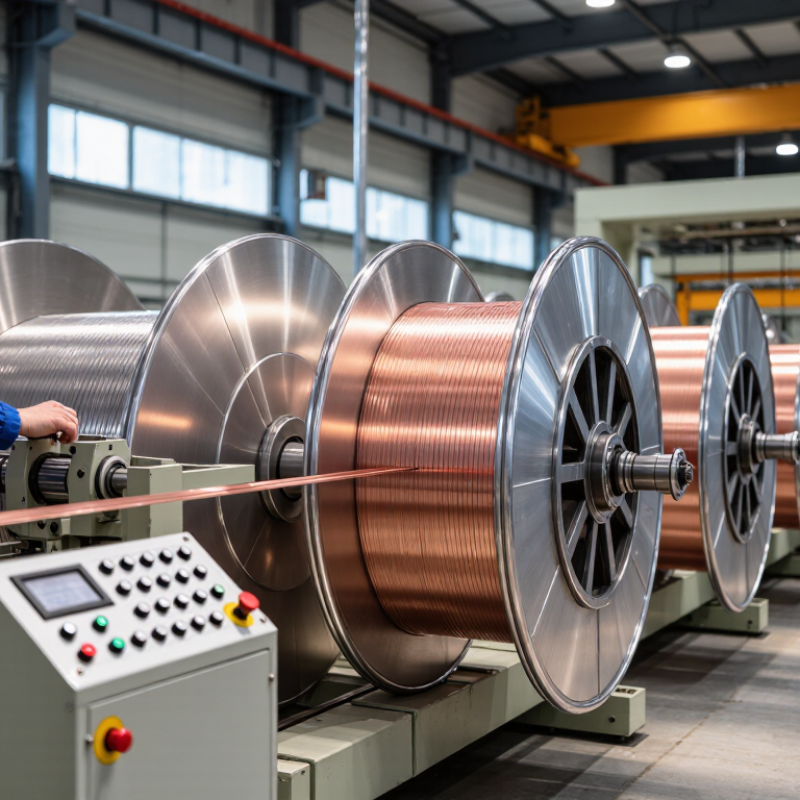
China Top Bow Type Laying Up Machine Supplier?

What Is a Bow Type Laying-Up Machine?

A bow type laying-up machine brings several insulated wires or cores together around a central element. Its rotating bow guides the outer components into a controlled helical pattern. The distance between successive turns is called the lay length. Changing this setting affects flexibility, diameter, and how the finished cable handles during installation. Small changes matter.

During operation, payoff units feed each component toward the closing point, while tension controls help prevent loose strands or stretching. The take-up system then collects the laid-up cable onto a reel. Operators typically check wire tension, bow speed, and lay length together; adjusting only one may create uneven results. A close look at the first few metres can reveal crossed wires or inconsistent spacing before a full reel is made.

The machine is useful for cable constructions that need repeatable alignment, but it is not a universal solution. Product diameter, material stiffness, and required output all influence machine configuration. Even with automatic controls, setup still needs careful observation. A neat-looking cable can hide uneven tension, so visual inspection alone is not enough. A practical trial run helps confirm the settings.

How Does a Bow Type Laying-Up Machine Work?

A bow type laying-up machine combines insulated cores into a finished cable. Individual cores unwind from pay-off reels and pass through guides that keep them aligned. A rotating bow carries the reels around the machine’s central axis, wrapping the cores together in a controlled helix. The take-up system pulls the assembled cable forward. The relationship between bow speed and line speed determines the lay length, or the distance between successive turns. Small changes matter. Uneven tension can leave a core loose or distort the cable’s shape.

In practical operation, an operator checks reel alignment, tension, and the selected lay length before production. During a run, guides and tension controls help each core feed smoothly as the bow rotates. If a reel drags, the finished cable may show uneven spacing or a soft spot. That can be easy to miss at first. Still, a neat-looking lay is not proof of a stable process; measurements and a close inspection of sample sections provide better evidence. Machine settings should suit the cable’s core count, material, and required construction.

How Does a Bow Type Laying-Up Machine Work?

A rotating bow carries the strand guides around the cable core, laying strands into a helix as the core advances. The chart shows the calculated helix angle for an illustrative 20 mm strand-centerline diameter at different lay lengths; it is a geometry example, not a machine specification.

Which Industries Use Bow Type Laying-Up Machines?

Bow type laying-up machines are used by cable manufacturers that need to combine insulated conductors into a stable cable core. Their work supports several industries, though the machine itself usually sits on a factory production line. Cable design, conductor size, and required output all affect the setup.

Power and utility suppliers use laid-up cores in many low- and medium-voltage cables. Telecommunications manufacturers use them for multi-core data and signal cables, where orderly conductor placement helps maintain a consistent construction. Automotive suppliers also make cable assemblies for vehicles, including wiring that must fit tight routes around dashboards and engine compartments. Small details matter.

Renewable energy projects create demand for cables used in wind and solar installations. Shipbuilding and industrial automation are other markets, with cables designed to handle movement, vibration, or demanding operating conditions. A bow type machine can help maintain strand geometry and production consistency, but it does not determine cable performance alone. Materials, tooling, and process checks matter too. It is easy to focus on speed and overlook setup quality. Not every line needs the same configuration, and choosing one without reviewing the actual cable structure can lead to avoidable adjustments.

What Should Buyers Consider When Choosing a Chinese Supplier?

When choosing a Chinese supplier for a bow type laying-up machine, compare the working details, not just the quotation. Ask for the usable fabric width, laying speed, tension range, and supported roll diameter in writing. Check whether the machine handles your actual fabric, including stretch, weight, and edge curl. A sample run should use your material, not a supplier’s easy-to-handle substitute. Ask to see the finished layers and measure alignment yourself. Small details matter.

Supplier credentials help, but they do not guarantee a reliable machine. ISO’s 2022 Survey recorded 1,265,216 valid ISO 9001 certificates across 189 countries and economies; treat certification as a screening point, not proof of equipment quality. The World Bank’s 2023 Logistics Performance Index report puts the median port-to-port journey for international shipments at 44 days. Build a realistic transport buffer, then confirm spare-part availability, commissioning support, and response times in writing. Ask for references from factories running similar fabrics and production shifts. A factory visit helps, though one polished demonstration can still hide routine problems. I may be cautious here, but unclear service terms often matter more after installation than a small price difference.

How Can Buyers Compare Leading Chinese Suppliers?

Buyers comparing Chinese bow type laying-up machine suppliers should test performance with their own fabric, not a showroom sample. Check whether the machine maintains fabric tension, aligns plies, and controls edge distortion across the full lay. Ask for measured spreading speed, usable fabric width, lay-length tolerance, and changeover time. Then request a trial with lightweight and stretch fabrics; one easy material proves little. Textile Exchange’s Materials Market Report 2024 estimated global fiber production at 124 million tonnes in 2023. That scale makes flexible production useful, but it does not prove any machine’s quality. Numbers matter.

Compare suppliers using the same acceptance checklist. Record lay height, alignment deviation, fabric damage, and operator adjustments during a timed run. Ask for maintenance schedules, spare-part lead times, wiring diagrams, and remote-support response targets. A clear warranty is helpful, but written service commitments matter more than broad promises. Ask for references from factories running similar fabrics and shifts. If possible, inspect a machine after months of production, not just during installation. Still, supplier comparisons can feel messy: factory conditions differ, and a short trial may miss real problems. Keep the test notes, even when results look imperfect. They can reveal where a machine needs adjustment before purchase.

China Top Bow Type Laying Up Machine Supplier? - How Can Buyers Compare Leading Chinese Suppliers?
Comparison dimension What buyers should compare Evidence to request from each supplier Practical evaluation
Application and product fit Whether the machine is designed for the buyer’s cable construction, conductor or core types, finished cable size, and production process. A written application review showing the proposed machine configuration and the buyer’s stated product range. Prefer a configuration supported by examples or test results for comparable products, rather than a general-purpose claim.
Bow and bobbin configuration Bow diameter, number and arrangement of bobbins, bobbin dimensions, and compatibility with the planned materials and production layout. Dimensioned machine drawings, bobbin specifications, and a clear list of included tooling and change parts. Check that bobbin capacity, loading method, floor space, and access for changeovers match the factory’s operating needs.
Lay length and operating speed Available lay-length range and the operating-speed conditions under which the quoted production rate can be achieved. A technical specification identifying the applicable product, material, and operating conditions for stated limits. Compare like-for-like conditions. A maximum speed alone does not establish achievable output or finished-product quality.
Tension and take-up control How the machine maintains pay-off tension and coordinates take-up with the laying-up process. Control-system description, tension-control details, and a demonstration or test record using representative materials. Assess whether tension remains stable during starts, stops, speed changes, and reel changes relevant to the production plan.
Drive and control system Drive arrangement, operator interface, available recipes or parameter settings, alarms, and data or communication options. Electrical and control documentation, an operating-interface demonstration, and a list of standard and optional functions. Confirm that operators can set and repeat product parameters and that the proposed controls suit the plant’s maintenance capabilities.
Finished-product quality How the machine supports the required lay geometry, surface condition, and consistency across the buyer’s product range. Sample production records, inspection criteria, and a factory acceptance test plan tied to agreed product requirements. Set measurable acceptance criteria before ordering; assess samples against the buyer’s own product specifications.
Safety and documentation Guarding, emergency stops, operating instructions, electrical documentation, and the safety requirements applicable at the installation location. Risk and safety documentation, machine manuals, wiring diagrams, and relevant conformity documents for the destination market. Verify the documents and machine configuration against local regulations and site requirements before shipment.
Installation and commissioning Installation scope, commissioning method, operator training, utilities, and the responsibilities of the supplier and buyer. A written installation plan, utility requirements, training agenda, and a clear scope-of-work statement. Compare total project readiness, not just machine delivery; clarify travel, translation, and on-site support arrangements.
After-sales support and spare parts Technical support channels, response arrangements, warranty terms, spare-parts availability, and recommended maintenance items. Written warranty conditions, spare-parts list, maintenance schedule, and support contact and escalation process. Evaluate the clarity and practicality of the support commitment, including parts identification and ordering procedures.
Commercial and delivery terms Machine scope, options, delivery schedule, packing, payment milestones, acceptance conditions, and exclusions. A detailed quotation, configuration list, delivery schedule, and contract terms that correspond to the technical offer. Compare total cost and contractual scope consistently; identify optional items, installation costs, and other exclusions.
This supplier-neutral comparison framework does not rank or make performance claims about individual manufacturers. Buyers should compare written specifications and test evidence under the same product and operating conditions.
Scroll to Top