
Choosing a Dashboard Instrument manufacturer involves more than comparing catalogs. Buyers need dependable readings, clear displays, durable components, and support that continues after delivery. A gauge may look impressive on a screen, yet perform poorly under glare, vibration, or repeated temperature changes. Small details matter.
Industrial designer Henry Dreyfuss wrote, “When the point of contact between the product and the people becomes a point of friction, then the industrial designer has failed.” That principle applies directly to dashboard instruments: drivers must read essential information quickly, without distraction or guesswork. It also gives global buyers a useful way to assess manufacturers—not only by product range, but by usability, build quality, customization options, and communication.
This guide reviews 10 Dashboard Instrument manufacturers for buyers serving different markets and vehicle applications. It considers practical factors such as display technology, analog and digital options, integration capabilities, production experience, and after-sales support. The right supplier depends on the project. A fleet operator may prioritize long service life, while a vehicle developer may need a tailored interface and close engineering collaboration. No list is perfect. Supplier claims still deserve careful checking, and specifications should be confirmed against the intended application. The aim here is a grounded starting point for comparing capabilities, asking sharper questions, and finding a manufacturer that fits real operating needs.
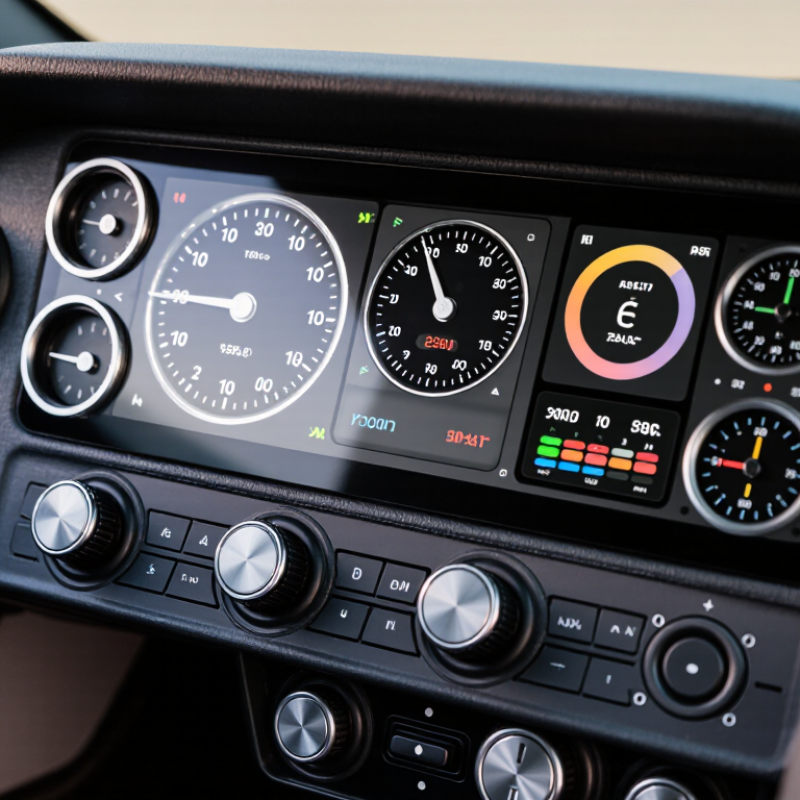
Dashboard instruments convert vehicle data into information a driver can read quickly. Speedometers show road speed, while tachometers display engine speed. Fuel and temperature gauges help drivers notice changing levels before they become urgent. Warning lamps flag conditions such as low oil pressure or charging-system faults. Small details matter. A dim indicator or unclear symbol can make a message easy to miss.
Common product types include analog gauges, digital displays, indicator lamps, and combined instrument clusters. Analog dials offer familiar, at-a-glance readings. Digital screens can present several values in one place, sometimes with selectable layouts. Warning lights remain useful because they draw attention without requiring drivers to study a screen. Some vehicles also use compact displays for trip distance, gear position, or diagnostic messages.
For buyers, the right instrument depends on the vehicle’s electrical system, sensor inputs, mounting space, and operating environment. A gauge must match its sender and measurement range; otherwise, the reading may look precise but be wrong. Check visibility in daylight and at night, connector details, and resistance to vibration and temperature changes. Compatibility deserves careful review. Product sheets do not always explain every installation condition, so confirm key specifications before ordering.
Dashboard instrument manufacturers differ in how they balance readability, durability, and customization. Some favor clear, high-contrast displays; others combine digital screens with physical gauges. Look closely at viewing angles, night dimming, and how icons appear in direct sunlight. Details matter. A display that looks sharp indoors may wash out beside a bright window.
Technology choices shape integration and service needs. Buyers can compare sensor inputs, communication interfaces, software update methods, and diagnostic access. Ask for test records covering vibration, temperature cycling, and display readability—not just a feature list. For international projects, check language options, measurement units, and whether warning symbols can be configured. Claims should be verified against the intended equipment and operating conditions.
Production capabilities vary just as much. One supplier may support prototypes and frequent design changes, while another is better equipped for stable, larger runs. Review sample consistency, inspection steps, traceability, and lead-time assumptions. A neat factory tour is useful, but it cannot replace documented process controls. This comparison is rarely perfectly tidy: a low-volume specialist may offer flexibility yet struggle with delivery peaks. Request representative samples and clarify how defects are handled before committing.
A brand-neutral comparison of common instrument-cluster manufacturer profiles and the design, technology, and production approaches used across the automotive industry.
| Profile | Design Focus | Typical Display Approach | Common Vehicle Applications | Integration Priorities | Production Considerations | Best-Fit Buyer Needs |
|---|---|---|---|---|---|---|
| Profile 1: Analog Cluster Specialist | Clear, familiar layouts with physical gauges and conventional warning indicators. | Stepper-motor gauges, telltales, and a small information display may be combined in one assembly. | Entry-level passenger cars, light commercial vehicles, and cost-sensitive platforms. | Readability, dependable warning indication, and compatibility with established vehicle electronics. | Uses mature assembly methods and proven components; variant control is important when supporting multiple vehicle trims. | Buyers prioritizing straightforward operation, established designs, and controlled system cost. |
| Profile 2: Hybrid Cluster Specialist | Combines familiar gauge graphics with flexible digital information areas. | Physical or simulated gauges paired with an LCD information screen. | High-volume passenger vehicles and commercial models transitioning from fully analog layouts. | Consistent visual hierarchy, simple driver interaction, and reuse of vehicle data signals. | Requires coordination between mechanical gauge components, display electronics, and software variants. | Buyers seeking a balance between conventional interfaces and configurable information. |
| Profile 3: TFT Display Integrator | Flexible screen layouts with customizable graphics and information zones. | Color TFT-LCD panels, with screen size and resolution selected for the vehicle program. | Passenger vehicles and light commercial vehicles across a range of market segments. | Display readability, graphics performance, software integration, and thermal management. | Panel sourcing, optical bonding choices, software validation, and display calibration affect program planning. | Buyers needing adaptable graphics, multiple information layouts, or a digital-forward cabin. |
| Profile 4: Large-Format Digital Cluster Developer | Screen-led designs that make the instrument panel a prominent part of the cabin interface. | Large LCD display assemblies with configurable instrument and vehicle-information content. | Mid-range and premium passenger vehicles, including new vehicle platforms. | Human-machine interface consistency, boot time, graphics quality, and integration with other displays. | Large panels need careful packaging, supply planning, environmental testing, and software lifecycle support. | Buyers prioritizing a high degree of interface customization and a modern digital presentation. |
| Profile 5: OLED Cluster Developer | Emphasizes high contrast, deep blacks, and slim display packaging where the vehicle design supports it. | OLED panels may be used for selected instrument-display applications. | Premium vehicle programs and specialized cabin designs. | Image quality, display aging management, temperature behavior, and long-term component availability. | Panel qualification and lifecycle planning are important; suitability depends on the required operating environment and program targets. | Buyers seeking distinctive display characteristics and prepared for careful panel qualification. |
| Profile 6: HUD-Integrated Cluster Supplier | Coordinates the instrument cluster with a head-up display to support a coherent driver information experience. | Typically combines an LCD or TFT cluster with a separate windshield or combiner-based HUD system. | Vehicles offering driver information across more than one viewing area. | Information prioritization, consistent graphics, and avoiding unnecessary duplication between displays. | Requires cross-system optical, software, packaging, and vehicle-level validation work. | Buyers developing a coordinated multi-display cockpit rather than an isolated cluster. |
| Profile 7: Commercial-Vehicle Instrument Supplier | Prioritizes legibility, robust controls, and information suited to demanding vehicle duty cycles. | Analog, hybrid, or digital displays depending on vehicle class and specification. | Trucks, buses, construction vehicles, and other commercial applications. | Glove-friendly controls, clear alerts, vehicle-system integration, and environmental robustness. | Product variants may reflect different vehicle configurations, operating conditions, and service requirements. | Buyers needing application-specific layouts and durability appropriate to commercial use. |
| Profile 8: Off-Highway Display Specialist | Designs instrument displays around machine operation, work functions, and operator visibility. | Rugged LCD-based displays are common; the interface may include dedicated keys or touch input. | Agricultural machinery, construction equipment, and material-handling vehicles. | Outdoor readability, vibration resistance, operator workflow, and integration with machine controls. | Qualification may need to address harsher vibration, temperature, dust, or moisture conditions than typical passenger-car programs. | Buyers requiring equipment-focused interfaces and application-specific environmental validation. |
| Profile 9: Connected-Cockpit Integrator | Designs the cluster as part of a wider digital cockpit and vehicle-software architecture. | Digital display hardware paired with software-defined layouts and vehicle data interfaces. | New vehicle platforms with connected services or multiple in-cabin screens. | Software integration, cybersecurity processes, data consistency, and update planning. | Requires sustained software support, system testing, and coordination across vehicle and display teams. | Buyers seeking configurable interfaces and a supplier able to support software-intensive programs. |
| Profile 10: Contract Manufacturing Partner | Builds instrument assemblies to a customer-defined design and specification. | Can support analog, hybrid, or digital designs depending on engineering scope and qualified production capability. | Programs where the vehicle maker or design partner owns much of the product definition. | Manufacturability, component traceability, test coverage, and adherence to customer requirements. | Capability depends on tooling, component sourcing, production-line qualification, and the agreed division of engineering responsibilities. | Buyers with established designs seeking production capacity or a manufacturing-focused partnership. |
Note: These are representative industry profiles, not named companies or a verified ranking of individual suppliers. Technologies and production capabilities vary by product, vehicle program, and customer specification; validate exact requirements directly with prospective suppliers.
Dashboard instrument manufacturers stand out through ten practical strengths: readable displays in glare, fast cluster integration, vibration resistance, stable calibration, functional-safety processes, software validation, flexible interfaces, production scalability, cost discipline, and long-term parts support. These differences matter on the assembly line and behind the wheel. A speed reading must remain legible at noon; warning icons must appear without delay. Small details can decide whether a cluster feels dependable.
Market shifts add pressure. OICA reported 93.5 million motor vehicles produced worldwide in 2023, while the International Energy Agency’s Global EV Outlook 2024 estimated nearly 14 million electric cars sold that year, about 18% of total car sales. These figures point to substantial production volume and changing vehicle architectures, increasing demand for adaptable instrument systems. Buyers comparing ten manufacturers should request evidence: environmental test results, integration timelines, calibration controls, and documented service support. Ask for a sample unit, too. It can reveal glare, awkward menus, or inconsistent brightness that a presentation misses. No supplier excels at everything; a polished screen alone proves little.
These are representative speedometer scale endpoints, not manufacturer rankings or market-share data. Actual instrument ranges vary by vehicle and region.
A dashboard instrument supplier should be assessed against the vehicle program, not just a catalog. A city bus, an agricultural machine, and a passenger vehicle place different demands on displays, wiring, and mounting. Ask for evidence from comparable projects, including sample build records and environmental test results. Check how the supplier manages vibration, temperature changes, glare, and moisture. These details matter when a vehicle spends long hours outdoors or on rough roads.
Confirm the instrument’s communication interfaces, warning indicators, and mechanical envelope early. A connector that fits on paper may still create a difficult assembly step. Request prototype units and test them with the vehicle’s actual harness and control system. Review change control, production capacity, traceability, and plans for service parts across the program’s lifespan. Ask who handles engineering questions, and how quickly issues are documented and resolved. Small details count.
A polished presentation is not proof of repeatable production. Compare inspection methods and sample reports, then verify key claims during a site or process review when practical. Cost matters, but a low quote may exclude tooling, validation, or later revisions. Be candid about uncertainty: early specifications often change, and even a careful checklist can miss a packaging conflict. Leave time for a second fit check before design freeze.
Global buyers should treat compliance as evidence, not a logo on a brochure. Request model-specific test records, material declarations, and traceability for displays, sensors, and connectors. The ISO Survey 2022 reported more than 1.2 million ISO 9001 certificates worldwide. That figure reflects quality-management systems, not approval of a particular instrument. Ask which standards apply to your intended market, then verify the exact model’s documentation. Details matter.
Customization starts with practical fit: bezel depth, mounting points, connector pinouts, units, and backlight visibility in daylight. Deloitte and MAPI’s 2019 Smart Factory study found that 86% of surveyed manufacturers expected smart manufacturing to drive competitiveness within five years. This is not proof that every digital option adds value. I would check change-control procedures and software version records before approving a custom design; it is easy to overlook these during sampling.
Tips: Test a sample in the actual panel, with gloves and cabin lighting. Agree on response times, spare-part availability, and support languages before ordering. A polished prototype can still hide production variation, so request inspection criteria and a sample inspection report.