
Where to Find Top Environmentally Friendly Fans in China?

Finding reliable Environmentally Friendly Fans in China takes more than comparing prices and polished product photos. A quiet motor or recycled-looking packaging does not prove a fan has a lower environmental impact. Buyers need clear product details, credible documents, and a way to check who made the unit.

Useful starting points include established Chinese manufacturers, verified business-to-business marketplaces, and major industry exhibitions. These channels can help buyers compare factories, product ranges, and export experience. Still, a listing is only a lead. Ask suppliers for energy-use data, material specifications, warranty terms, and records from independent testing where available. Check that documents match the exact model, not merely a similar product.

Look closely at practical features. A fan with replaceable parts, a durable motor, and accessible repair support may stay useful longer than a cheaper model that is difficult to service. Packaging matters, too, but it should not distract from operating efficiency or product lifespan. Small details count.

This guide will explain how to assess suppliers, compare product claims, and narrow down suitable purchasing channels in China. It will also distinguish verifiable evidence from vague terms such as “eco” or “green.” No single label answers every question, and supplier documents can be incomplete. That is worth remembering. Careful comparison, direct questions, and independent verification offer a more dependable path than relying on marketing language alone.
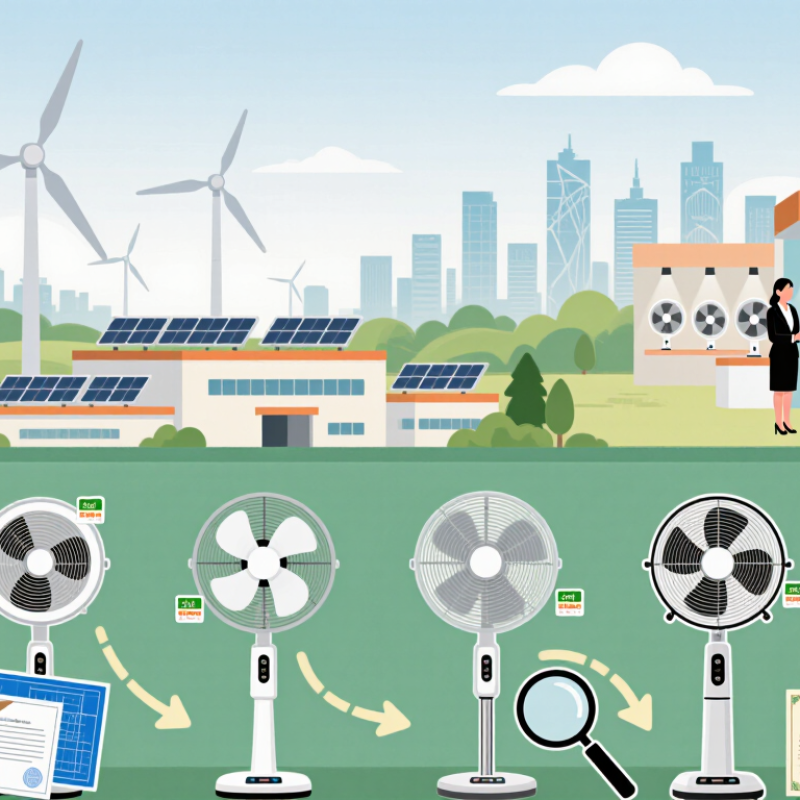
Where to Find Top Environmentally Friendly Fans in China?

What Makes a Fan Environmentally Friendly?

An environmentally friendly fan uses less electricity to move a useful amount of air. Look for airflow and power figures on the product label, then compare models of similar size. A low wattage number sounds appealing, but it means little if the fan barely cools a room. Check whether speed settings let you use gentle airflow when full power is unnecessary.

Small details matter. A sturdy grille, replaceable parts, and a motor designed for long service can reduce the need for early replacement. Ask whether common components, such as the remote or control board, can be repaired. Materials also count, though a recyclable housing is only helpful where suitable recycling facilities exist. Less packaging is a plus, but it should still protect the fan during delivery.

Try the fan in person if possible. Listen at low and high speeds, and notice whether its base feels stable on the floor. Quiet operation can encourage longer use, but noise ratings may not reflect every room. I would not judge a fan by one green claim alone. Compare its energy use, repair options, and everyday comfort together; the trade-offs are not always obvious.

Which Chinese Manufacturing Regions Specialize in Efficient Fans?

China’s fan manufacturing is spread across several connected regions, rather than one single hub. In Guangdong, especially around Foshan and Zhongshan, buyers can find dense networks for household appliances, motors, molded parts, and final assembly. That proximity may shorten sourcing conversations and make sample revisions easier. Details matter.

Zhejiang, including Cixi and Ningbo, is known for a broad small-appliance supply chain. Fan makers there may offer compact desk, pedestal, and circulation models, with nearby suppliers for housings and electrical components. Jiangsu has strengths in motors, controls, and industrial equipment, making parts of the region relevant for larger ventilation fans. These are tendencies, not guarantees; factory capabilities vary.

A regional label cannot confirm efficiency. Ask for the rated airflow and power consumption, then compare airflow per watt across equivalent operating settings. Request a test report for the exact model, not a similar product. During a factory visit, inspect blade balance, motor temperature, and noise at low and high speeds. The map is useful, but imperfect. A capable supplier may sit outside the best-known clusters, so verify production records, component sources, and sample performance before choosing.

Where to Find Reputable Fan Manufacturers and Suppliers in China

To find reputable fan manufacturers and suppliers in China, begin with established business directories, industry exhibitions, and referrals from importers with relevant product experience. Use these sources to build a shortlist, not to make a final decision. A directory listing or attractive booth can confirm little about production quality. Look closely.

Ask each supplier for its factory address, product specifications, and recent test reports. Where possible, arrange a factory visit or independent audit. Observe how motors, blades, and housings are assembled, and ask how quality checks are recorded. Request samples and compare airflow, noise, power use, and finish under the same conditions. Small details matter.

For environmentally friendly fans, ask for specific evidence behind claims about energy efficiency, materials, packaging, and product durability. Check that documents match the exact model being offered, and confirm which testing methods were used. Requirements may vary by destination market, so verify relevant standards before placing an order. A polished website is not proof. I would also leave time for a second review; supplier comparisons can feel clear until sample results differ. A careful paper trail helps keep decisions grounded.

How to Check a Supplier’s Quality and Environmental Credentials

When evaluating a fan supplier in China, look beyond product photos and sales promises. Request the factory’s quality-management certificate, then check its issuing body, validity dates, and covered activities. A certificate for an office or trading company may not describe the factory making your fans. Ask for recent inspection records, defect rates, and corrective-action examples. Specific answers matter.

Check environmental claims against documents tied to the actual product. Ask for energy-use test reports, material specifications, and details about recycled content or packaging. Confirm that the report names the same fan model and was issued by a qualified testing laboratory. If the supplier cites an environmental-management certificate, verify its scope and current status with the issuer. Paperwork can look convincing. It is not proof by itself.

A factory visit or live video tour can reveal practical details: labeled material bins, orderly assembly stations, and clear procedures for handling production waste. Ask staff to demonstrate how they test airflow, power consumption, and noise. Compare a sample with the report rather than relying on a catalogue figure. Small inconsistencies deserve questions, not instant rejection; records can be incomplete, and I would not treat one missing document as a final verdict. Keep a written checklist and request dated evidence before placing an order.

What to Compare When Choosing an Eco-Friendly Fan Supplier

When comparing eco-friendly fan suppliers in China, look beyond claims such as “energy-saving.” Ask for airflow and power-consumption data for the same fan speed, then compare airflow per watt. A supplier should explain how the figures were measured and provide recent test reports. Ask for a sample, too. A quiet showroom model may sound different in a small bedroom, where motor hum and blade wobble are easier to notice.

Materials and product life matter. Check whether plastic parts are clearly identified, metal components resist corrosion, and spare motors or control boards can be ordered. Request details on repair options and expected service life; vague answers deserve a follow-up. Packaging is worth checking as well. A fan packed in thick foam may arrive safely, but the supplier should explain whether less material or recyclable alternatives are practical. Details matter.

Compare factory quality controls, lead times, minimum order quantities, and the process for handling defects. Ask how often finished units are sampled and what happens when a batch fails inspection. Documents help, but they do not replace a physical sample or clear communication. Even a tidy comparison sheet can miss things: I would record unanswered questions alongside prices, rather than treating a low quote as proof of value.

Where to Find Top Environmentally Friendly Fans in China?

Compare suppliers using verifiable product specifications, test reports, and factory documentation—not unverified environmental claims.

How to use this chart: The 1–5 values are suggested evaluation priorities, not measured supplier data or market rankings. Request comparable evidence for each criterion, including energy-efficiency test results, airflow and power figures, noise measurements, material details, and applicable compliance documents.

Scroll to Top