
What Are the Top Mine Exhaust Fans?

Selecting the right Mine Exhaust Fans is a safety decision, not merely an equipment purchase. Underground workings depend on reliable airflow to dilute methane, diesel particulate matter, heat, and blasting fumes. A fan may look powerful on a specification sheet. Its real value appears underground, beside long duct runs, bends, dust, and changing resistance.

The International Energy Agency’s Global Critical Minerals Outlook 2024 highlights expanding mineral demand and deeper, more energy-intensive operations. That trend increases pressure on mine ventilation systems. The World Bank’s Minerals for Climate Action report projects mineral production could rise by nearly 500% by 2050. More production will require stronger airflow planning, efficient motors, and dependable controls. These reports do not rank fan brands. They show why selection standards must be rigorous.

NIOSH guidance consistently emphasizes airflow measurement, contaminant control, system redundancy, and worker exposure protection. The Global Mining Guidelines Group also recommends evaluating ventilation through the complete network, rather than judging one fan alone. That approach matters. An efficient impeller cannot compensate for leaking stoppings or undersized ducting. Top Mine Exhaust Fans should therefore be compared through airflow volume, static pressure, efficiency, noise, vibration, monitoring options, and maintenance access. Field experience adds another lesson: corrosion and dust often reduce performance sooner than expected. Some published efficiency claims also assume clean, stable conditions. Real mines are rarely so cooperative. This article examines leading fan solutions through technical performance, operating reliability, lifecycle cost, and documented ventilation practice. The final choice should still follow a site-specific survey and qualified engineering review.
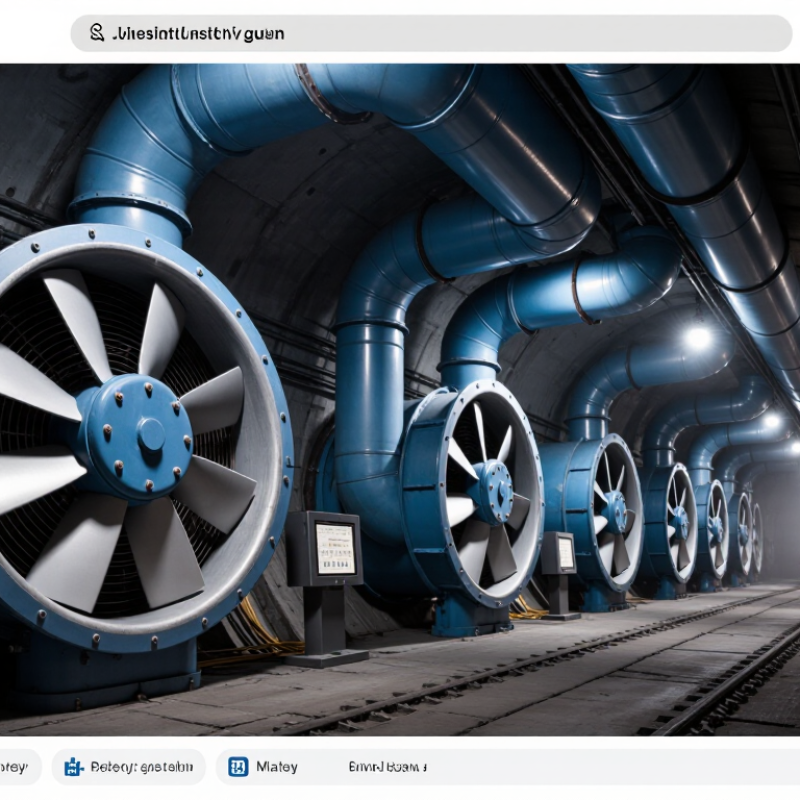
What Are the Top Mine Exhaust Fans?

What Are Mine Exhaust Fans and Why Are They Important?

What Are Mine Exhaust Fans and Why Are They Important?

Mine exhaust fans are powerful ventilation machines that remove contaminated air from underground workings. They pull out dust, heat, fumes, and gases through shafts, raises, or ventilation ducts. Fresh air then replaces the extracted air. This continuous movement helps workers breathe more safely and keeps equipment operating in difficult conditions.

Top-performing mine exhaust fans are not judged by size alone. Their value depends on airflow, pressure, energy use, noise, durability, and control accuracy. A fan moving air through a long, narrow tunnel faces more resistance than one serving a wide chamber. Poorly sealed doors and damaged ducting can also reduce performance. In practice, technicians often check vibration, bearing temperature, airflow readings, and motor condition during inspections. Small warning signs matter. I have learned that a quiet fan is not always a healthy fan.

Tips: Match the fan to the ventilation network, not just the rated airflow. Inspect blades and guards regularly. Measure airflow at working areas, not only near the fan. Keep maintenance records with dates, readings, and unusual sounds. Variable-speed controls can reduce wasted power when demand changes. However, controls need qualified setup and regular testing. A rushed adjustment may create uneven ventilation. Airflow plans should be reviewed when mine layouts, production levels, or equipment change. Safety assumptions can become outdated faster than expected.

What Are the Top Mine Exhaust Fans?

What Are Mine Exhaust Fans and Why Are They Important?

Mine exhaust fans remove contaminated air, heat, dust, diesel particulate matter, and potentially hazardous gases from underground workings. The chart shows representative airflow ranges commonly used for different mine ventilation duties. Actual fan selection depends on mine layout, airway resistance, depth, gas conditions, and required ventilation volume.

Representative engineering planning ranges; values are not manufacturer ratings and should be verified through a mine ventilation survey and system-resistance calculation.

How Mine Exhaust Fans Work in Underground Ventilation

Mine exhaust fans create the pressure difference that moves air through underground workings. Their rotating impellers pull used air toward a surface exhaust shaft. Fresh air then enters through intake shafts, declines, or dedicated openings. That pressure difference drives airflow. Regulators, doors, and stoppings guide air toward active work areas. A small leakage path can weaken the entire ventilation circuit.

Axial fans suit systems requiring high air volume with moderate pressure. Centrifugal fans generally handle higher resistance from long ducts, bends, and restrictive passages. The best mine exhaust fan depends on airway length, required airflow, pressure loss, dust exposure, and operating conditions. Variable-speed drives can adjust fan output as production areas change. This can reduce energy waste, but poor control settings may create unstable airflow. Fan selection should follow measured ventilation data, engineering calculations, and applicable mine safety standards.

Ventilation teams should monitor airflow, pressure, temperature, vibration, and motor performance. During inspections, unusual noise or rising vibration may reveal damaged blades, bearing wear, or imbalance. A fan may sound normal and still deliver inadequate air. That is easy to miss. Regular instrument checks matter more than appearance alone. Emergency airflow reversal may also be required in some mine designs, but it needs careful testing and clear procedures. No fan works alone. Duct leaks, poorly sealed stoppings, or an open door can undermine a well-sized system. Calculations provide a strong foundation, yet underground conditions often change faster than drawings.

Key Types of Mine Exhaust Fans and Their Applications

What Are the Top Mine Exhaust Fans?

Mine exhaust fans are selected by airflow, pressure, gas conditions, and tunnel geometry. Axial fans suit large air volumes with modest resistance. They commonly serve main shafts, declines, and long return-air routes. Their compact blades also simplify installation underground. Centrifugal fans generate higher pressure. They work better where ducts are narrow, bends are frequent, or regulators create resistance. Mixed-flow fans occupy the middle ground. They can balance pressure and airflow when mine layouts change.

Auxiliary exhaust fans remove contaminated air from headings and blind tunnels. A flexible duct trails behind the advancing face, pulling dust and diesel fumes toward the return airway. For larger headings, twin fans can provide stronger extraction and some operational redundancy. Main exhaust systems usually require fixed-duty fans, standby capacity, vibration monitoring, and variable-speed control. Poor damper settings can waste energy and reduce face ventilation. The mistake is common.

The International Energy Agency’s Global Methane Tracker 2024 estimated about 40 million tonnes of methane emissions from coal operations in 2023. Effective ventilation and monitoring therefore support both worker protection and emissions management. NIOSH ventilation research also emphasizes matching fan performance with duct leakage and system resistance. A fan may look powerful on paper. Field measurements matter more. Airflow surveys, pressure readings, gas sensors, and maintenance records reveal whether the selected type actually performs underground. Survivability is often overlooked. Temperature, dust, moisture, and electrical protection can change the decision.

How to Compare Mine Exhaust Fan Performance and Efficiency

What Are the Top Mine Exhaust Fans?

Comparing mine exhaust fan performance starts with the duty point, not the catalogue headline. Record airflow, total pressure, air density, and operating hours at the mine site. A fan delivering 250 m³/s at 3,000 Pa may outperform a larger fan operating far from its best-efficiency point. ISO 5801 testing helps compare airflow and pressure under controlled conditions. Yet field results can differ because of leakage, dust, bends, and worn impellers.

Energy deserves equal attention. Industry studies reported through Australia’s ACARP research program commonly estimate ventilation uses about 40–50% of underground mine electricity. This makes fan efficiency a major operating issue. Compare shaft power, motor efficiency, variable-speed control, and annual energy use. Check the complete system, too. A highly efficient fan cannot correct a poorly sealed airway. NIOSH mine ventilation research also stresses reliable airflow measurement and effective monitoring. One weakness remains: predicted savings often look cleaner than real mine conditions.

Tips: Ask for certified performance curves, not only peak efficiency. Measure airflow and pressure during different production periods. Inspect doors, stoppings, seals, and duct joints before upgrading equipment. Review noise, vibration, maintenance access, and backup capacity. A small error in pressure measurement can distort the comparison. Recheck the numbers.

Safety, Maintenance, and Selection Factors for Mine Exhaust Fans

What Are the Top Mine Exhaust Fans?

The best mine exhaust fan is not always the largest or fastest model. Selection begins with airflow demand, static pressure, tunnel length, and ventilation resistance. A reliable fan should maintain steady air movement under changing underground conditions. Look for strong housing materials, protected motors, secure guards, and controls suited to dust, moisture, and temperature changes. Equipment certification must match the mine’s operating environment and local safety requirements. Quiet operation also matters, because abnormal noise can hide warning signs.

Safety depends on more than fan capacity. Installers should confirm airflow direction, emergency isolation, and access for inspections. Vibration, rising motor temperature, loose bolts, and damaged blades need prompt attention. During maintenance, isolate the power supply and follow approved site procedures. Keep inspection records specific. Note the date, readings, unusual sounds, and corrective action. Small details can reveal larger failures. A clean-looking fan may still have worn bearings or electrical faults.

Tips: Check actual airflow after installation, not only the design calculation. Inspect guards and fasteners each shift when conditions are harsh. Clean dust from accessible surfaces without damaging components. Replace questionable parts rather than delaying repairs. A specification sheet can look perfect, yet field conditions may expose weaknesses. No selection is flawless, so review performance after seasonal changes, extensions, or ventilation modifications.

What Are the Top Mine Exhaust Fans? Safety, Maintenance, and Selection Factors
Fan Type Typical Mining Application Airflow and Pressure Characteristics Key Safety Considerations Maintenance Priorities Selection Rating Best Selection Factors
Large Axial Main Fan Primary ventilation for underground mines, shafts, declines, and large production areas. Very high airflow with low-to-moderate pressure. Airflow can be reversed on suitable designs for emergency or planned ventilation changes. Use guarded rotating parts, emergency shutdown controls, vibration monitoring, fire protection, and electrical equipment suitable for the classified area. Inspect blades, hub assembly, bearings, couplings, belt drives, vibration levels, casing, and emergency controls. Keep an operating log for airflow, pressure, temperature, and vibration. Excellent for main ventilation Required airflow, total system resistance, reversal capability, noise limits, motor power, duty-cycle reliability, and available installation space.
Centrifugal Main Fan High-resistance mine ventilation systems, deep shafts, long airways, and applications requiring stable pressure. Moderate-to-high pressure capability and stable performance across a broad operating range. Usually less compact than an axial fan at the same duty. Provide secure inlet and outlet guards, overspeed protection where applicable, electrical isolation, fire-resistant construction where required, and protection against excessive vibration. Check impeller balance, shaft alignment, bearings, seals, belts or couplings, casing wear, and dust buildup. Verify that the fan remains within its approved operating curve. Excellent for high resistance System pressure, dust loading, impeller wear, efficiency at the duty point, access for maintenance, and foundation requirements.
Auxiliary Axial Fan Secondary ventilation for headings, tunnels, development drives, raises, and localized work areas. High airflow in a compact form. Commonly used with ventilation ducting; actual delivered airflow decreases as duct length, leakage, and resistance increase. Protect workers from rotating parts, prevent damaged ducting from restricting airflow, use suitable electrical protection, and maintain adequate clearance around the fan. Inspect fan guards, blades, motor connections, duct joints, hanging supports, and airflow direction. Repair duct leaks and remove obstructions promptly. Excellent for localized ventilation Required face airflow, duct diameter, duct length, leakage rate, pressure loss, portability, starting current, and ease of relocation.
Mixed-Flow Fan Ventilation systems requiring a balance between axial-fan airflow and centrifugal-fan pressure performance. Moderate-to-high airflow with moderate pressure capability. Often suitable where system resistance is higher than a conventional axial fan can efficiently handle. Use correct motor protection, guarding, vibration monitoring, and controls suitable for the mine environment. Confirm the fan will not operate in an unstable region of its performance curve. Monitor bearings, impeller condition, vibration, motor temperature, and casing wear. Check performance after ductwork or airway changes. Very good for balanced duties Pressure stability, airflow range, energy efficiency, installation orientation, access to components, and compatibility with variable-speed control.
Explosion-Protected Auxiliary Fan Areas where methane, combustible dust, or other hazardous atmospheres may be present, subject to local regulations and mine risk assessment. Airflow and pressure are selected according to the ventilation circuit; the defining feature is compliance with the required hazardous-location protection level. Use certified equipment appropriate to the hazardous classification. Control ignition sources, maintain electrical integrity, bond and ground equipment where required, and follow gas-monitoring procedures. Inspect certified enclosures, cable glands, grounding connections, seals, guards, and protective devices. Do not modify certified components without approval. Essential where hazards require it Hazard classification, certification requirements, gas-monitoring strategy, motor protection, cable routing, local regulations, and authorized maintenance capability.
Variable-Speed Mine Fan Main or auxiliary systems with changing production schedules, variable airway resistance, or demand-controlled ventilation. Adjustable airflow and pressure allow ventilation to match demand. Lower speed generally reduces power consumption, but the operating point must remain within the approved fan curve. Use compatible drives, motor insulation, emergency bypass or shutdown arrangements, harmonic mitigation where needed, and safeguards against unintended restart. Inspect drive cooling, filters, electrical connections, motor temperature, vibration, and control alarms. Verify sensors and setpoints during planned inspections. Excellent for energy management Required control range, minimum stable speed, motor-drive compatibility, harmonic effects, response time, energy targets, and operator training.
Portable Auxiliary Fan Temporary ventilation during construction, maintenance, emergency response, or changing underground work locations. Usually lower capacity than a main fan, with quick deployment and flexible duct connection. Performance depends strongly on duct configuration and leakage. Provide stable mounting, protected electrical connections, safe lifting points, guarded inlets and outlets, and clear escape routes. Prevent duct movement or collapse near workers. Check wheels or lifting devices, mounting brackets, guards, power cables, duct connections, and motor condition before each relocation. Excellent for temporary duties Weight, portability, power supply, setup time, duct compatibility, noise, durability, and ease of inspection.
Energy-Efficient High-Efficiency Fan Continuous-duty ventilation systems where electrical consumption and operating cost are major concerns. Designed to deliver the required duty point with reduced losses. The highest efficiency is achieved only when the fan, motor, controls, and ventilation network are correctly matched. Efficiency must not compromise required airflow, redundancy, emergency performance, or safety controls. Confirm operation under normal and emergency ventilation modes. Maintain clean air passages, correct blade settings, aligned drives, adequate lubrication, and accurate sensors. Compare measured performance with commissioning data. Excellent for long-term operation Life-cycle cost, duty-point efficiency, motor efficiency, variable-speed suitability, reliability, spare-parts availability, and measured commissioning results.
Scroll to Top