
An Advertising Flag Pole turns a moving strip of fabric into a visible landmark. Businesses use one to mark an entrance, highlight a promotion, or help visitors find a booth. Outside a café, a feather flag can sway above parked cars. At a trade show, a compact banner can rise above a crowded aisle. The message is simple: notice this place.
The wider outdoor advertising market shows why visibility matters. The Out of Home Advertising Association of America reported that U.S. out-of-home advertising revenue reached a record $9.1 billion in 2024. That figure covers many formats, not flag poles alone. It offers useful context, but it should not be mistaken for proof that every flag increases sales. Placement, design, weather, and nearby visual clutter all affect performance.
A good flag is specific and readable. Use a short message, strong contrast, and a height suited to the viewing distance. Check the base, fabric, and fastenings before placing it where people pass. Small details matter. A beautiful flag hidden behind a delivery van is still hidden. Results can also be difficult to isolate when signs, online campaigns, and foot traffic work together. That uncertainty deserves attention, not guesswork. The sections ahead explain common uses, flag styles, placement choices, and practical limits, helping readers decide whether an Advertising Flag pole fits their site and goals.
An advertising flag pole is a lightweight support designed to display promotional fabric flags. It holds a tall, narrow graphic where people can see it from a distance. Common shapes include feather, teardrop, and rectangular flags. The pole often comes in connected sections, with a curved top that helps shape the fabric. A base keeps it upright on pavement, grass, or indoor flooring.
Unlike a permanent flagpole, this type is usually made for temporary displays and easier transport. The fabric sleeve or edge attaches to the pole, while the base suits the surface beneath it. Some bases use a ground spike; others use a flat plate or water-filled support. Wind matters. A flexible pole may move with a breeze, but strong gusts can still strain the fabric or tip the display. That detail is easy to underestimate when choosing a setup.
Tips: Match the base to the surface and check the flag’s height against nearby signs or doorways. Keep the fabric taut, but do not force it onto the pole. A slightly less prominent placement can sometimes work better than a flag that blocks a walkway or competes with other displays.
An advertising flag pole holds a printed flag upright and visible above nearby displays. Its structure turns a flat graphic into a moving marker people can notice from a distance. A typical setup uses a flexible mast, a fabric sleeve or edge pockets, and a ground stake or weighted base. The sleeve guides the pole through the flag, while tension helps keep the message readable. Wind adds motion, but it can also fold the fabric or twist the print. Small details matter.
The base controls where and how the flag stands. A ground stake suits grass or soil; a weighted base works better on hard floors. Pole sections connect to set the flag’s height and curve, while the flag’s cut must match the frame. A loose fit can sag. A tight one may strain seams. The setup is not foolproof, especially in gusty conditions, so placement and inspection matter.
Signage can influence store visits, though it cannot guarantee attention. A 2012 FedEx Office consumer survey reported that 76% of respondents had entered a store they had not visited before because of its signs. It also found that 68% had bought a product or service because a sign caught their attention. Those figures concern signage broadly, not advertising flags specifically. Still, they show why a clear, elevated message can be useful near entrances, queues, and event paths. One practical limitation remains: if people cannot read the flag quickly, movement alone will not help.
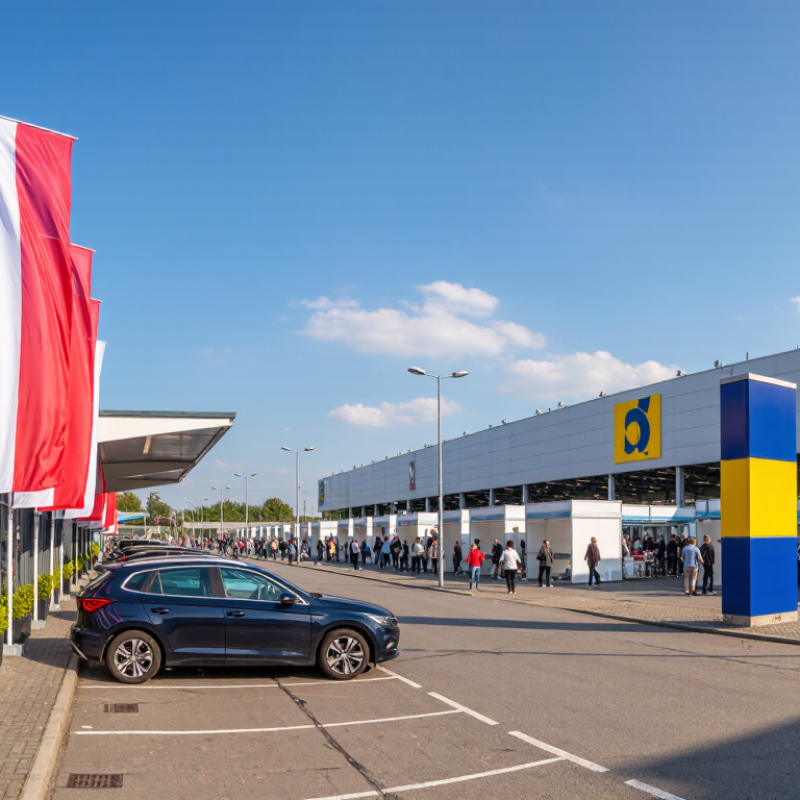
Advertising flag poles are common outside shops, cafés, and shopping centers, where they help visitors spot an entrance from a busy sidewalk. A row of narrow flags can mark a sale or seasonal display without taking up much ground space. Keep them clear of doors and walking paths. Small details matter.
Car dealerships, garden centers, and home-improvement stores often place flags along parking-lot edges. Their height can make a location easier to notice from the road, especially when nearby signs are low. But more flags do not always mean more attention. Crowded layouts can look noisy, and wind may twist fabric around the pole.
Trade shows, sports grounds, campuses, and outdoor markets also use advertising flag poles to identify booths, gathering points, or temporary promotions. Lightweight bases are useful on indoor floors, while weighted bases can provide steadier support outdoors. Conditions vary, so check the surface and expected weather before setup. A flag that looks crisp in calm air may become hard to read in gusts. At open houses or property developments, flags can guide visitors toward a sales area, though their placement should feel helpful rather than obstructive.
What Is an Advertising Flag Pole Used For?
How Businesses Use Them to Attract Attention
An advertising flag pole gives a business a tall, moving sign that people can notice from a street, parking lot, or event entrance. The fabric rises above parked cars and storefront clutter, while its movement can catch the eye without sound. Cafés may place one near a sidewalk to point out outdoor seating. A repair shop might use one to mark its driveway. At a market, a bright flag can help visitors find a booth from farther away. It works best when the message is brief, readable, and relevant to the location.
Tips: Choose a flag size that suits the viewing distance, and check that the pole is stable on the intended surface. Keep the wording simple, such as “Open” or a service name. Place it where people can see it, but not where it blocks a doorway or pedestrian path. Check the fabric and fittings regularly; wind, rain, and repeated folding can wear them down. Small details matter.
A flag pole can support a promotion, but it cannot fix unclear signage or a hard-to-find entrance. It is easy to overestimate how much attention one flag will attract. Too many flags competing along one frontage can make each message harder to notice. One well-positioned flag often looks more deliberate. Consider wind exposure and nearby sightlines before setting it out. On a calm day, the fabric may hang limp. That’s worth planning for.
Businesses use advertising flag poles to lift promotional messages above storefronts, entrances, and event crowds—helping them catch attention from a distance.
Representative flag heights: 8, 10, and 12 feet are common size options. A taller flag may be easier to see over nearby obstacles, while the best choice depends on the site and local conditions. Available sizes vary by supplier; these are examples, not survey data.
An advertising flag pole displays a branded or informational flag where people can notice it while walking or driving. Its effectiveness depends less on height alone than on the whole viewing situation. A pole beside a busy entrance may attract attention, while one hidden behind parked vehicles can disappear. Distance matters, too. Small lettering becomes hard to read across a wide parking lot.
Visibility improves when the flag contrasts with its background and moves freely in a light breeze. Fabric choice, flag size, pole height, and nearby buildings all affect how clearly it appears. Strong wind can make a flag fold around the pole or flap so quickly that its message is difficult to read. Dirt, fading, and loose fittings also reduce impact. A common planning mistake is choosing a location from a desk; the view can feel different at sidewalk level.
Tips: Check the flag from several approach angles before installation. Keep key words brief and high-contrast. Inspect stitching and fittings regularly, especially after windy weather. A quick site test helps, though it cannot predict every condition.