
Why Are Automobile Bushings Important?
An Automobile Bushing is a small part with a demanding job. It sits between suspension or steering components, where it cushions contact and allows controlled movement. Picture a control arm rising over a pothole: its bushing helps soften the impact before vibration reaches the cabin. It also helps keep connected parts aligned. Small component. Big consequences.
Vehicle-dynamics engineer Thomas D. Gillespie’s published work explains how suspension behavior affects a vehicle’s response. A practical paraphrase of that engineering principle is: “A well-controlled suspension helps the tires stay connected to the road.” This is a paraphrase, not a verbatim quotation. Bushings contribute by flexing under load, but age, heat, road salt, and repeated impacts can wear them down. Cracked rubber, excess play, clunks, or uneven tire wear may signal a problem; none proves the bushing is faulty on its own. Diagnosis matters.
Why does this matter to drivers? Worn bushings can change steering feel, increase noise, and affect handling, especially over rough pavement or during braking. Yet replacement is not automatically the answer. Bushing design, inspection methods, and service limits vary by vehicle. A careful technician checks related joints and follows the manufacturer’s procedures before recommending repairs. That detail is easy to overlook. This guide explores what bushings do, common wear symptoms, inspection basics, and why timely attention can protect ride comfort and predictable handling. It also leaves room for a useful caution: not every vibration begins at a bushing.
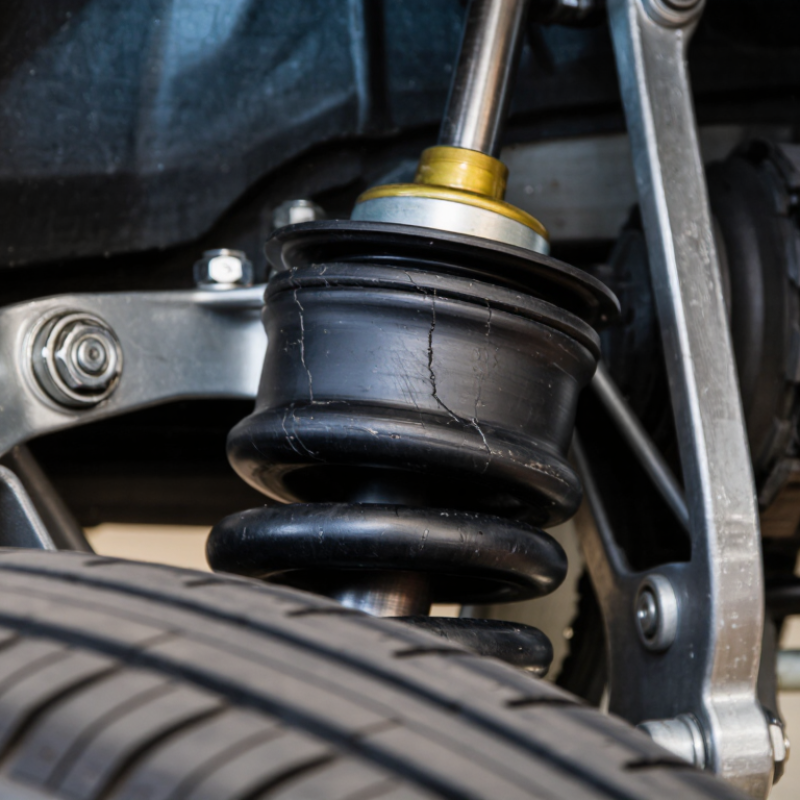
What Automobile Bushings Do in a Vehicle’s Suspension and Chassis
Automobile bushings are flexible joints between suspension or chassis parts. They let components pivot in a controlled way while reducing the harsh vibration that travels from tires into the cabin. A control-arm bushing, for example, cushions movement as a wheel crosses a pothole. The metal parts still need to move. The bushing helps guide that movement rather than letting the arm shift freely.
Bushings also help preserve suspension geometry under braking, cornering, and acceleration. When they are in good condition, the tires can maintain steadier contact with the road, and steering often feels more predictable. They may be made from rubber or other resilient materials, each with different firmness and comfort characteristics. A firm bushing can transmit more road feel. That matters. It may also make a rough commute less pleasant.
With age, heat, road salt, and repeated flexing can cause a bushing to crack, soften, or separate from its sleeve. Drivers may notice a dull clunk over bumps, uneven tire wear, or vague steering, but these signs can have other causes. No single noise confirms a failed bushing. A careful inspection checks for splits, excessive movement, and looseness at the joint. It is easy to overlook these small parts because they rarely draw attention until handling changes. That distinction deserves attention.
| Bushing Location | What It Connects | Main Function | How It Supports the Vehicle | Possible Signs of Wear | Inspection Considerations |
|---|---|---|---|---|---|
| Control arm pivots | Control arms to the vehicle frame or subframe | Allows controlled suspension movement while limiting unwanted movement. | Helps keep wheel position and alignment stable as the suspension moves over bumps and during cornering. | Clunks over bumps, uneven tire wear, steering wander, or visibly cracked or separated rubber. | Check for splitting, excessive deformation, separation from the sleeve, and abnormal movement. Confirm any alignment concerns with a qualified inspection. |
| Stabilizer bar mounts and end links | The stabilizer bar to the chassis, or the bar to suspension links | Cushions contact and permits the bar and links to move as the suspension articulates. | Helps the stabilizer bar resist differences in left-to-right suspension movement and reduce body roll. | Rattling or knocking over uneven surfaces; a worn bushing may also look cracked, loose, or compressed. | Inspect the mount and link bushings for looseness, deterioration, or missing material. Noise alone does not confirm bushing failure. |
| Subframe mounts | The suspension or engine subframe to the vehicle body | Supports the subframe and helps isolate vibration and noise from the body. | Helps maintain the subframe’s position while reducing the transmission of some road and drivetrain vibration. | Excessive vibration, clunks, or visible deterioration; symptoms can also come from other mounts or suspension parts. | Look for torn or displaced material and signs of abnormal subframe movement. Diagnosis may require inspection under load. |
| Strut or shock absorber mounts | The top of a strut or shock assembly to the body or chassis | Provides a cushioned mounting point; some front strut mounts also incorporate a bearing for steering rotation. | Helps limit vibration transfer and allows the suspension assembly to move or rotate as designed. | Clunks, creaks, or knocking near a wheel; steering stiffness or noise may occur on some designs. | Inspect the mount and any integrated bearing according to the vehicle’s service procedure. The exact design varies by vehicle. |
| Leaf-spring eye or shackle mounts | The ends of a leaf spring to the frame or suspension shackle | Allows the spring to pivot as it flexes and the suspension travels. | Supports suspension movement while helping control spring position and noise. | Squeaks, clunks, visible cracking, or movement at the spring eye or shackle. | Check for deterioration, looseness, or metal-to-metal contact. Inspect related spring and fastener components as well. |
| General chassis and suspension joints | Selected suspension links or chassis-mounted components | Provides a flexible interface between connected parts and reduces direct metal contact. | Balances component movement, vibration isolation, and positional control; stiffness depends on the application. | Noise, vibration, handling changes, or uneven tire wear may occur, but these symptoms have many possible causes. | Use the vehicle manufacturer’s inspection and replacement procedures. Do not diagnose a bushing from one symptom alone. |
Key point: Bushings are flexible joints, commonly made from rubber or other elastomeric materials. Their design and stiffness vary by location. A worn bushing can affect noise, vibration, handling, or alignment, but symptoms should be checked alongside other suspension components.