Why Choose a UAV Camera Gimbal for Aerial Imaging?
Why Choose a Uav Camera Gimbal for Aerial Imaging?
Aerial imaging is no longer limited to dramatic landscapes. Survey teams inspect bridge joints, farmers check stressed crop rows, and emergency crews map changing terrain. In each case, a stable image matters more than a spectacular flight. The FAA’s Aerospace Forecast 2024–2044 reports more than 850,000 registered drones in the United States, showing how quickly airborne imaging has entered practical operations. As adoption grows, image quality becomes a working requirement, not a luxury.
A Uav Camera Gimbal helps maintain a level horizon while the aircraft accelerates, turns, or meets uneven wind. Its motors make tiny corrections several times each second. The result is sharper video, cleaner orthomosaics, and more reliable thermal comparisons. MarketsandMarkets identifies stabilization as a key development area within the expanding drone and camera ecosystem. Grand View Research also projects strong growth in commercial drone applications, especially inspection, mapping, and agriculture. These reports suggest demand, but demand alone proves nothing.
Industry analyst Colin Snow, founder of Drone Analyst, has emphasized that “a drone is only as valuable as the data it produces.” That principle explains the gimbal’s role. A powerful sensor can still produce blurred frames. A lower-cost platform may deliver better evidence with disciplined stabilization. Yet a gimbal is not magic. Poor calibration, vibration, weak lighting, and rushed flight planning can still damage results. This is where many product comparisons feel too neat. Choosing the right Uav Camera Gimbal requires examining payload weight, control accuracy, weather tolerance, latency, and maintenance support. The best system is not always the most expensive. It is the one that keeps useful detail visible when conditions become difficult.
What Is a UAV Camera Gimbal?
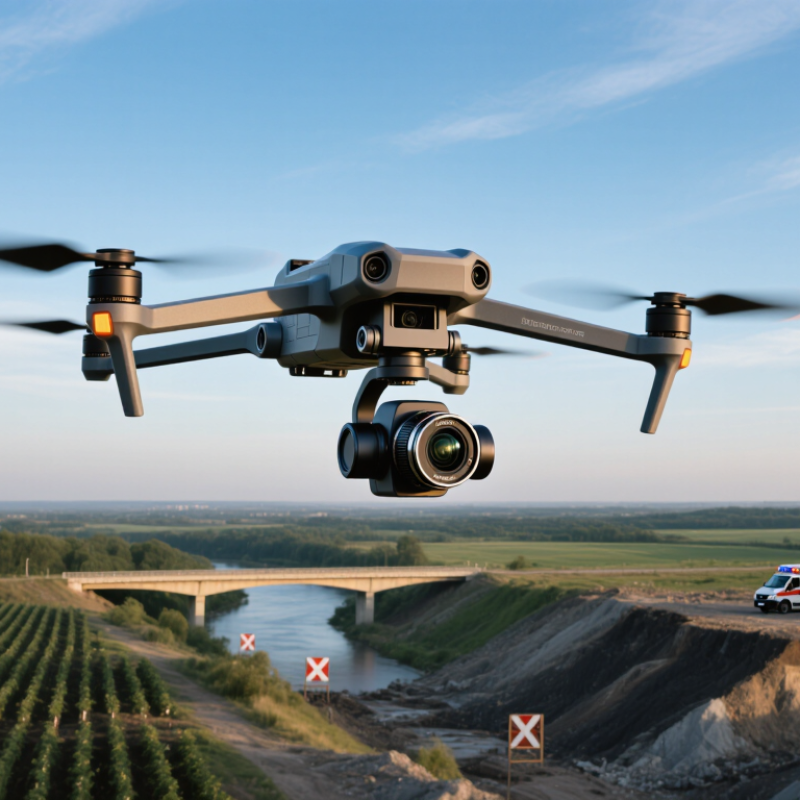
A UAV camera gimbal is a motorized mount that keeps an airborne camera steady during flight. It usually controls two or three axes: pitch, roll, and yaw. Small motors respond to movement detected by an inertial measurement unit, or IMU. This process reduces the effects of wind, vibration, and sudden changes in direction.
It is not magic. The gimbal cannot repair poor focus, weak lighting, or a badly planned flight path. However, it can keep a camera pointed at a selected subject while the UAV moves around it. During aerial inspections, this stability helps produce sharper images of roof edges, power structures, farmland, and construction details. The result is easier to review and compare.
A reliable gimbal also depends on balanced equipment, correct calibration, and suitable payload limits. Excessive camera weight can slow the motors and create uneven movement. In practical testing, even a loose mounting screw may introduce visible shaking. Small errors matter. Operators should check the horizon, motor response, and vibration before recording important footage. A gimbal is therefore both a mechanical support and a control system, not merely an accessory attached beneath a UAV.
How Does a UAV Camera Gimbal Stabilize Aerial Images?
A UAV camera gimbal keeps aerial images steady while the aircraft moves, tilts, and vibrates. Its three-axis structure controls roll, pitch, and yaw independently. Small motors respond to data from an inertial measurement unit, or IMU. Gyroscopes detect rotation, while accelerometers sense movement. A control processor then corrects the camera’s position several hundred times per second.
The process is precise but not magical. During a sharp turn, the gimbal briefly counters the aircraft’s rotation. Encoders measure motor position, and feedback loops refine each correction. This helps keep the horizon level and reduces motion blur during slow shutter speeds. A 2024 report from Drone Industry Insights identifies surveying, inspection, and mapping as major commercial UAV applications. These tasks depend heavily on stable imagery and repeatable camera angles.
Market evidence also shows rising demand. Grand View Research estimates the global drone camera market reached about USD 11.48 billion in 2023, with projected growth near 19.1% annually through 2030. Better stabilization supports that expansion, especially for detailed roof surveys and terrain models. Yet balance matters. A heavier camera can overload the gimbal, shorten flight time, and create new vibrations. I have found that perfect footage is not guaranteed. Wind, loose mounting, and poor calibration still leave visible errors. Those weaknesses deserve attention before every flight.
Which Imaging Benefits Does a UAV Gimbal Provide?
A UAV camera gimbal improves aerial imaging by keeping the lens steady during flight. It counters aircraft vibration, sudden turns, and changing wind conditions. This stability produces sharper photographs and smoother video, especially from higher altitudes. Fine details become easier to inspect, including roof damage, crop stress, and surface cracks. Motion blur is reduced. That matters.
The gimbal also allows controlled camera angles while the UAV follows a planned route. Operators can capture straight-down images for mapping and angled views for structural inspection. Consistent angles make images easier to compare across different dates. Many systems support visible-light, thermal, or multispectral cameras. Each sensor reveals different information. Thermal imagery may show heat loss or unusual equipment temperatures, while multispectral data can reveal plant stress before it becomes obvious.
Reliable results still depend on careful preparation. Balance the payload, check the horizon, and confirm that the lens is clean. Strong stabilization cannot repair poor focus or incorrect exposure. It is easy to blame the gimbal when the real problem is vibration from an overloaded aircraft. Calibration may also drift after hard landings or repeated transport. A field checklist helps, but it is not perfect. Reviewing sample images before a full survey can expose tilted horizons, missing areas, or inconsistent lighting. These small checks often protect the value of the final dataset.
How to Choose a UAV Camera Gimbal for Different Missions?
Choosing a UAV camera gimbal starts with the mission, not the highest resolution. Mapping requires stable nadir images, accurate positioning, and minimal rolling-shutter distortion. Inspection work needs smooth zoom, low-latency video, and precise control around towers or bridges. For thermal surveys, sensor compatibility and radiometric accuracy matter more than cinematic movement.
MarketsandMarkets reported that the global UAV market could grow from about USD 30.6 billion in 2022 to USD 58.4 billion by 2027. This growth reflects wider demand for reliable aerial data. A gimbal should therefore match the aircraft’s payload capacity, flight time, and onboard computing limits. Three-axis stabilization is useful, but it can increase weight and power consumption. Check the figures.
For emergency mapping, choose fast startup, strong vibration isolation, and dependable image transmission. Environmental protection also matters when rain, dust, or sudden temperature changes affect the flight. The International Organization for Standardization’s ISO 21384-3 guidance emphasizes operational risk management for unmanned aircraft, making secure mounting and predictable control essential. For film work, prioritize silent motors, smooth acceleration, and repeatable movement. For surveying, prioritize calibrated sensors and data consistency. More features are not always better. A heavy gimbal may produce beautiful footage but shorten flight time by several minutes, which can disrupt a real mission. Testing the complete aircraft, payload, and software together remains wiser than trusting a specification sheet alone.
What Factors Affect UAV Gimbal Performance and Reliability?
Why Choose a UAV Camera Gimbal for Aerial Imaging?
What Factors Affect UAV Gimbal Performance and Reliability?
A UAV gimbal converts aircraft movement into stable, usable imagery. Its reliability depends on more than motor strength. The payload’s weight, center of gravity, and lens position must match the gimbal’s design. Even a small imbalance increases motor load and drains batteries faster. Small errors compound. MarketsandMarkets’ 2024 UAV analysis projects the drone market will grow from approximately $35.6 billion in 2024 to $67.3 billion by 2029. More aircraft will demand more consistent imaging hardware.
Vibration is another critical factor. Propeller imbalance, loose mounting screws, and frame resonance can create blurred frames or unstable video. Field technicians should inspect dampers, wiring, and fasteners before every demanding mission. I have found that calibration is often treated as routine, although temperature changes can shift sensor readings. That assumption deserves review. A gimbal should also manage heat, dust, moisture, and sudden power changes. Ingress protection and thermal testing matter during long flights.
Control software affects performance as much as mechanical construction. Fast sensor sampling, accurate inertial data, and smooth stabilization reduce response delay. The 2023 AUVSI Economic Report estimated that the U.S. drone industry could create over $115 billion in economic impact by 2025. Such growth raises expectations for dependable data collection. However, published specifications rarely reveal long-term vibration fatigue or repair intervals. Buyers should request endurance tests, operating-temperature limits, calibration procedures, and failure-rate evidence before choosing a UAV camera gimbal.