Why Choose Electric Pallet Jacks for Your Warehouse?
Why Choose Electric Pallet Jacks for Your Warehouse?
Electric Pallet Jacks are changing how warehouses move pallets across busy floors. They reduce physical strain, improve travel speed, and support more consistent handling. Operators can guide heavy loads with a control handle instead of relying on constant manual force. That difference becomes clear during long shifts, narrow aisle turns, and repeated loading tasks.
Warehouse equipment expert James A. Tompkins once emphasized, “Material handling succeeds when equipment fits the work, not when the work fits the equipment.” His point remains practical. Electric Pallet Jacks can suit distribution centers, retail backrooms, cold-storage facilities, and smaller operations. However, choosing one requires more than checking battery capacity or maximum load weight. Floor conditions, ramp use, turning space, operator training, and service access also matter.
The benefits are tangible. A powered jack can move a 2,000-kilogram pallet with smoother acceleration. It may reduce fatigue near the end of a shift. It can also help maintain steadier workflows when demand rises. Still, electric power is not a perfect answer. Batteries need charging. Controls require familiarization. Poorly planned routes can create congestion, even with better equipment.
That deserves honest attention.
A strong purchasing decision compares real operating patterns, not impressive specifications alone. Managers should observe travel distances, pallet sizes, shift lengths, and maintenance history. The right Electric Pallet Jacks should make daily work safer, simpler, and more predictable. They should not introduce complexity that the warehouse cannot support.
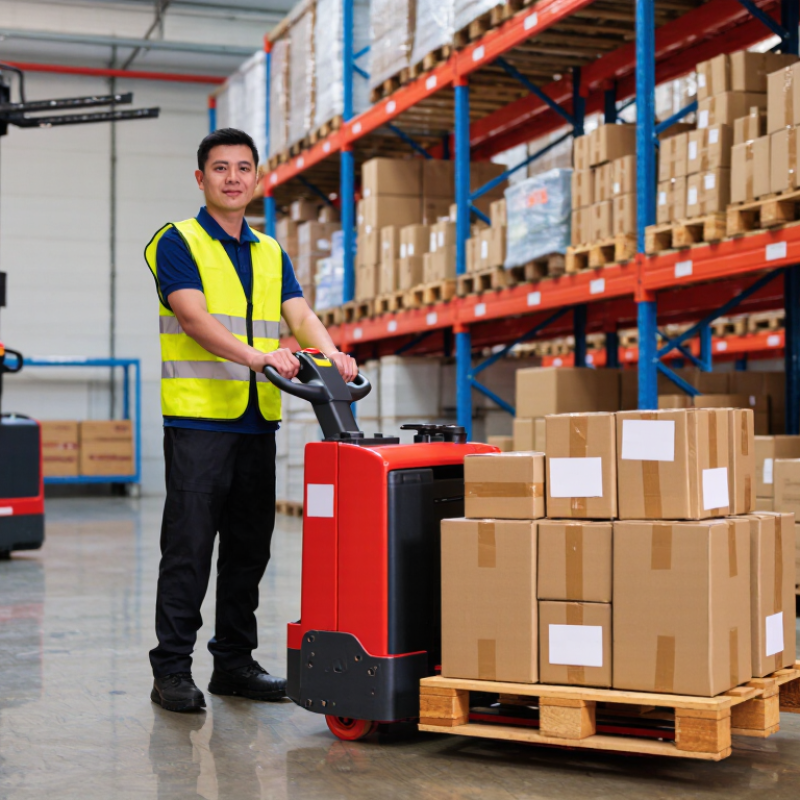
Electric Pallet Jacks Defined: Typical 2,000–4,500 lb Load Capacities
Electric pallet jacks give warehouse teams a practical way to move heavy loads with less pushing.
Their typical capacity ranges from 2,000 to 4,500 pounds. That range fits many palletized goods, from boxed food to building materials.
A 2,000-pound model may suit narrow aisles and frequent short trips. Higher-capacity equipment can handle denser pallets, but it may need more turning space.
Capacity is not the same as safe working performance.
Operators should check the load center, pallet condition, floor grade, and travel distance. A 4,500-pound rating can change in practice when weight sits far from the forks. Uneven floors also increase vibration and stopping distance.
Measure the heaviest routine load, not an occasional maximum. Leave a sensible margin. Rushed purchasing decisions often fail here.
In daily use, electric travel reduces strain during repeated movements across a loading area. Tiller controls, controlled acceleration, and reliable braking help workers position pallets beside racks or dock plates. Battery condition matters too. A weak battery can slow travel and disrupt a busy shift.
Charging areas need clear procedures and regular checks. Practical inspections can catch loose forks, worn wheels, and damaged controls early.
Still, no capacity chart replaces operator training or a site-specific assessment. A smaller unit may work better when aisles are tight and loads are light.
How Electric Drive Systems Reduce Manual Handling and Operator Strain
Electric pallet jacks use powered drive systems to move loads with less physical effort. Instead of pushing several hundred kilograms across a concrete floor, an operator guides the equipment with a control handle. The motor supplies consistent traction during starts, turns, and moderate inclines. This reduces repeated shoulder, wrist, and lower-back strain during busy warehouse shifts.
In practical use, the difference becomes clear near loading docks. Operators can position a pallet beside a truck without bracing their feet and forcing the handle forward. Variable speed controls also support smoother movement in narrow aisles. That matters when shelves, pedestrians, and stacked cartons share limited space. Many systems include automatic braking when the handle is released, although supervisors should verify this feature through routine inspections.
Less manual handling can also reduce fatigue late in a shift. Tired workers may react more slowly or use awkward lifting positions. Electric assistance helps maintain steadier work habits. It does not remove every risk. Poor training, damaged wheels, uneven floors, or overloaded pallets can still create dangerous conditions. Noise and battery charging routines require attention too. In my view, the strongest results come when operators receive hands-on practice, equipment checks are documented, and managers review near-misses honestly. Small operational flaws often reveal more than impressive specifications.
Why Choose Electric Pallet Jacks for Your Warehouse?
Electric drive systems reduce the physical effort required to move pallets, helping operators handle heavier loads with less pushing, pulling, and walking.
The chart uses a normalized operational benchmark, where manual pallet-jack handling is set to 100. Lower values indicate less operator input and reduced manual-handling exposure. Actual results vary according to load weight, travel distance, floor condition, and workflow design.
Productivity Factors: Travel Speed, Maneuverability, and Warehouse Throughput
Why Choose Electric Pallet Jacks for Your Warehouse?
Travel speed directly affects warehouse productivity, but faster is not always better. Electric pallet jacks reduce physical effort and support steadier movement across long aisles. The U.S. Bureau of Labor Statistics reported that transportation and material-moving occupations employed more than 7 million workers in 2023. Even small time savings can matter at this scale. However, speed must match aisle width, load stability, and pedestrian traffic.
Maneuverability often creates greater gains than maximum speed. A compact electric pallet jack can turn within tight staging areas and align quickly with pallet openings. Fewer corrections mean less idle time. WERC’s 2024 DC Measures report identifies lines shipped per labor hour as a key distribution-center benchmark. That measure connects equipment handling directly with throughput. The MHI 2024 Annual Industry Report also found that 55% of supply-chain leaders planned to increase investment in innovation. The data supports modernization, but equipment alone cannot fix poor slotting or congested paths.
Tips: Measure travel time, turning delays, and loading pauses for one full shift. Compare results before changing equipment. Keep speed settings practical. A calmer operator may outperform a faster one. Review near-misses, battery changes, and blocked aisles weekly. I would not judge productivity from speed alone. That approach can hide fatigue, inefficient routes, or unsafe pressure. Try a short pilot with real loads, peak-hour traffic, and new operators included.
Battery Economics: Lead-Acid Versus Lithium-Ion Runtime and Charging Data
Why Choose Electric Pallet Jacks for Your Warehouse?
Battery economics often decide whether an electric pallet jack pays off. Lead-acid batteries usually provide four to six hours of active use, depending on load, travel distance, and floor conditions. They often need six to eight hours for a full recharge. Cooling time matters too. A warm battery should not be rushed back into service.
Lithium-ion batteries commonly deliver six to eight hours of comparable work. Their charging time may fall between two and four hours. Operators can also add short charging periods during breaks without the same performance concerns. This keeps equipment moving across staggered shifts. In warehouse trials, lithium systems often reduce battery changes, watering tasks, and charging-room labor. Lead-acid units can still cost less initially, especially in lighter-duty operations with one daily shift. Their established service practices are familiar to many maintenance teams.
The numbers are not universal. Cold aisles, heavy pallets, ramps, and poor charging habits change runtime quickly. Lithium-ion batteries also require suitable management electronics and trained technicians. A spreadsheet may favor lithium-ion, yet actual savings depend on utilization. We once underestimated idle time. That mistake mattered. Track operating hours, charge cycles, labor, and replacement dates for several months before choosing. A simple log beside the charging station can reveal more than a sales estimate.
Safety Compliance: OSHA 29 CFR 1910.178 and 85 Annual Forklift Deaths
Why Choose Electric Pallet Jacks for Your Warehouse?
Safety must guide every pallet-jack decision. The reported figure of 85 annual forklift deaths shows the seriousness of warehouse traffic. Electric pallet jacks can reduce manual strain, but they do not remove operational risks. Depending on their design, many fall under OSHA 29 CFR 1910.178 requirements for powered industrial trucks. Employers may need documented operator training, workplace evaluations, inspections, and safe operating procedures.
A trained operator should check the controls, horn, forks, battery area, and wheels before each shift. Small defects matter. A worn wheel can affect stopping distance near a loading dock. A blocked aisle can force sudden steering around pedestrians. Use marked travel lanes, visible crossings, speed limits, and clear separation between people and equipment. Operators should keep loads stable, travel with a clear view, and avoid carrying damaged pallets.
Training should include practical demonstrations, not only a signed form. Supervisors must evaluate operators before allowing independent work and retrain them after unsafe behavior, accidents, or major equipment changes. Quieter electric equipment can create a false sense of security. That assumption is risky. Noise, lighting, floor conditions, and blind corners still require daily attention. No checklist catches every hazard. Managers should review near misses, invite worker feedback, and adjust procedures when real warehouse conditions expose weaknesses. Safety compliance is not a one-time purchase decision; it is a repeated workplace practice.