Choosing the right pmdc motor manufacturer can shape a machine’s performance, service life, and operating cost. Global buyers often compare more than catalog prices. They examine torque curves, voltage ranges, duty cycles, brush life, noise levels, and thermal limits.
This guide introduces ten manufacturers serving international industrial markets. The selection considers manufacturing experience, product breadth, quality systems, engineering support, and evidence of dependable delivery. It also considers practical details, such as whether a supplier can provide a 24-volt motor for conveyor equipment, customized shafts for medical devices, or sealed housings for dusty factory environments. Testing matters. Buyers should review load testing, insulation results, vibration control, and traceable inspection records before placing large orders.
No ranking is perfect. Supplier capabilities can vary by plant, region, and application. A respected brand may still be unsuitable for a highly specific duty cycle. Likewise, a smaller manufacturer may offer stronger customization and faster communication. That difference deserves attention. The manufacturers discussed here are not presented as universal answers. They are starting points for careful comparison, technical discussions, and sample evaluation. By combining published specifications with direct engineering questions, buyers can reduce selection risks and choose a partner that matches real operating conditions—not merely a polished brochure.
PMDC motors use permanent magnets to create the stationary magnetic field. Their compact design makes them useful in pumps, valves, medical devices, and small automation systems. Unlike wound-field motors, they do not need separate field-current equipment. This usually reduces wiring and simplifies installation.
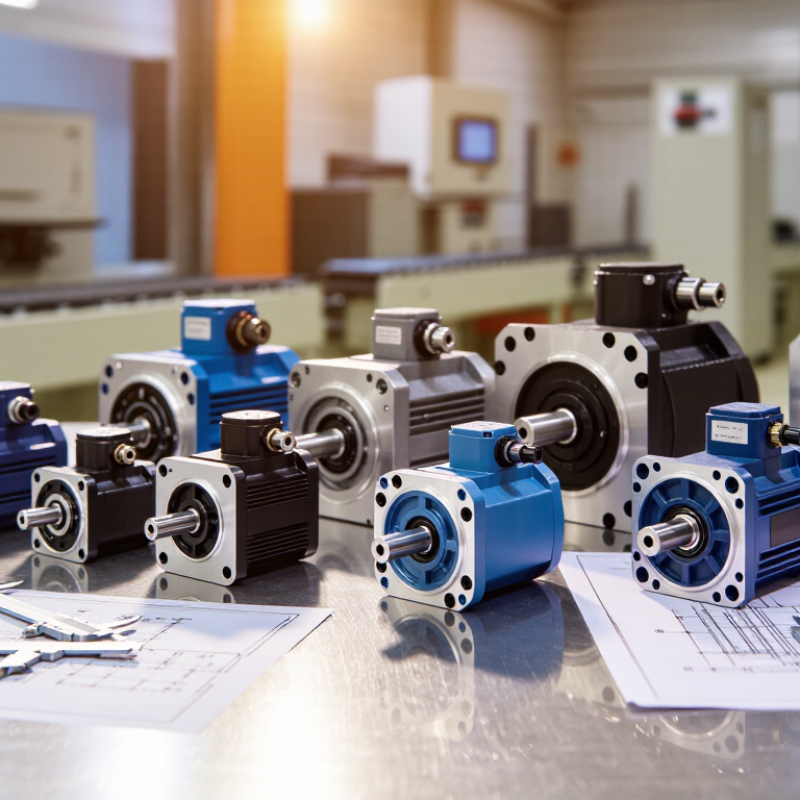
The main parts include a steel housing, permanent magnets, an armature, copper windings, a commutator, brushes, bearings, and a shaft. When DC voltage reaches the armature, current flows through its windings. The magnetic fields then interact and produce torque. The commutator switches current direction as the rotor turns. This keeps the torque moving in one direction.
Back electromotive force rises with speed and limits armature current during normal operation. A heavier load slows the rotor, reduces back EMF, and increases current. That response creates useful starting torque, but it also produces heat. I have seen buyers focus on rated power while overlooking stall duration, brush wear, and ambient temperature. That is an incomplete comparison. Speed control also needs care, because low-speed operation may cool the motor poorly. One detail is easy to miss. Permanent magnets can weaken under excessive heat or unsuitable current conditions. Mechanical alignment matters too; a small shaft error can create noise, vibration, and shortened bearing life. Some specifications remain unclear until testing begins. Load cycles, protection levels, and duty conditions should be checked with measured data, not assumptions.
Choosing among PMDC motor manufacturers requires more than comparing catalog prices. A reliable evaluation starts with the application. Check rated voltage, continuous torque, peak torque, speed range, duty cycle, and stall current. A motor that performs well at 12 volts may overheat in a compact enclosure. Measure the torque-speed curve under realistic load conditions. Short tests can hide thermal problems.
Manufacturing consistency matters just as much. Ask how the supplier controls magnets, brushes, commutators, bearings, and shaft tolerances. Request inspection records, traceability details, and sample-test data. Useful evidence includes vibration readings, noise levels, winding resistance, and temperature rise after extended operation. Do not rely only on a polished datasheet. It may omit the conditions behind each number.
Environmental protection also deserves close attention. Confirm insulation ratings, operating temperature, humidity resistance, and protection against dust. Review the motor’s expected service life under actual switching frequency and load changes. A capable manufacturer should explain failure modes clearly, not promise perfect performance. Communication is another practical test. Can the engineering team answer technical questions with measured data? Can it adjust mounting dimensions without weakening quality control? Some buyers overlook this stage. Later, small tolerance differences create costly assembly delays. Independent validation remains worthwhile, even when factory documentation appears complete.
Top PMDC motor manufacturers distinguish themselves through practical strengths, not attractive catalogs alone. Some excel in compact motors for medical pumps, laboratory equipment, and small automation systems. Others focus on high-torque designs for valves, mobility devices, and industrial actuators. Their strongest products often combine stable speed, low electrical noise, and efficient heat control.
Customization is another important advantage. Experienced manufacturers can adjust shaft dimensions, mounting holes, winding resistance, brushes, and gear ratios. This flexibility helps engineers match the motor to limited installation space. It also reduces costly redesigns during prototype testing. Fit matters. A motor that performs well in testing may still fail after dust, vibration, or repeated starts.
Reliable suppliers usually provide test data, lifecycle estimates, and clear operating limits. They should explain stall conditions, brush wear, voltage variation, and thermal behavior without hiding weaknesses. Quality systems, traceable components, and responsive engineering support add practical value. However, no manufacturer is perfect for every project. A low-cost motor may suit a simple actuator but disappoint in continuous operation. A highly customized unit may perform better, yet require longer development time. Buyers should compare torque curves, duty cycles, noise readings, and service expectations before selecting among leading PMDC motor manufacturers.
For global buyers comparing the top 10 PMDC motor manufacturers, compliance should begin with measurable evidence, not catalog claims.
Small efficiency losses therefore become significant across continuous-duty equipment. Ask suppliers to provide efficiency data, temperature-rise results, and load curves at the actual operating point.
Look for testing aligned with IEC 60034, including insulation, rated performance, and ingress protection requirements. UL 1004-1 may support market access in North America, while RoHS and REACH documentation helps control restricted substances.
An ISO 9001-certified facility should also show process records, calibration logs, and corrective-action reports. ISO’s 2023 Survey recorded more than one million ISO 9001 certificates worldwide, but certification alone does not prove consistent motor quality.
Traceability matters.
A reliable factory can link each motor to winding wire, magnets, bearings, batch numbers, and final inspection results. Test samples should include no-load current, stall torque, noise, vibration, and endurance checks.
Measure the heat. A 24-hour run test can expose brush wear, commutator arcing, or bearing noise that a short inspection misses.
Some suppliers still provide incomplete test conditions, which makes comparison difficult. Buyers should request raw data, acceptance limits, and independent laboratory reports. Even then, quality control is not perfect; humidity, storage time, and assembly variation can affect starting torque and service life.
Top 10 PMDC Motor Manufacturers for Global Buyers
How to Select the Right PMDC Motor Supplier for Your Application
Selecting a PMDC motor supplier requires more than comparing catalog prices. Define voltage, rated speed, continuous torque, starting torque, duty cycle, and shaft load before contacting manufacturers. A motor running at 12 V may perform well in testing but overheat inside a compact enclosure. Measure the real operating conditions.
Review each supplier’s technical documents carefully. Look for torque-speed curves, efficiency data, brush life estimates, insulation ratings, noise levels, and allowable ambient temperatures. Ask whether these figures come from production samples or controlled laboratory tests. That detail matters. Request samples with your preferred gearbox, encoder, connector, or mounting flange when possible.
Supplier experience also appears in small details. Can the engineering team explain stall current clearly? Do they provide traceable inspection records and practical failure analysis? Confirm quality systems, material controls, testing equipment, warranty terms, and replacement procedures. A low price can become expensive when one failed motor stops a production line. Delivery promises should include tooling time, sample approval, and realistic capacity during peak demand.
Do not rely on polished presentations alone. A common sourcing mistake is accepting a perfect datasheet without testing the motor under vibration, load changes, and repeated starts. Your application may expose weaknesses that laboratory data misses. Leave room for redesign. The right supplier should question your specifications, not simply approve every number.
| Profile | Typical Application Focus | Common Voltage Range | Typical Output Power | Typical Speed Range | Continuous Torque Range | Duty Capability | Feedback Options | Protection / Compliance | Best Supplier Selection Criteria |
|---|---|---|---|---|---|---|---|---|---|
| Profile 01 | Industrial automation and conveyor systems | 12–48 VDC | 50–500 W | 1,500–6,000 rpm | 0.15–2.5 N·m | S1 continuous | Encoder or Hall sensor | IP54–IP65; ISO 9001 production control | Verify thermal rating, brush life, EMC performance, and compatibility with the drive controller. |
| Profile 02 | Mobile equipment and battery-powered machinery | 12–72 VDC | 100–1,000 W | 1,000–5,000 rpm | 0.4–6.0 N·m | S2–S3 intermittent | Hall sensor or encoder | IP65–IP67; vibration-tested options | Check stall-current limits, shock and vibration testing, battery voltage tolerance, and connector durability. |
| Profile 03 | Medical, laboratory, and diagnostic equipment | 12–48 VDC | 10–300 W | 500–4,000 rpm | 0.03–1.2 N·m | S1 continuous | Optical encoder or Hall sensor | Low-noise design; traceable quality records | Prioritize low vibration, repeatable speed control, clean assembly processes, and documented change management. |
| Profile 04 | Automotive auxiliary systems and actuators | 12–24 VDC | 30–800 W | 800–6,000 rpm | 0.1–4.0 N·m | S2–S3 intermittent | Hall sensor or integrated position sensor | IP67–IP69K options; automotive PPAP support | Confirm temperature cycling, salt-spray resistance, vibration standards, traceability, and end-of-line testing. |
| Profile 05 | Robotics, AGV, and precision motion platforms | 24–72 VDC | 100–1,500 W | 1,000–8,000 rpm | 0.2–8.0 N·m | S1 or S5 cyclic duty | Incremental encoder or Hall sensor | Low backlash gearbox options; EMC-tested assemblies | Evaluate torque ripple, encoder resolution, regenerative braking behavior, gearbox matching, and control-loop response. |
| Profile 06 | Pumps, fans, blowers, and fluid-handling equipment | 12–48 VDC | 20–750 W | 1,500–10,000 rpm | 0.02–2.0 N·m | S1 continuous | Tachometer, Hall sensor, or none | IP55–IP68; corrosion-resistant options | Compare efficiency, acoustic noise, bearing life, flow-load curves, sealing, and operation at the required altitude. |
| Profile 07 | Security, access control, and smart building devices | 6–24 VDC | 5–150 W | 300–3,000 rpm | 0.01–0.6 N·m | Short-time or cyclic duty | Hall sensor, encoder, or limit-switch feedback | Compact design; RoHS and REACH declarations | Look for low standby current, quiet operation, compact mounting, consistent start-up torque, and long storage life. |
| Profile 08 | Printers, scanners, and office automation equipment | 12–36 VDC | 10–250 W | 500–5,000 rpm | 0.02–1.0 N·m | S3–S5 cyclic duty | Encoder or Hall sensor | Low-EMI and low-acoustic-noise configurations | Assess acceleration consistency, speed ripple, acoustic noise, EMI behavior, and repeatability across production lots. |
| Profile 09 | Electric tools, winches, and compact lifting systems | 12–48 VDC | 200–2,000 W | 800–5,000 rpm | 1.0–12.0 N·m | S2–S3 intermittent | Hall sensor or encoder | Thermal cut-off and overload protection options | Validate peak torque, stall tolerance, thermal recovery, commutator wear, gearbox compatibility, and braking requirements. |
| Profile 10 | Custom OEM assemblies and integrated motor solutions | 6–180 VDC | 5 W–3 kW | 100–12,000 rpm | 0.01–20.0 N·m | Application-dependent | Encoder, Hall sensor, tachometer, or resolver | Application-specific testing and documentation | Choose a supplier with validated prototypes, design-for-manufacturing support, lifecycle documentation, and stable change control. |