2026 Best Magnet Motor Manufacturers for Global Buyers

Choosing the right magnet motor manufacturer in 2026 requires more than comparing catalog prices. Global buyers need evidence of engineering capability, production consistency, and dependable after-sales support. A reliable supplier should explain magnet grades, winding design, torque curves, thermal limits, and expected service life. Clear technical documents matter.

Real purchasing decisions often begin with a sample unit. You may inspect its housing, listen for bearing noise, and measure temperature after continuous operation. These details can reveal weaknesses that brochures hide. Factory audits, traceable materials, and documented quality procedures also strengthen supplier credibility. Look for manufacturers with relevant experience in industrial automation, electric mobility, pumps, robotics, or other demanding applications.

Not every famous supplier fits every project. A company may offer excellent prototypes but struggle with large-volume delivery. Another may provide competitive pricing but limited customization. That trade-off deserves careful review. Buyers should verify production capacity, testing equipment, export experience, packaging standards, and communication speed. Independent certifications can help, but certificates alone cannot replace performance testing.

This guide examines leading magnet motor manufacturers for global buyers. It considers product quality, technical expertise, customization, lead times, pricing transparency, and long-term reliability. Supplier rankings are never permanent. Market conditions change, and available evidence may remain incomplete. Treat this overview as a practical starting point, then confirm specifications through samples, factory discussions, and written agreements. Small details matter. A strong partnership should survive beyond the first shipment.
2026 Best Magnet Motor Manufacturers for Global Buyers

What Magnet Motors Are and How They Work

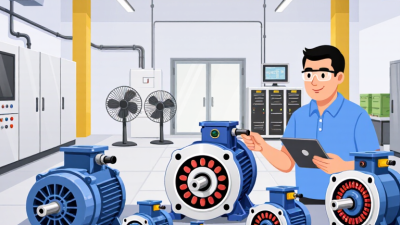
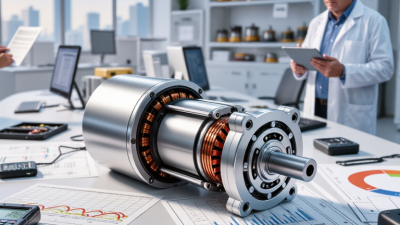
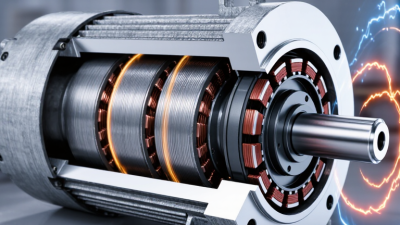
For global buyers, “magnet motor” usually means a permanent-magnet synchronous motor (PMSM), although terminology varies. Its rotor carries permanent magnets, while copper windings sit in stator slots. When an inverter sends three-phase current through those windings, it creates a rotating magnetic field. The rotor follows that field, much like a compass needle following Earth’s field, but at controlled industrial speed. No rotor current is required. That reduces rotor copper loss and can improve efficiency during variable-speed operation. The term is not perfectly precise. Some suppliers use it for brushless DC designs with different control waveforms.

The energy stakes are substantial. The International Energy Agency’s Energy Efficiency 2023 analysis identifies motor systems as a major electricity-saving opportunity. Earlier IEA estimates place electric motor systems near 45% of global electricity consumption. U.S. Department of Energy guidance, Improving Motor and Drive System Performance, explains how variable-speed drives can sharply reduce pump and fan energy when flow changes. Magnet motors pair well with these drives, but results depend on cooling, bearings, commissioning, and control tuning. A poorly matched inverter can create noise, heat, or torque ripple. Rare-earth magnets also create supply-chain and temperature concerns. Efficiency claims should be checked at the actual load point, not only at rated speed. Real installations are less tidy than brochures suggest.

Key Criteria for Evaluating Magnet Motor Manufacturers

For global buyers, evaluating magnet motor manufacturers requires more than comparing rated efficiency. The International Energy Agency reports that electric motor systems consume roughly half of global electricity. Small design differences can therefore create substantial operating costs. Request verified efficiency curves, torque-speed data, thermal-rise results, and acoustic measurements at realistic loads. A motor tested only at one ideal point is not enough.

Examine manufacturing discipline closely. ISO 9001 certification supports process control, but it does not replace factory evidence. Ask for rotor-balance records, magnet-grade traceability, winding inspection data, and end-of-line test procedures. IEC 60034 compliance should cover the relevant motor ratings and testing conditions. Check protection ratings, insulation class, bearing life, and demagnetization resistance. The U.S. Department of Energy has identified motor-driven equipment as a major share of industrial electricity use, so efficiency claims deserve independent verification.

Supplier capability matters after delivery. Review lead times, spare-part policies, firmware control, warranty exclusions, and service coverage near the installation site. Evaluate whether the manufacturer can adapt shaft dimensions, cooling methods, or duty cycles without weakening validation. Supply-chain transparency is also important for permanent-magnet materials and recycling plans. A polished datasheet can still hide weak field support. No supplier is perfect. Buyers should score documented evidence, not confident promises.

Leading Magnet Motor Manufacturers for Global Buyers in 2026

Leading magnet motor manufacturers for global buyers in 2026 are judged by more than rated efficiency. The International Energy Agency reported that global electric car sales exceeded 17 million in 2024, creating strong demand for compact, efficient traction motors. The U.S. Department of Energy also identifies motor-driven systems as major industrial electricity users. These figures support careful sourcing. Buyers should request efficiency curves, torque-speed maps, thermal test results, and measured magnet retention data. A factory visit can reveal winding consistency, balancing equipment, and end-of-line testing that brochures often hide.

Reliable manufacturers should provide traceable materials, documented quality controls, and testing aligned with IEC or equivalent standards. Ask whether results cover real operating temperatures, not only laboratory conditions. After-sales support matters too. Spare rotor assemblies, clear warranty terms, and regional service capacity can reduce expensive downtime. In my view, suppliers with automated inspection usually offer better repeatability, but automation does not guarantee sound engineering. No shortlist is perfect. I would still question unusually high efficiency claims, especially when test conditions are missing. Delivery capacity also deserves scrutiny: a low quoted price may reflect weaker magnets, limited testing, or unstable component sourcing. Global buyers should compare total lifecycle cost, customs documentation, cybersecurity practices for connected drives, and the manufacturer’s ability to adapt voltage, shaft, cooling, and mounting requirements.

2026 Best Magnet Motor Manufacturers for Global Buyers - Leading Magnet Motor Manufacturers for Global Buyers in 2026

Evaluation Dimension Recommended Benchmark for Global Buyers Relevant Technical Reference Why It Matters Verification Method
Motor Technology Permanent-magnet synchronous motor or electronically commutated motor, selected according to duty cycle and control requirements IEC 60034 series; applicable drive documentation Permanent-magnet designs can provide high efficiency and high power density when correctly matched with a drive Review motor data sheet, efficiency map, torque-speed curve, and drive compatibility
Efficiency Class IE3 or higher for standard industrial applications; IE4 or IE5 where lifecycle energy savings justify the investment IEC 60034-30-1 Higher efficiency reduces electrical losses, operating costs, and heat generation Request rated-load efficiency, test conditions, and efficiency-class documentation
Rated Power Range Small fractional-kilowatt units through multi-hundred-kilowatt industrial systems, depending on the application IEC 60034-1 rating requirements A broad product range simplifies standardization across pumps, fans, compressors, conveyors, and machine tools Compare continuous power, overload capacity, rated torque, and speed range
Speed and Torque Control Closed-loop or sensorless control matched to the required speed range, starting torque, and dynamic response Drive manufacturer specifications and application standards Control quality affects positioning accuracy, energy consumption, acceleration, and system stability Check control mode, encoder options, minimum speed, peak torque, and response time
Ingress Protection IP55 as a common industrial baseline; higher protection may be required for washdown, dust, or outdoor environments IEC 60529 Protection level influences suitability for dust, water jets, moisture, and contamination Confirm the complete motor enclosure rating and test documentation
Insulation System Class F insulation is common; Class H may be selected for higher thermal demands or demanding inverter duty IEC 60085; IEC 60034-18 series Thermal endurance and inverter compatibility affect service life and reliability Review insulation class, winding temperature rise, voltage-spike resistance, and bearing-current protection
Duty Rating S1 continuous duty for continuously operated equipment; intermittent ratings should state the exact duty cycle IEC 60034-1 Correct duty selection prevents overheating and premature failure Match the motor duty rating with the actual load profile, starts per hour, and operating hours
Mechanical Compatibility Standard IEC frame, mounting, shaft, flange, and terminal-box dimensions where possible IEC 60072 and related dimensional standards Standardized dimensions make replacement, installation, and maintenance easier Verify frame size, mounting arrangement, shaft dimensions, tolerances, and total weight
Operating Environment Specify ambient temperature, altitude, humidity, vibration, corrosive exposure, and hazardous-area requirements before selection IEC 60034-1; IEC 60079 where hazardous locations apply Environmental conditions can reduce allowable output and change enclosure, cooling, and certification requirements Request derating curves, environmental limits, cooling method, and hazardous-area documentation if applicable
Quality Management Documented quality-management system with traceable testing and production controls ISO 9001 Consistent processes reduce variation in winding, balancing, magnets, bearings, and final assembly Request a current certificate, sample inspection plan, and factory acceptance-test procedure
Global Compliance Compliance documentation aligned with the destination market, electrical system, and product category Applicable regional safety, EMC, environmental, and energy-efficiency regulations Correct documentation supports customs clearance, installation approval, and customer audits Confirm declarations, test reports, marking requirements, material information, and regional approvals
Lifecycle Support Availability of spare bearings, encoders, fans, drives, technical drawings, manuals, and repair guidance Supplier service documentation and maintenance procedures Long-term support reduces downtime and total ownership cost Evaluate spare-parts policy, warranty terms, service response, documentation quality, and regional support coverage

Note: Final motor selection should be based on the complete load profile, supply conditions, installation environment, control system, applicable regulations, and verified test documentation.

Comparing Motor Technologies, Performance, and Production Capabilities

2026 Best Magnet Motor Manufacturers for Global Buyers

Comparing motor technologies requires more than checking peak efficiency. Permanent magnet synchronous motors deliver stable torque, strong efficiency, and quiet operation at variable speeds. Brushless DC motors suit compact equipment, especially where simple electronic control matters. Magnet-assisted synchronous reluctance motors can reduce magnet use, but their control settings require closer engineering review. In factory evaluations, I check torque curves at low speed, heat rise after continuous operation, vibration, and acoustic output. Numbers at rated load can hide weak performance.

Tips: Request test reports, not promises. Compare efficiency across several speed points. Inspect rotor balancing, magnet bonding, winding consistency, and insulation quality. Ask how rejected units are traced. A capable manufacturer should provide serial-level records, calibrated testing, and clear corrective actions. Production scale also matters. Look for automated winding, controlled magnet placement, dynamic balancing, and end-of-line testing. These details reduce variation between samples and mass production. However, automation is not proof of quality. Process discipline matters more.

Global buyers should also examine thermal design, ingress protection, controller compatibility, and service response. A motor may perform well in a laboratory but fail inside a dusty pump housing. Confirm material availability and realistic lead times. Some suppliers overstate annual capacity during peak seasons. That deserves questions. Independent verification is wise, particularly for safety-critical machinery. I would also leave room for doubt: published efficiency may exclude the inverter, cable losses, or temperature effects. A careful comparison uses witnessed tests, application data, and documented production controls.

How to Select and Purchase the Right Magnet Motor Supplier

2026 Best Magnet Motor Manufacturers for Global Buyers

Selecting a magnet motor supplier requires more than comparing catalog prices. Define the application in measurable terms. Record rated power, voltage, speed, duty cycle, ambient temperature, and installation conditions. A 11 kW motor in a clean factory may need different protection from one used near dust or moisture. Ask for efficiency data at your actual load, not only at the rated point. Small details matter.

Review the supplier’s technical evidence. Request routine test reports, rotor balancing records, insulation test results, and material traceability. Check whether the factory controls magnets, bearings, winding processes, and final assembly internally. Confirm applicable international standards and required certifications for your destination market. A reliable supplier should explain demagnetization risk, cooling limits, noise levels, and overload behavior in clear language. Vague answers deserve a second review.

Purchase terms need equal attention. Compare sample approval, production lead time, packaging, spare parts, warranty coverage, inspection rights, and after-sales response times. A written specification prevents expensive misunderstandings. Specify shaft dimensions, cable entries, mounting style, paint system, and control compatibility. Verify the supplier through video audits, reference projects, and independent pre-shipment inspection when practical. No supplier gets every detail right. I have seen technically strong motors delayed by unclear shipping documents or missing accessories. That is not a minor issue. Leave room for testing, corrective action, and honest reconsideration before placing a large order.

Scroll to Top