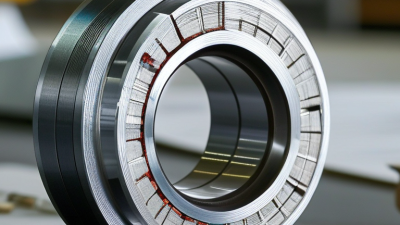
Choosing the best magnets for motors is not simply a matter of selecting the strongest material. Motor performance depends on magnetic strength, temperature stability, corrosion resistance, size, cost, and the motor’s operating environment. A compact drone motor may need high-energy neodymium magnets, while an industrial motor near intense heat may require samarium cobalt or ferrite. The right choice must match the design.
Real engineering decisions often begin with the working conditions. How hot will the rotor become? Will moisture, vibration, or repeated overload affect the magnets? Neodymium magnets offer excellent power in a small space, but they can lose performance at high temperatures and need protective coatings. Ferrite magnets are less powerful, yet they remain affordable and resist corrosion well. Samarium cobalt performs reliably in demanding heat, although its higher price and brittleness deserve attention.
Small details matter.
This guide compares the main magnet types used in motors and explains where each material performs best. It considers torque density, efficiency, manufacturing limits, and long-term reliability. It also examines grades, coatings, magnet shapes, and permanent-magnet motor designs. Industry specifications and manufacturer data should support every final selection, because laboratory strength does not always predict field performance. A magnet that looks ideal on paper may create balancing problems, assembly risks, or unnecessary costs. I have found that practical testing can challenge an otherwise convincing calculation. That uncertainty is worth acknowledging. The best solution is usually not the strongest magnet, but the most suitable one for the motor’s complete operating life.
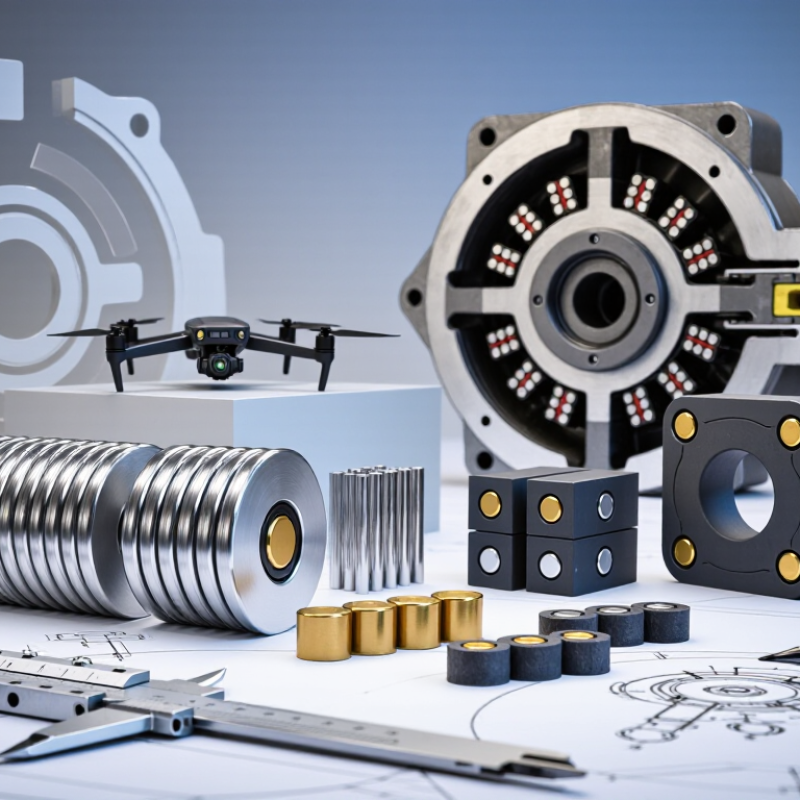
The best motor magnet depends on the design, temperature, speed, and required torque. Flux density describes how much magnetic field enters the air gap. A stronger air-gap field can improve torque, but excessive flux may increase core saturation and losses. In practical testing, engineers measure the air gap with a gaussmeter. Small changes can affect vibration and efficiency.
Coercivity shows how well a magnet resists demagnetization. Motors with high current, sudden overloads, or hot rotors need strong coercivity. Temperature matters greatly. A magnet that performs well at room temperature may weaken during continuous operation. High-temperature rare-earth magnets usually offer strong performance, while ferrite magnets provide lower cost and good corrosion resistance. Some designs also use temperature-stable materials when reliability matters more than peak output.
Energy product, measured in megajoules per cubic meter, combines magnetic strength and resistance. A higher value can produce the required field with a smaller magnet. That can reduce rotor size, but it may raise manufacturing and handling demands. A simple ranking can mislead. I have seen compact magnets perform poorly after poor bonding, uneven air gaps, or inadequate cooling. Designers should compare demagnetization curves, thermal cycling results, mechanical retention, and real duty cycles. Laboratory figures are useful. They are not the whole motor.
For high-power motors, NdFeB magnets rated from 35 to 52 MGOe offer different performance trade-offs. MGOe measures maximum energy product, not complete motor quality. A 35 MGOe magnet may provide stable output in moderate-duty applications. A 52 MGOe grade can increase torque density and reduce rotor size. That advantage matters where space and weight are limited.
Higher energy does not solve every design problem. High-grade NdFeB magnets can lose performance when temperatures rise. Their coercivity, temperature coefficient, and operating point must match the motor’s duty cycle. A magnet rated at 52 MGOe may underperform a 40 MGOe option in a hot rotor. Heat changes the decision. So does cost.
In practical motor development, engineers should review demagnetization curves under worst-case temperature and current conditions. They should also check coating durability, mechanical retention, and dimensional tolerance. Thin magnets need careful handling. Small cracks can become serious at high rotational speeds. Testing should include repeated acceleration, thermal cycling, and overload events. Simulation helps, but it is not enough. Real hardware can behave differently.
Some specifications remain easy to overlook. For example, magnetic alignment, air-gap variation, and adhesive thickness affect torque consistency. A stronger magnet may also increase cogging torque or inverter stress. The best choice is rarely the highest MGOe value alone. It is the grade that survives the complete electrical, thermal, and mechanical environment. My earlier assumption that maximum energy always meant maximum efficiency was too simple.
The chart compares representative neodymium-iron-boron (NdFeB) magnet energy-product levels used in high-power motor design. BHmax is converted using 1 MGOe ≈ 7.96 kJ/m³. Higher BHmax can support greater magnetic energy density and potentially more compact motors, but actual motor output also depends on magnet temperature rating, coercivity, geometry, winding design, cooling, and control strategy.
For many cost-sensitive motors, ferrite magnets rated around 3–5 MGOe offer a practical starting point. Their magnetic energy is lower than rare-earth alternatives, but their material cost and temperature tolerance can be attractive. Ferrite works well in fans, pumps, small compressors, and household actuators. It usually needs more volume to produce similar torque. That extra size affects rotor weight and housing design. In real prototypes, I would not judge the magnet by MGOe alone. Air-gap length, pole shape, winding current, and operating temperature can change performance significantly. A compact design may still need a stronger material.
Tips: Keep the air gap as small as manufacturing tolerances allow. Check torque at startup, not only during steady operation. Measure temperature near the magnet after continuous loading. Use magnetic simulation before cutting tooling, then verify the results with a physical prototype. That assumption can fail.
Ferrite magnets are brittle, so careless pressing or uneven clamping may create hidden cracks. Mechanical support should distribute force across the rotor surface. Protective coatings can help in humid environments, although ferrite generally resists corrosion better than many metallic magnetic materials. Designers should also examine demagnetization during overload conditions. A slightly oversized ferrite rotor may reduce peak efficiency, yet it can lower material cost and simplify sourcing. This tradeoff deserves testing, not guesswork. Small changes in magnet arc, spacing, or pole count can produce surprisingly different vibration and noise levels.
Choosing magnets for motors involves more than peak magnetic strength. SmCo magnets rated around 16–32 MGOe can outperform NdFeB when heat dominates the design. Their resistance to irreversible demagnetization remains valuable near hot windings, tight air gaps, and repeated temperature cycles. Heat changes that choice. A rotor running above 150°C may lose useful torque if its magnet grade and operating point are poorly matched. SmCo generally offers better thermal stability across demanding duty cycles. Engineers still need to verify actual temperatures, rather than relying on catalog ratings.
In practice, thermal testing should follow the motor’s real load profile. Place sensors near the magnet surface, not only on the housing. Compare cold-start torque with torque after sustained operation. Check the rotor after overload events, too. A SmCo design can retain flux more reliably under heat, helping reduce torque fade and control errors. Its corrosion resistance may simplify protection in humid environments. However, SmCo is brittle and can chip during assembly. It may also deliver less magnetic output per volume than high-performance NdFeB. The trade-off is real.
Material selection should include magnet volume, rotor speed, mechanical retention, cost, and cooling limits. A smaller NdFeB magnet may win in a cool, compact motor. A larger SmCo magnet may be safer where heat cannot escape quickly. That assumption can fail if the temperature estimate is optimistic or the retention system is weak. Prototype testing remains essential. Measure flux, torque, and demagnetization after thermal cycling. Good motor design accepts some uncertainty, then removes it with data.
Selecting AlNiCo Magnets Rated at 5–9 MGOe for Stable Applications
AlNiCo magnets rated from 5 to 9 MGOe suit motors that need dependable magnetic performance over long operating periods. Their strong temperature stability supports applications exposed to warm housings, repeated duty cycles, or nearby heat sources. The selected grade should match the motor’s air gap, pole design, and required torque.
Performance depends on more than energy product. AlNiCo has relatively low coercivity, so strong opposing fields can weaken it. Designers should limit demagnetizing conditions during startup, overload, and maintenance. A wider magnet may improve flux coverage, but it can also change the air-gap balance. Small geometry changes matter.
Practical evaluation should include temperature cycling, vibration checks, and magnetic-field measurements after operation. A 5 MGOe grade may provide adequate stability for a lightly loaded motor, while a 9 MGOe grade can offer more useful flux in a compact design. However, higher MGOe does not automatically produce a better motor. Poor pole alignment, excessive clearance, or unsuitable steel can waste the available field. Engineers sometimes select magnets by catalog strength alone, then discover uneven torque on the test bench. That mistake is avoidable, although real assemblies rarely behave perfectly. Reviewing measured results can reveal whether the chosen AlNiCo grade truly fits the application.