
Why Choose a Neodymium Magnet Motor for Global Sourcing?
Global sourcing teams are under pressure to improve motor efficiency without increasing maintenance costs. A neodymium magnet motor can offer strong magnetic performance in a compact design. This advantage matters in conveyors, pumps, robotics, fans, and precision equipment.
The sourcing decision involves more than magnet strength. Buyers should examine torque requirements, operating temperature, insulation quality, bearing life, and controller compatibility. Supplier audits can reveal winding consistency, rotor balance, and production discipline. Ask for test reports, material specifications, sampling procedures, and traceable quality records. Small details matter. A poorly balanced rotor may create vibration that shortens equipment life.
Neodymium magnets can support efficient operation, but they are not a universal solution. High temperatures may reduce magnetic performance if the motor lacks suitable protection. Raw material prices can also change, affecting long-term purchasing plans. I have seen specifications look convincing while service support remained unclear. That deserves careful reflection. Reliable suppliers explain tolerances, delivery capacity, warranty terms, and corrective-action processes openly. They should also communicate realistic lead times during peak demand. Comparing total ownership cost is wiser than comparing unit prices alone. With disciplined evaluation, global buyers can select a neodymium magnet motor that fits technical needs, supply conditions, and responsible procurement expectations.
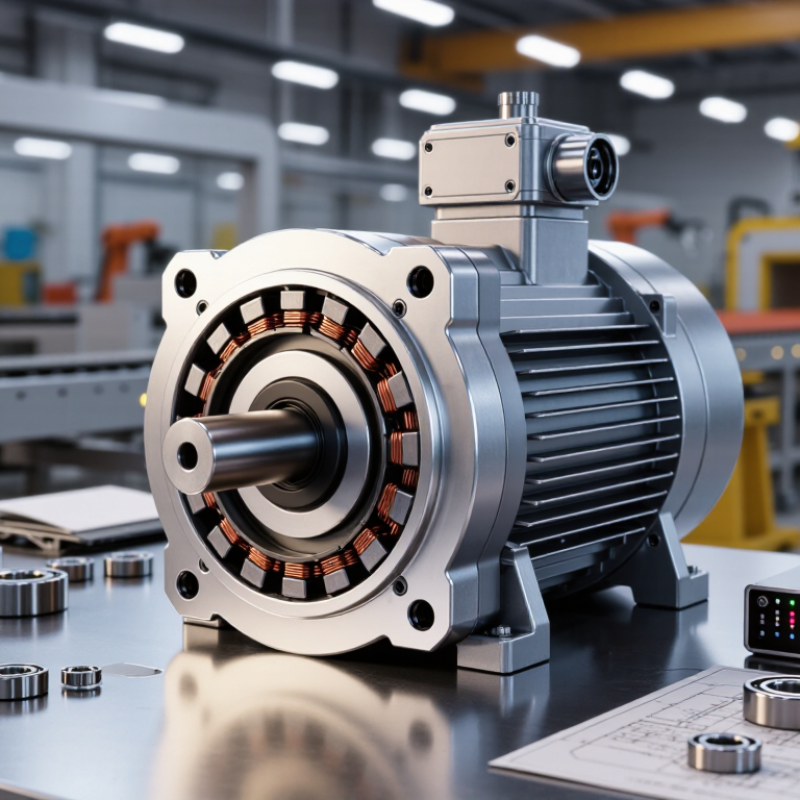
What Is a Neodymium Magnet Motor?
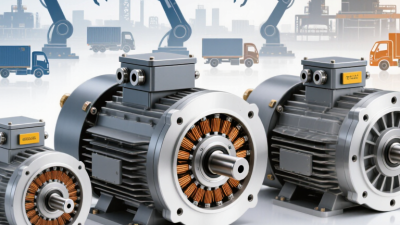
A neodymium magnet motor uses permanent magnets made mainly from neodymium, iron, and boron. These magnets sit in the rotor and create a strong magnetic field. Copper windings in the stator then produce a controlled rotating field. The rotor follows that field and generates mechanical motion.
Many designs are brushless DC or permanent magnet synchronous motors. They use electronic controllers instead of mechanical brushes. This reduces friction, sparking, and routine brush replacement. The result is often higher torque density, especially in compact equipment such as pumps, cooling fans, automated tools, and electric actuators. A smaller motor may deliver useful power without taking much installation space.
Performance still depends on more than magnet strength. During technical evaluations, engineers check winding temperature, controller quality, bearing life, and the motor’s duty cycle. A motor that runs quietly on a test bench may overheat inside a sealed machine. Heat can weaken neodymium magnets, while moisture may damage their protective coating. Not perfect.
Global sourcing also requires clear drawings, measured efficiency data, insulation ratings, and realistic tolerance limits. Suppliers should provide rotor balance results and temperature test records, not only attractive catalog figures. One common mistake is choosing maximum torque without checking continuous torque. That choice can increase energy use and shorten service life. For dependable procurement, sample testing under the actual load is essential.
Why Choose a Neodymium Magnet Motor for Global Sourcing? - What Is a Neodymium Magnet Motor?
| Data Dimension | Typical Data or Definition | Global Sourcing Relevance |
|---|---|---|
| What it is | An electric motor that uses permanent neodymium-iron-boron magnets in the rotor to create a magnetic field without continuous rotor excitation. | Clarifies the product category for supplier searches, technical specifications, and customs documentation. |
| Common motor types | Permanent-magnet synchronous motors (PMSM), brushless DC motors (BLDC), and interior permanent-magnet motors (IPM). | The required motor architecture should be matched with the application, controller, speed range, and local compliance requirements. |
| Magnet material | Sintered NdFeB is widely used for high-performance motors; bonded NdFeB is used where complex shapes, lower eddy-current loss, or easier forming is important. | Material selection affects cost, magnetic output, mechanical strength, corrosion resistance, and production availability. |
| Typical maximum energy product | Approximately 30–52 MGOe for many commercial sintered NdFeB grades, depending on grade and manufacturer specification. | Higher energy density can support a smaller motor or higher torque output, but usually increases material cost and specification sensitivity. |
| Typical remanence | Approximately 1.0–1.45 tesla for common sintered NdFeB grades. | Higher remanence may enable greater torque density, subject to the motor’s electromagnetic and thermal design. |
| Typical magnet density | Approximately 7.4–7.6 g/cm³ for sintered NdFeB. | Useful for estimating rotor mass, shipping weight, handling requirements, and packaging costs. |
| Operating temperature | Common commercial grades are often specified around 80–150°C; high-temperature grades can be rated approximately 180–200°C, subject to the complete motor design. | The selected grade must exceed the motor’s actual hotspot temperature, including overload and duty-cycle conditions. |
| Temperature coefficient | The reversible temperature coefficient of remanence is commonly about −0.10% to −0.12% per °C for many NdFeB grades. | Thermal calculations are important when sourcing motors for hot climates, enclosed equipment, or continuous-duty applications. |
| Corrosion protection | Common protections include nickel-based coatings, epoxy coatings, zinc coatings, or specialized surface treatments. | Coating choice should reflect humidity, salt exposure, chemicals, temperature, assembly method, and required service life. |
| Torque density | Generally higher than induction motors of similar size when the magnetic circuit, winding, cooling, and control system are properly optimized. | Can reduce motor volume and weight, helping lower freight volume and simplify installation in space-constrained equipment. |
| Efficiency potential | Permanent-magnet motors avoid rotor copper losses and can achieve high efficiency across suitable operating ranges; actual efficiency depends on the complete system. | Lower energy losses may reduce operating costs, especially in pumps, fans, compressors, traction systems, and continuous-duty machinery. |
| Control requirement | Usually requires an electronic drive or inverter with appropriate commutation, current control, and protection functions. | The motor, controller, encoder or sensor, and communication interface should be sourced as a compatible system. |
| Demagnetization risk | Excessive temperature, short-circuit current, incorrect control, or strong opposing magnetic fields can cause partial irreversible demagnetization. | Supplier validation should include overload limits, thermal protection, fault testing, and magnet-grade verification. |
| Rare-earth content | NdFeB magnets contain neodymium and may include praseodymium, dysprosium, or terbium depending on the grade and temperature requirements. | Material price and lead time can be affected by rare-earth market volatility, export controls, recycling, and regional supply conditions. |
| Quality documents to request | Material certificate, magnetic-property report, dimensional inspection, coating test results, rotor balance report, efficiency data, and endurance-test records. | Consistent documentation supports supplier comparison, incoming inspection, regulatory review, and repeat purchasing. |
| Best-fit applications | Electric vehicles, industrial automation, robotics, servo systems, pumps, fans, compressors, appliances, medical equipment, and renewable-energy equipment. | The technology is especially attractive where compact size, high torque density, variable-speed efficiency, and precise control are important. |
Note: Values are typical engineering ranges for commercial NdFeB materials and motor systems. Final performance depends on magnet grade, motor geometry, winding design, controller settings, cooling method, operating duty, and required safety margin.
Related Posts
-
Top 10 Benefits of Using Permanent Magnet DC Motors in Modern Applications?
-
The 5 Best Permanent Magnet DC Motors You Should Consider
-
How to Choose a Magnet Motor Supplier in 2026
-
2026 Best Magnet Motor Manufacturers for Global Buyers
-

Exploring the Future of Energy with Permanent Magnet Motor Generators
-

2026 Best Halbach Array Motor Innovations and Applications?