Choosing the right drive technology can shape an entire product’s performance, service life, and operating cost. A pmsm electric motor offers high efficiency, strong torque density, and precise speed control for global applications. These qualities matter in electric vehicles, industrial pumps, robotics, compressors, and automated production lines.
Its permanent magnets reduce rotor losses during operation. That can lower heat generation inside compact enclosures. Engineers can also achieve responsive acceleration with advanced inverter control. In a factory, this may mean smoother conveyor starts and less mechanical shock. In a vehicle, it may support quiet movement and better energy use across changing road conditions.
Still, no motor is perfect. Magnet materials, thermal limits, controller quality, and maintenance planning all affect results. A design that performs well in a dry warehouse may need stronger protection in coastal or dusty environments. Engineers should examine voltage ranges, cooling methods, vibration levels, grid compatibility, and local service capability before selection. Testing under realistic loads remains essential, not optional.
Manufacturers with documented testing, traceable components, and clear technical support offer greater confidence. Independent efficiency data and application references can strengthen purchasing decisions. The best choice depends on more than peak efficiency. It also depends on reliability, integration effort, lifecycle cost, and the people responsible for servicing the equipment. This article explores why the pmsm electric motor continues to attract attention worldwide, while recognizing where its advantages require careful engineering.
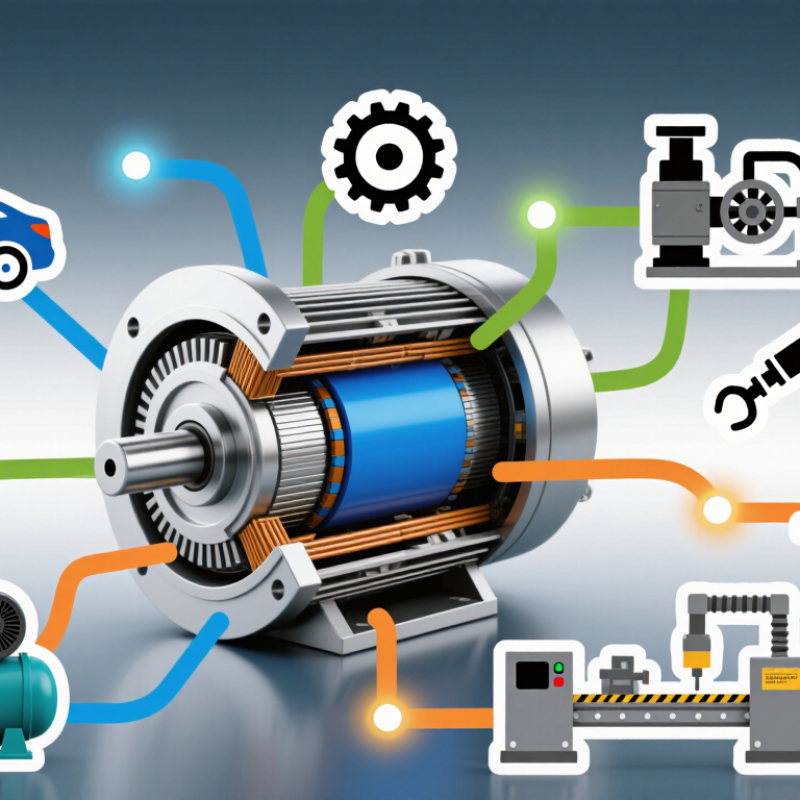
A permanent-magnet synchronous motor (PMSM) uses magnets fixed to its rotor to create a steady magnetic field. AC current in the stator produces a rotating field that pulls the rotor along in synchronism. In practical terms, the rotor turns at a speed tied to the supply frequency and the motor’s pole count. An inverter usually controls that frequency and adjusts motor torque. No rotor winding is needed. That can reduce rotor electrical losses, though actual efficiency depends on motor design, controls, and operating conditions.
The distinction matters in global applications because electric motors use substantial energy. The International Energy Agency’s 2011 report, Energy-Efficiency Policy Opportunities for Electric Motor-Driven Systems, estimates that motor-driven systems account for about 46% of global electricity consumption. A PMSM can be a strong option where high efficiency, compact size, or precise speed control matters, such as pumps, compressors, and vehicle traction systems. But magnets do not make every design superior. Drive compatibility, heat, service requirements, and magnet sourcing all deserve scrutiny. Real installations can be less tidy than a specification sheet suggests. A careful comparison should use measured duty-cycle data, not peak-efficiency figures alone.
A PMSM creates rotation through a controlled magnetic pull. The stator contains three-phase windings. When an inverter feeds them timed currents, they produce a magnetic field that travels around the stator. Permanent magnets inside the rotor respond to this moving field and turn with it. The rotor does not need current in its own windings to create its magnetic poles. That is the key. Changing the current’s frequency changes the field’s speed, while precise timing helps maintain torque and smooth motion.
This interaction matters beyond the motor itself. The IEA’s 2011 report, Energy-Efficiency Policy Opportunities for Electric Motor-Driven Systems, estimated that motor-driven systems use about 46% of global electricity. That figure covers many motor types, not PMSMs alone. Still, it shows why efficient control deserves attention in pumps, compressors, and vehicle drives. In practice, heat, load changes, and inverter settings can affect performance; the magnetic-field explanation is simple, but real operating conditions are not.
Tips: Match the inverter to the motor’s pole count and operating range, then verify current and temperature under the actual load. A light, smooth rotor spin is encouraging, but it does not prove the system is correctly tuned. The setup may need another check.
For global applications, a PMSM earns attention through measurable performance, not fashionable terminology. Permanent magnets create rotor flux without continuous excitation current. This reduces electrical losses. The result can be higher efficiency across variable loads, especially in pumps, fans, compressors, and automated conveyors. Small footprint. Strong torque.
High torque density allows engineers to reduce motor size or reserve space for cooling. In a warehouse conveyor, that may mean easier installation beside narrow frames. PMSMs also deliver precise speed control when paired with a suitable inverter and feedback system. Smooth torque supports quiet operation in elevators, medical equipment, and climate-control units. Their high power factor can reduce current demand, but actual savings depend on the drive, load profile, and local grid conditions. That detail matters.
Thermal behavior remains a serious design issue. Magnets can lose performance when temperatures rise beyond their rated limits. Engineers should check winding temperature, enclosure protection, altitude, dust, moisture, and starting cycles. In field testing, a motor that performs well at steady load may respond differently during repeated acceleration. Control software also needs careful tuning. PMSMs are efficient, but they are not automatically the best choice for every duty. Maintenance teams should verify sensor access, bearing life, and replacement procedures before installation. Some designs trade lower operating losses for greater control complexity. That trade deserves an honest review.
| Performance Dimension | Typical PMSM Characteristics | Practical Benefit in Global Applications | Technical Considerations |
|---|---|---|---|
| Energy Efficiency | Commonly achieves approximately 90%–97% efficiency, depending on motor size, speed, load, cooling method, and control system. | Lower electricity consumption and reduced operating costs over the motor’s service life. | Efficiency should be evaluated across the complete duty cycle rather than at one rated operating point. |
| Power Density | Permanent-magnet excitation eliminates the rotor electrical excitation losses found in many conventional induction motors, enabling a compact design. | Smaller and lighter drive systems for vehicles, pumps, compressors, fans, robotics, and industrial equipment. | High power density may require careful thermal design, insulation selection, and mechanical rotor validation. |
| Torque Density | High torque per unit mass and volume, especially at low and medium speeds. | Supports compact machinery and can reduce the required gearbox size or allow direct-drive configurations. | Actual torque density depends on magnet grade, magnetic circuit design, cooling, current limits, and speed requirements. |
| Speed Regulation | Provides precise speed and position control when paired with an appropriate inverter and feedback system. | Improves process consistency in conveyors, machine tools, textile equipment, automation systems, and precision actuators. | Encoder-free control is possible in some applications, but feedback may be preferred for demanding low-speed or positioning duties. |
| Starting and Low-Speed Torque | Can deliver strong, controllable torque from standstill when operated with a suitable variable-frequency drive. | Useful for elevators, hoists, electric traction, conveyors, and equipment requiring frequent starts and stops. | The inverter must be correctly matched to the motor’s back-electromotive-force and current requirements. |
| Part-Load Performance | Generally maintains high efficiency over a broad operating range because rotor excitation does not require continuous electrical power. | Particularly beneficial for variable-load pumps, fans, compressors, HVAC systems, and battery-powered equipment. | System efficiency also includes inverter losses, cabling, bearings, cooling equipment, and any mechanical transmission. |
| Thermal Performance | Lower rotor copper loss can reduce internal heat generation compared with many electrically excited motor designs. | Supports longer operating periods, improved efficiency, and potentially smaller cooling systems. | Stator winding heat remains a key limitation; temperature sensors and suitable cooling are important for continuous-duty operation. |
| Noise and Vibration | Smooth electromagnetic torque and optimized control can provide low acoustic noise and vibration. | Well suited to indoor equipment, laboratory systems, medical devices, residential HVAC, and passenger vehicles. | Noise performance depends on slot and pole selection, switching frequency, bearing condition, structural resonance, and control algorithms. |
| Operating Speed Range | Can operate from zero speed to high speed with vector control and field-weakening techniques. | Enables flexible operation in traction systems, spindles, compressors, pumps, and automated production lines. | High-speed operation requires attention to rotor mechanical strength, magnet retention, windage, and inverter voltage limits. |
| Regenerative Capability | Can operate as a generator during deceleration or overhauling loads when the drive system supports energy regeneration. | Allows energy recovery in electric vehicles, elevators, cranes, test benches, and automated material-handling systems. | Regenerated energy must be returned to the grid, stored in a battery, or dissipated through a braking system. |
| Environmental Adaptability | Can be designed for a wide range of ambient temperatures, humidity levels, dust exposure, and enclosure requirements. | Supports deployment across different climates and industrial environments worldwide. | The complete assembly should be specified by enclosure rating, insulation system, corrosion protection, altitude, and cooling conditions. |
| Grid and Regulatory Compatibility | The motor itself is supplied from an inverter, allowing operation with different supply voltages and frequencies when the drive is correctly configured. | Simplifies adaptation to regional electrical systems and variable-speed energy-efficiency requirements. | The inverter, motor, filters, protection devices, and installation must comply with applicable local electrical and electromagnetic-compatibility requirements. |
| Maintenance Profile | Brushless construction avoids brush and commutator wear, reducing routine electromechanical maintenance. | Can reduce service interruptions and maintenance needs in remote or difficult-to-access installations. | Bearings, seals, sensors, insulation, cooling components, and inverter electronics still require inspection and maintenance. |
| Key Design Trade-Off | Offers high efficiency and power density but requires permanent magnets, electronic commutation, and a compatible control system. | Provides strong lifecycle performance where space, efficiency, controllability, and energy consumption are priorities. | Initial system cost, magnet supply, demagnetization resistance, fault protection, and inverter complexity should be assessed during product selection. |
Note: Performance values are representative engineering ranges and vary according to motor rating, magnetic design, cooling method, control strategy, duty cycle, and installation conditions.
Permanent-magnet synchronous motors support worldwide applications by combining compact size with precise speed control. Their high torque density can help engineers fit more output into a smaller machine. That matters in electric vehicles, factory conveyors, pumps, and building ventilation systems. Less bulk matters.
The International Energy Agency’s 2011 report, Energy-Efficiency Policy Opportunities for Electric Motor-Driven Systems, estimates that motor-driven systems use about 45% of global electricity. Improving motor efficiency can therefore have wide operational value. PMSMs can reduce rotor losses and operate efficiently across demanding speed ranges, especially when paired with suitable drives and controls. In a pump room, that may mean steadier flow without running the motor at full speed all day.
Global deployment still requires careful engineering. Voltage, ambient temperature, duty cycle, service access, and local repair skills vary from site to site. A PMSM is not automatically the best choice: permanent magnets add material and thermal-management considerations, and the drive needs correct configuration. I would not treat a high efficiency rating as a guarantee of lower lifetime cost. Engineers should compare the complete motor-and-drive system under real operating conditions, then confirm that maintenance teams can support it. That practical check is easy to overlook.
Why Choose a PMSM Electric Motor for Global Applications?
PMSM selection changes with the market, not just the machine’s rated power. Voltage standards, grid quality, and local certification requirements can alter the preferred design. A motor used in a cold warehouse may need different insulation and bearing protection than one operating near a humid coastline. Temperature matters greatly. So does altitude.
Field experience shows that duty cycle often outweighs peak efficiency. A conveyor running twelve hours daily needs stable thermal performance, simple monitoring, and predictable maintenance intervals. A compact pump may value high torque density and quiet operation instead. Engineers should compare continuous torque, overload capacity, cooling method, and controller compatibility under real operating conditions. Catalog figures can look attractive.
Energy costs and regional efficiency rules also shape the decision. In areas with expensive electricity, reduced losses may justify a higher initial investment. In markets with limited technical support, a simpler service procedure may be more valuable than maximum performance. Spare-part availability, technician training, shipping conditions, and local climate should enter the same evaluation.
Early project estimates can be too optimistic. A spreadsheet may ignore dust, unstable power, or repeated start-stop cycles. Testing a motor with representative loads can reveal problems before installation. Protection ratings, cable length, sensor feedback, and enclosure design deserve practical review. The best choice is rarely identical across countries. It must fit the application, the infrastructure, and the people responsible for keeping it running.