2026 Best Rotor Magnet Manufacturers for Global Buyers

Choosing a rotor magnet supplier in 2026 takes more than comparing prices. Buyers must match magnet grade, dimensions, coating, and magnetization direction to the motor’s design and operating conditions. A mismatch can reduce efficiency or create assembly problems. Small details matter.

This guide examines manufacturers serving global buyers, with attention to production capability, quality controls, customization, and communication. It also considers practical checks: request material and inspection documents, confirm temperature and corrosion limits, and review sample parts against drawings. For example, a rotor magnet used near heat or moisture may need different specifications from one used in a controlled indoor setting. Ask how suppliers manage tolerances and repeat orders, not just how quickly they can quote.

No supplier list can replace technical verification. A polished catalog is not proof of consistent production. Buyers should compare documented capabilities and test samples under relevant conditions before making a large commitment. Lead times, shipping arrangements, and after-sales support can also affect the real cost of a sourcing decision. Some details may remain unclear until a project reaches trial production; that is worth acknowledging. The manufacturers featured here provide a starting point for evaluation, not a universal ranking or guarantee of fit. By asking precise questions and checking evidence, procurement and engineering teams can narrow their options with greater confidence.
2026 Best Rotor Magnet Manufacturers for Global Buyers

Rotor Magnet Types and Magnetic Grades: NdFeB Br 1.0–1.45 T vs. SmCo

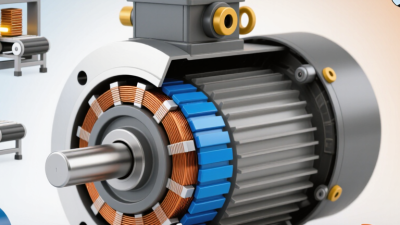
Rotor magnets determine torque density, thermal stability, and long-term reliability. NdFeB magnets with Br values from 1.0 to 1.45 T provide strong magnetic output in compact rotors. Higher Br can increase torque, but it may also raise demagnetization risk at elevated temperatures. The selected grade must match the rotor’s air gap, speed, temperature, and control strategy.

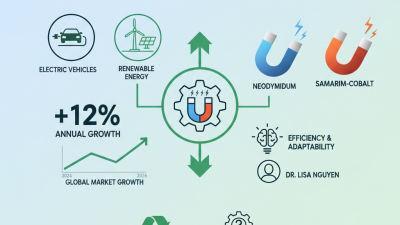
SmCo usually offers lower remanence than high-grade NdFeB. However, it performs well in hot environments and resists corrosion more naturally. This makes SmCo useful for aerospace systems, industrial drives, and compact motors exposed to continuous heat. NdFeB often suits applications needing maximum power density and competitive material cost. Still, a higher Br value does not automatically create a better motor. Not always.

Experienced buyers should request Br, Hcj, operating-temperature, and coating data from each manufacturer. They should also check magnetization direction, dimensional tolerance, rotor balance, and batch consistency. Thermal cycling tests can reveal weaknesses hidden by room-temperature inspection. Measure twice. I have seen designs focus heavily on Br while overlooking adhesive limits and sleeve stress. That mistake can cause field loss, vibration, or early rotor failure. SmCo can reduce some risks, but its brittleness demands careful machining and assembly. Supplier evaluation should include traceable test reports, sample approval, and realistic production evidence.

Temperature Ratings and Coatings: NdFeB Grades Span About 80–230°C

For rotor magnets, an NdFeB temperature rating is a design limit, not a promise of unchanged output. Common grade tables span roughly 80°C to 230°C, depending on coercivity and grade. A rotor running near its limit can lose useful flux, especially during overloads or repeated heat cycles. The stated rating also assumes a particular magnetic circuit and operating point. Ask suppliers for the demagnetization curve at the expected temperature, not just a grade label. That distinction is easy to miss.

Coatings protect against moisture and corrosion, but they do not raise the magnet’s intrinsic temperature rating. Nickel-based coatings, epoxy, and other finishes differ in adhesion, chemical resistance, and process limits; confirm compatibility with the rotor’s heat and environment. Coatings matter too. IEC 60404-5:2015 specifies measurement methods for permanent-magnet properties, useful when comparing test data. For sourcing context, the USGS Mineral Commodity Summaries 2025 estimated 2024 global rare-earth mine production at 390,000 metric tons, measured as rare-earth-oxide equivalent. That figure signals a large upstream market, not uniform magnet quality. I would still request batch-level magnetic and coating records, then test a sample through the intended thermal cycle. A neat datasheet can hide a messy assembly.

Manufacturer Qualification: IEC 60404-8-1 Testing and IATF 16949

For rotor magnet suppliers, qualification starts with a clear view of what each standard covers. IEC 60404-8-1 specifies requirements for certain cold-rolled electrical steel products; it is not a permanent-magnet test standard. That distinction matters. If a supplier cites it as proof of magnet performance, ask which component was tested and request the relevant report.

For the magnets themselves, review documented methods for properties such as magnetic flux, coercivity, dimensions, coating integrity, and performance after thermal exposure. Ask how samples are identified and linked to production lots. A useful report names the test conditions, equipment, calibration status, and acceptance limits. Check that results match the drawing and agreed material specification, not just a sales sample. Small gaps in traceability can become large production delays.

IATF 16949 certification indicates an automotive quality management system, not automatic approval of every part or process. Verify the certificate’s validity and manufacturing-site scope, then examine change control, nonconformance handling, and process monitoring. Ask for a recent corrective-action example. Details reveal habits. No certificate removes the need for technical review, and even a capable supplier may have documentation gaps worth discussing before production begins.

Compare Suppliers by Tolerance, Capacity, Lead Time, and Export Reach

2026 Best Rotor Magnet Manufacturers for Global Buyers

A rotor magnet supplier should be judged on more than quoted price. Compare dimensional tolerance, magnetic consistency, production capacity, lead time, and export experience. For tolerance, request inspection records for magnet thickness, arc angle, and coating—not only a general “precision” claim. Small differences matter. They can affect rotor balance and assembly fit.

The International Energy Agency’s Global Critical Minerals Outlook 2024 estimates that China accounts for about 90% of rare-earth refining. This concentration makes supply continuity worth checking, even when a supplier promises ample stock. Ask for evidence: monthly output, sample-to-production timing, and a written process for reporting delays. Confirm whether quoted lead times include inspection, packing, and transport. A fast sample schedule does not guarantee fast volume production.

Export reach also needs practical verification. Request recent experience shipping to your destination region, plus clear packing details for magnets that may attract metal debris or chip during handling. Compare suppliers using the same drawing revision and order quantity; otherwise, capacity and lead-time claims are difficult to assess fairly. I would not treat a polished capacity sheet as proof. It can still miss seasonal bottlenecks, and even a careful comparison cannot remove every risk.

2026 Best Rotor Magnet Manufacturers for Global Buyers – Compare Suppliers by Tolerance, Capacity, Lead Time, and Export Reach

Supplier-specific tolerances, production capacity, lead times, and export coverage cannot be reliably inferred without verified quotations. The comparison below uses manufacturer capability profiles, not company data. Confirm all figures against the supplier’s current technical documents and written quotation.

Manufacturer profile Tolerance comparison Capacity comparison Lead-time comparison Export reach What global buyers should verify
Sintered NdFeB specialist Tolerance depends on magnet geometry, machining method, coating, and drawing requirements. Request a dimension-by-dimension capability statement. Capacity is grade-, shape-, and process-specific; confirm available monthly output for the exact rotor design. Ask for separate sample, tooling, and repeat-order schedules; material and coating availability can affect timing. Verify destination-country shipping experience, export documentation, and any applicable trade restrictions. Magnetic grade, temperature rating, corrosion protection, magnetization direction, inspection plan, and traceability.
Bonded NdFeB specialist Near-net shaping may suit complex forms, but achievable dimensions and magnetic performance depend on the molding process and design. Confirm tooling availability, molding-line allocation, and output for the required geometry and annual demand. Request a schedule that identifies tooling, qualification, and production stages. Confirm packaging, customs paperwork, and delivery options for the intended market. Process-specific dimensional data, magnetic-property reports, tooling ownership, and change-control terms.
SmCo magnet specialist Tolerance is design- and finishing-dependent. Confirm machinability, drawing compliance, and inspection method for the specified part. Ask the manufacturer to confirm capacity for the specified grade, dimensions, and order cadence. Request a current, order-specific delivery plan, including any material or machining constraints. Check actual shipping lanes and export-document support for the buyer’s destination. Grade, operating-temperature requirements, brittle-material handling, test reports, and packaging protection.
Ferrite magnet specialist Confirm tolerances against the part drawing and the supplier’s stated forming and finishing capabilities. Request demonstrated output for the required shape, tooling, and forecast rather than relying on general factory capacity. Obtain separate timelines for tooling, samples, production, and shipment. Verify destination coverage, freight terms, and delivery documentation directly with the supplier. Material grade, dimensional inspection, magnetic testing, packaging, and production-lot consistency.
Rotor assembly and magnetization provider Evaluate the completed assembly, not just individual magnets; specify runout, balance, placement, and assembly tolerances on the drawing. Confirm assembly-line capacity, magnetization equipment, and inspection throughput for the complete rotor. Include fixture development, assembly validation, magnetization, and final inspection in the quoted schedule. Check whether the provider can ship the assembled product and supply the required export and product documents. Assembly process controls, balance results, magnetization pattern, rotor test reports, and acceptance criteria.

Buyer checklist: provide a controlled drawing, material and performance requirements, annual and peak demand, destination country, required certifications, and target delivery date when requesting comparable quotations.

2026 Rotor Magnet Manufacturer Shortlist by Region and Application

A practical 2026 shortlist should match a supplier’s region to the rotor’s operating conditions, not just its quoted price. The IEA’s Global EV Outlook 2024 reports nearly 14 million electric cars sold in 2023, close to one in five new cars worldwide. That scale supports screening Asian suppliers for high-volume traction magnets, with attention to batch consistency, tight dimensional tolerances, and corrosion protection. Ask for test data from production lots, not only a polished sample.

For European wind and industrial drives, shortlist manufacturers able to document thermal stability and performance under sustained loads. GWEC’s Global Wind Report 2024 records 117 GW of new wind capacity installed in 2023. This is useful context, not a direct measure of magnet demand. Rotor designs differ. Request temperature-dependent magnetic curves and coating results, then verify them against the motor’s actual duty cycle.

North American buyers serving robotics, pumps, or specialized machinery may value responsive engineering support and smaller pilot runs. Compare lead times, traceability, and rotor-retention guidance alongside magnetic strength. Fit matters more. Regional labels can mislead. A supplier near the assembly plant may still lack the right grade or process control. One weak point: public reports rarely disclose magnet specifications, so buyers should validate shortlisted parts through independent testing before production approval.

Scroll to Top