Neodymium magnet motors are valued for high torque density, compact size, and efficient operation. These traits make them useful in electric vehicles, industrial equipment, robotics, and precision appliances. Demand is growing. The International Energy Agency’s Global EV Outlook 2024 reports that nearly 14 million electric cars were sold worldwide in 2023, about 18% of all new car sales. That growth gives motor suppliers a larger opportunity, but it also raises expectations for consistent performance and dependable delivery.
Material supply matters, too. The IEA’s Global Critical Minerals Outlook 2024 highlights China’s dominant role in rare-earth processing, with roughly 90% of global capacity. This concentration can affect sourcing, pricing, and lead times for manufacturers using neodymium-based magnets. It does not, by itself, determine motor quality. Design, magnet grades, thermal management, production controls, and testing records all matter. Details matter.
This China Top 10 Neodymium Magnet Motor Manufacturers guide introduces companies serving different applications and production needs. It considers technical capability, product range, manufacturing experience, and available quality information—not just headline specifications. Readers should verify certifications, test data, and project references directly with suppliers, since product offerings and capacity can change. No ranking captures every trade-off. A supplier that suits a high-volume vehicle program may not fit a small automation project, and this distinction deserves closer attention.
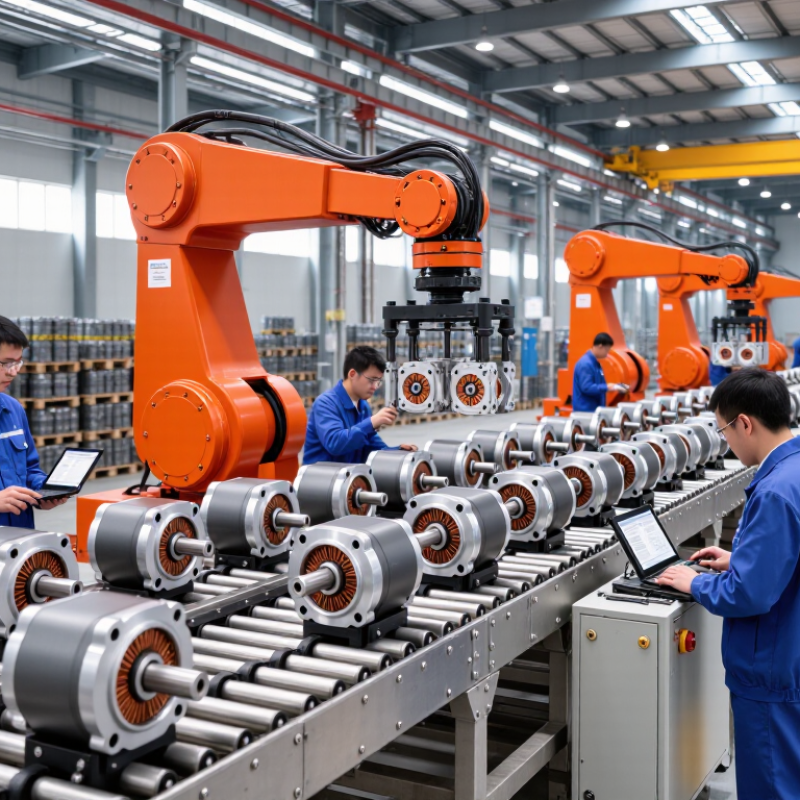
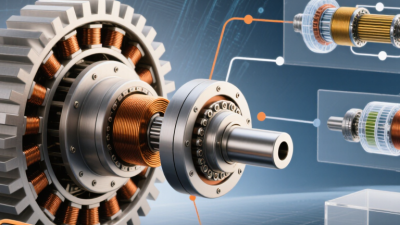
A neodymium magnet motor is built around a precise magnetic circuit, not just strong magnets. In a typical permanent-magnet design, electrical steel laminations form the stator core, while NdFeB magnet segments sit on or inside the rotor. The air gap between them must stay small and uniform. Even slight runout can increase vibration or reduce efficiency. Windings, insulation, bearings, the shaft, and a cooling path complete the assembly. Each part affects heat, noise, and service life.
Rotor geometry shapes torque and speed. Surface-mounted magnets support a simpler layout, while interior magnets can improve mechanical retention and field-weakening performance. Designers also consider magnet grade, coating, and sleeve strength. Heat matters: excessive temperature can weaken magnets, so cooling channels and temperature sensors help protect performance. The IEA’s Global EV Outlook 2024 reported nearly 14 million electric car sales in 2023, about 18% of global car sales. That growth raises demand for compact, efficient traction motors. Still, a promising simulation may not match a noisy prototype; testing exposes the gap.
Tips: Check air-gap tolerance, rotor balance, and magnet temperature under real load. Ask for measured efficiency and thermal-test conditions, not only peak figures. Small details count.
China’s neodymium magnet motor industry has developed alongside advances in materials processing, precision machining, and motor control. Neodymium-iron-boron magnets can produce strong magnetic fields in compact spaces. This makes them useful in motors designed for electric vehicles, factory equipment, appliances, and other space-conscious applications. Small details matter.
Manufacturers work across several connected steps, from magnet production and rotor assembly to balancing and performance testing. A rotor must hold its magnets securely under heat and vibration. Engineers also consider efficiency, noise, operating temperature, and the motor’s intended duty cycle. A motor for a small pump faces different demands from one used in industrial machinery. Testing under realistic loads can reveal problems that a specification sheet may not show.
The sector’s growth reflects rising demand for compact, efficient motion systems, but development is not effortless. Magnet supply and material costs can fluctuate, while heat management remains a practical design challenge. Stronger magnets alone do not guarantee a better motor; geometry, winding choices, control electronics, and assembly quality all matter. Even experienced teams can discover that a design performs differently outside the laboratory. Continued improvements in process control and application-specific testing are helping manufacturers refine products for varied operating conditions.
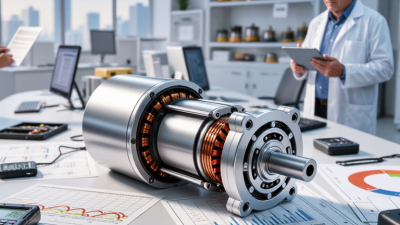
Choosing a neodymium magnet motor manufacturer requires more than comparing catalog power ratings. Start with the operating point: required torque, speed, voltage, duty cycle, and ambient temperature. Ask for torque-speed curves and efficiency data under the conditions your equipment will actually face. A curve measured at one voltage may not predict performance inside a warm, enclosed machine. Numbers matter.
Review magnet grade, rotor retention, and thermal design together. Strong magnets alone do not guarantee reliability; heat can reduce magnetic performance, while vibration exposes weak mechanical details. Request material certificates, inspection plans, and sample test records. Check that production motors follow the same controls. Ask how winding resistance, rotor balance, noise, and temperature rise are measured. Visit the factory if practical. A live video review can help, though it cannot reveal everything.
Assess engineering support and delivery discipline. Can the team explain trade-offs, document design changes, and respond when a prototype misses its target? Ask for recent production evidence rather than relying only on estimated lead times. Ask about spare parts and warranty handling before approval. One detail is easy to overlook: a technically capable supplier may still be a poor fit for your communication needs. Keep a written scorecard and note where evidence is missing. The assessment will not be perfect; revise it after pilot testing.
| No. | Evaluation Criterion | What to Verify | Practical Evaluation Method | Suggested Weight |
|---|---|---|---|---|
| 1 | Motor Design and Application Fit | Motor type, rated output, speed range, torque requirements, duty cycle, and intended operating environment. | Compare the proposed design and documented operating limits with the application specification; check whether custom engineering and prototype validation are available. | 15% |
| 2 | Measured Performance | Rated power, torque, speed, efficiency, power factor where applicable, and performance across the required operating range. | Request test reports identifying the tested motor, test conditions, instrumentation, and method. IEC 60034-2-1 describes methods for determining losses and efficiency of rotating electrical machines. | 15% |
| 3 | Permanent-Magnet Specification | Magnet grade, remanence, coercivity, maximum operating-temperature limits, and consistency between the specification and the delivered motor. | Review magnet material certificates and the motor’s thermal design. Assess demagnetization risk at the specified temperature and operating conditions rather than relying on grade labels alone. | 12% |
| 4 | Thermal and Insulation Design | Winding insulation system, cooling method, temperature-rise limits, and protection against thermal overload. | Check thermal test records and the declared insulation system. IEC 60085 provides a framework for evaluating the thermal classification of electrical insulation materials and systems. | 10% |
| 5 | Manufacturing and Process Control | Control of winding, rotor and magnet assembly, balancing, machining, and end-of-line inspection. | Review process-control plans, inspection records, traceability procedures, and corrective-action practices. Treat quality-system certificates as supporting evidence, not as proof of product performance. | 10% |
| 6 | Reliability and Validation | Documented endurance, vibration, temperature, starting, and load testing relevant to the motor’s intended use. | Request test plans and results, including sample identification, test duration, operating conditions, and acceptance criteria; confirm that tests represent the intended application. | 10% |
| 7 | Electrical and Mechanical Safety | Rated voltage and frequency, insulation and dielectric strength, grounding, enclosure protection, and mechanical safety provisions. | Check ratings and test documentation against the applicable project and destination-market requirements. IEC 60034-1 covers ratings and performance requirements for rotating electrical machines; IEC 60034-5 classifies degrees of protection provided by machine enclosures. | 8% |
| 8 | Customization and Engineering Support | Ability to adapt shaft, mounting, enclosure, cooling, winding, feedback devices, and interfaces to the application. | Assess design-review capability, drawing control, engineering-change procedures, prototype lead time, and availability of technical support throughout validation. | 7% |
| 9 | Delivery and Supply-Chain Resilience | Production capacity, component sourcing, production planning, traceability, and communication of schedule risks. | Verify capacity and lead-time assumptions using a production plan; ask how critical materials and components are monitored and how supply interruptions are managed. | 7% |
| 10 | Commercial and After-Sales Support | Quotation clarity, warranty terms, spare-parts availability, complaint handling, and support for failure analysis. | Compare written quotations and warranty conditions; evaluate response commitments and whether returned units can be investigated with documented root-cause analysis. | 6% |
| Total suggested evaluation weight | 100% | |||
| Note: The weights are an illustrative procurement framework, not a market ranking or a claim about any specific manufacturer. Adjust them to the motor’s application, operating environment, and destination-market requirements. | ||||
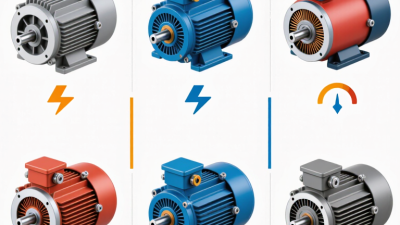
China’s neodymium magnet motor sector includes manufacturers with distinct engineering strengths. These ten profiles highlight capabilities buyers can compare, rather than claiming a verified ranking. Profile one focuses on compact motors for pumps and small appliances. Profile two specializes in high-speed units for industrial tools. Profile three emphasizes low-noise designs, while profile four develops sealed motors for humid environments. Details matter.
Profile five centers on customized shafts and housings. Profile six offers integrated motor-and-controller assemblies. Profile seven serves automation applications, where repeatable torque and precise speed control are important. Profile eight focuses on energy-efficient designs for continuous operation. Profile nine supports small-batch customization, and profile ten produces motors for larger industrial equipment. These are useful distinctions, but actual performance depends on the application and test conditions.
A credible supplier should provide clear specifications, test methods, and sample data. Ask for torque curves, thermal limits, insulation details, and evidence of production quality controls. A motor that performs well on a brief bench test may behave differently under sustained load. I would also check how clearly engineers explain trade-offs, such as size versus heat dissipation. Not every catalog detail is equally useful, and some claims need independent confirmation. Requesting a sample and reviewing its test results can reveal gaps before a design is finalized.
A material benchmark for comparing motor designs: higher maximum energy product can enable more compact magnets, while the best grade depends on operating temperature and the motor’s design. Values are representative ranges in MGOe; verify the specific magnet supplier’s datasheet for exact specifications.
China Top 10 Neodymium Magnet Motor Manufacturers
Key Applications and Emerging Motor Technologies
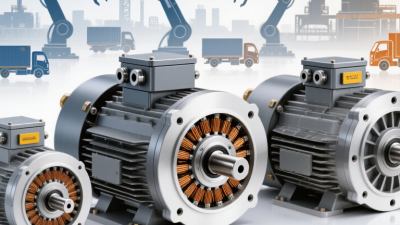
Neodymium magnet motors power electric-vehicle traction systems, factory servos, pumps, and compact robotics. Their high torque density helps engineers fit strong drive units into tight spaces. The IEA’s Global EV Outlook 2024 reports nearly 14 million electric cars sold in 2023, about 18% of global car sales. That growth is increasing demand for efficient traction motors, though vehicle sales alone do not show how many use neodymium magnets.
The IEA’s Global Critical Minerals Outlook 2024 estimates that China produced about 94% of the world’s sintered rare-earth permanent magnets in 2023. This manufacturing base supports a broad motor supply chain. Technology development is moving beyond simply adding more magnet material. Hairpin windings can improve copper packing, while direct oil cooling helps remove heat from dense motor assemblies. Axial-flux designs promise high torque in a short package, but production complexity and thermal management remain real challenges. Progress is uneven.
Tips: Match the motor to its duty cycle. Check torque, operating temperature, cooling method, and magnet grade—not just peak power. Ask for test data under realistic loads. A small detail matters.