Selecting a permanent magnet rotor manufacturer is not simply a matter of comparing prices or catalog photos. Buyers need a rotor suited to the motor’s speed, torque, thermal limits, and duty cycle. Differences in magnet grade, rotor balance, shaft tolerance, and bonding method can affect performance and service life. Details matter.
This article introduces manufacturers serving global buyers and outlines practical ways to compare them. Rather than treating “top” as a universal ranking, it considers engineering range, production consistency, testing practices, customization, and export support. For electric vehicles, industrial drives, pumps, and generators, operating conditions differ sharply. A rotor designed for a compact, high-speed motor may not suit a large, continuously loaded machine. There is no shortcut here. Compare published operating limits with the actual installation, including ambient heat, vibration, and maintenance access.
Global sourcing brings additional questions. Buyers can request test reports, clarify traceability for magnets and finished assemblies, and ask about balancing records, lead times, packaging, and replacement parts. A polished brochure may leave important details unclear. Verify specifications directly with each supplier, and confirm which tests apply to the exact rotor configuration being quoted. The most familiar brand is not automatically the best fit. Careful comparison, with room to revisit assumptions, helps buyers build a more reliable shortlist.
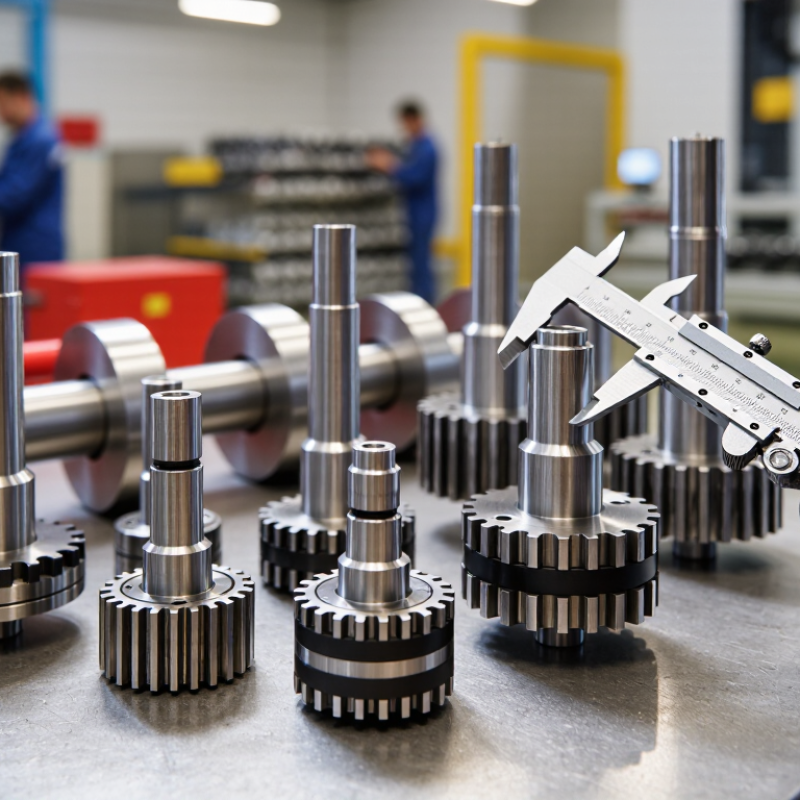
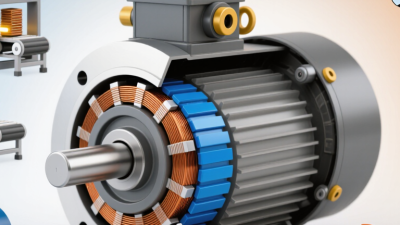
A permanent magnet rotor is the rotating assembly at the center of many electric motors. It combines a steel core with permanent magnets arranged around its circumference or embedded inside it. As the rotor turns, its magnetic field interacts with the stator’s changing field to produce torque. Unlike an induction rotor, it does not need current supplied to rotor windings for magnetization. That matters. It can improve efficiency and reduce heat, though the complete motor still has electrical and mechanical losses.
Rotor design depends on operating speed, temperature, and load. Surface-mounted magnets can support strong torque, while interior magnets offer mechanical protection and can help at higher speeds. Adhesives, sleeves, and precise balancing keep the assembly secure as it spins. Small alignment errors may cause vibration, noise, or bearing wear. Heat also deserves attention: excessive temperatures can weaken some magnets, so cooling and material choice must match the duty cycle.
For industrial buyers, the rotor should be assessed as part of the motor system, not as an isolated component. Check its dimensions, magnetic properties, balance requirements, and compatibility with the stator and drive. Ask how performance was measured, including the temperature and speed used in testing. A specification sheet can be useful, but it cannot describe every real installation. Actual loads vary, and that is easy to underestimate.
Permanent-magnet rotor quality starts with material control and precise geometry, not marketing claims. The IEA’s Global EV Outlook 2024 reported nearly 14 million electric cars sold worldwide in 2023, around 18% of all car sales. That scale makes consistent motor performance commercially important. Buyers should request magnet-grade certificates, batch traceability, and measured flux variation for each rotor. Small differences matter.
During assembly, magnet polarity, rotor-stack alignment, adhesive curing, and sleeve fit all affect reliability. Ask manufacturers for dynamic-balance results, runout measurements, and overspeed test records, with test conditions clearly stated. Inspect how they control air-gap concentricity; a rotor can look excellent and still vibrate under load. IATF-style process controls can help, but a certificate alone does not prove that every batch meets the drawing. That part is easy to overlook.
Tips: Compare test reports against your actual speed, temperature, and duty cycle. Request sample inspection data, not only a pass certificate. If a supplier cannot explain its measurement method, pause and ask again. The process should be clear.
| Technology or Quality Dimension | Manufacturing Detail | Quality Checks and Evidence | Why It Matters to Buyers |
|---|---|---|---|
| Surface-mounted magnet rotor | Permanent magnets are attached to the rotor surface. Retention may use a non-magnetic sleeve, a retaining band, adhesive, or a combination selected for the design and operating speed. | Review magnet-position records, bonding or retention process controls, rotor runout results, and any design-specific overspeed test evidence. | Magnet retention and rotor mechanical integrity are important at high rotational speeds. The suitable retention method depends on the design, temperature, and operating loads. |
| Interior permanent magnet rotor | Magnets sit within rotor cavities or slots in the laminated steel core. Bridges and ribs retain the magnets and contribute to the rotor’s mechanical strength. | Check lamination and cavity dimensions, magnet orientation and insertion records, core-stack integrity, and design-specific mechanical validation. | Accurate geometry supports consistent magnetic performance, while the rotor structure must withstand the intended speed and load conditions. |
| Spoke-type magnet arrangement | Magnets are arranged radially, commonly with their poles oriented to concentrate flux toward the rotor surface. The configuration and supporting structure are design-dependent. | Verify magnet polarity and placement against assembly instructions; inspect the core, retention features, and finished rotor geometry. | Correct polarity and placement are essential to achieving the intended magnetic circuit and avoiding assembly errors. |
| Magnet material and temperature capability | Permanent-magnet material is selected for the required magnetic output and operating environment. NdFeB and SmCo are common rare-earth magnet families; their properties vary by grade and temperature. | Request material certificates or agreed test data identifying grade and relevant properties, such as remanence and intrinsic coercivity, with test conditions stated. | Magnet properties affect torque, demagnetization resistance, and temperature suitability. A grade designation alone does not replace checking the project’s operating requirements. |
| Magnet orientation and polarity | Magnets must be installed in the specified direction and pole sequence. Assembly fixtures and documented procedures help control orientation. | Check polarity or magnetic-field mapping after assembly, and retain traceable inspection records for each rotor or production lot. | Incorrect polarity or orientation can reduce performance or cause the rotor to fail functional testing. |
| Rotor balance | Material distribution and assembly variation can create residual unbalance. The required balance quality depends on rotor design, speed, and application. | Request a balance report stating the correction planes, residual unbalance, test conditions, and applicable acceptance criteria. ISO 21940-11 provides procedures and tolerances for rotors with rigid behaviour. | Unbalance can contribute to vibration, bearing loads, noise, and reduced service life. Acceptance limits should be specified for the actual rotor and use case. |
| Runout, concentricity, and air-gap geometry | Shaft, core, and magnet surfaces must be manufactured and assembled to the drawing requirements. No single dimensional tolerance is appropriate for every rotor. | Review inspection results for drawing-defined runout, concentricity, shaft dimensions, and magnet position; confirm the measurement method and datums. | Dimensional variation can affect air-gap uniformity, vibration, electromagnetic performance, and assembly fit. |
| Lamination stack and core integrity | Many rotors use stacked electrical-steel laminations to limit eddy-current losses. Stack alignment, compression, and interlaminar insulation depend on the design and process. | Inspect stack dimensions and alignment; review material and process records, and use agreed electrical or functional checks where required by the design. | Core construction influences magnetic performance, losses, mechanical stability, and repeatability between production lots. |
| Magnet corrosion protection | Magnet coatings or other protective measures are selected according to the magnet material and exposure conditions. Protection requirements vary with humidity, temperature, and the surrounding environment. | Check coating specifications, visual coverage, handling controls, and any agreed adhesion or environmental test results. | Corrosion damage can degrade magnets or their protective layers. The protection system should match the intended service environment. |
| Adhesive and retention-process control | Where adhesive is used, surface preparation, adhesive storage, mix ratio where applicable, bond-line control, and cure conditions must follow the validated process. | Review process instructions, batch traceability, cure records, and any design-appropriate bond or retention validation. | Consistent process control helps reduce the risk of magnet movement or bond failure during operation. |
| Vibration and mechanical performance | Rotor vibration depends on balance, geometry, bearings, mounting, and test conditions. Evaluation should reflect the relevant machine and test setup. | Ask for vibration test results with the measurement locations, operating condition, and acceptance limits stated. IEC 60034-14 covers measurement and evaluation of mechanical vibration for certain electrical machines within its scope. | Comparable test conditions make it easier to assess vibration performance and identify potential issues before integration. |
| Traceability and inspection documentation | Production records can link rotor serial numbers or lot identifiers to material batches, process steps, inspections, and test results. | Confirm that inspection plans, calibration status, nonconformance records, and agreed test reports are available and traceable. | Clear records support incoming inspection, supplier quality review, root-cause analysis, and consistent production follow-up. |
Permanent magnet rotor manufacturing is concentrated in East Asia, where established magnet supply chains support high-volume production. The IEA’s Global Critical Minerals Outlook 2024 reports that China produced about 94% of the world’s sintered permanent magnets in 2023. This concentration matters to buyers comparing rotor suppliers: magnet availability, machining capacity, and delivery schedules can vary sharply by region. Ask manufacturers for traceable material data and rotor test results, not just rated output.
In Europe, manufacturers often compete through engineering support, custom designs, and closer access to regional motor customers. North American production is developing alongside efforts to diversify supply, but capacity and lead times differ between suppliers. Regional labels can mislead. A rotor assembled locally may still rely on magnets made elsewhere. Not every claim is independently audited, either. Check where magnets are produced, how rotors are balanced, and whether performance data covers the intended speed and temperature range.
Tips: Request a sample test report showing air-gap dimensions, balance grade, and thermal limits. Ask for a clear breakdown of magnet origin and delivery time. Small details matter. A rotor that passes a factory test may behave differently under your operating conditions.
Permanent magnet rotors serve very different jobs across global markets. In electric vehicles, they help deliver compact drive systems and responsive torque. Designers must account for heat, vibration, and frequent changes in speed. Small details matter. A rotor that performs well on a test bench may behave differently inside a tightly packed vehicle.
Factories use these rotors in pumps, compressors, and automated equipment, where steady operation and energy efficiency are practical priorities. Wind turbines also rely on permanent magnet designs in some generator systems, while household appliances use smaller versions in fans and other motors. Each application brings different demands for output, operating temperature, service life, and cost. Buyers should compare manufacturing controls, balancing methods, material consistency, and testing records—not just headline performance. There is no universal best design. A specification can look complete yet miss a real operating condition, such as dust, repeated starts, or limited cooling. That gap deserves attention. The right rotor is the one matched to its equipment, environment, and maintenance needs.
A supplier’s catalogue is only a starting point. Ask for rotor drawings, magnet-grade certificates, and test results tied to the exact production lot. For each sample, compare dimensions, runout, balance, and back-EMF against your drawing. Request operating-temperature limits and demagnetization data, not just a headline energy-product value. Ask how the supplier controls magnetization direction and adhesive curing; these details can affect torque consistency and rotor life. Small differences matter.
Supply-chain resilience deserves equal attention. The IEA’s Global Critical Minerals Outlook 2024 reports that China accounts for about 94% of global sintered permanent-magnet production, showing how concentrated supply can be. Ask suppliers to disclose magnet origin, backup production sites, and typical lead times, then verify their answers through audits or traceable records. Check quality systems, corrective-action procedures, and change-control rules. A certificate alone is not proof that every batch performs alike. Nor is the lowest quote always the best value. A trial order can reveal packaging damage, communication delays, or measurement gaps before volume production. No scorecard is perfect; buyers may still overlook a weak point, especially when schedules are tight. Keep records, review failures, and revisit assumptions.