Choosing a pm stepper motor manufacturer is not just a price comparison. Global buyers must match motor behavior to real machine demands: load, speed, positioning accuracy, duty cycle, and operating temperature. A compact motor may fit neatly beneath a feeder, yet still miss steps when the mechanism accelerates. Details matter. T. Kenjo, coauthor of Stepping Motors and Their Microprocessor Controls, is a recognized authority in this field. A concise editorial paraphrase of the engineering lesson in his work is: “Select the motor for the motion required, not for one attractive specification.” It is a useful reminder, not a verbatim quotation.
This guide reviews ten manufacturers serving international buyers and compares practical selection factors. These include product range, torque curves, available frame sizes, customization, documentation, and access to technical support. A datasheet can show holding torque, but the application may depend more on usable torque at operating speed. Ask for performance curves. Check the driver requirements. Confirm lead times, sample availability, and whether specifications apply to the exact model offered. Small differences count.
No ranking can replace testing in the actual machine. That is easy to overlook. A motor that performs well on a clean workbench may behave differently in a warm enclosure or under a changing load. The manufacturers below provide a starting point for informed comparison, not a universal winner. Buyers should verify current specifications directly with suppliers, especially when production volumes, delivery schedules, or operating conditions are demanding.
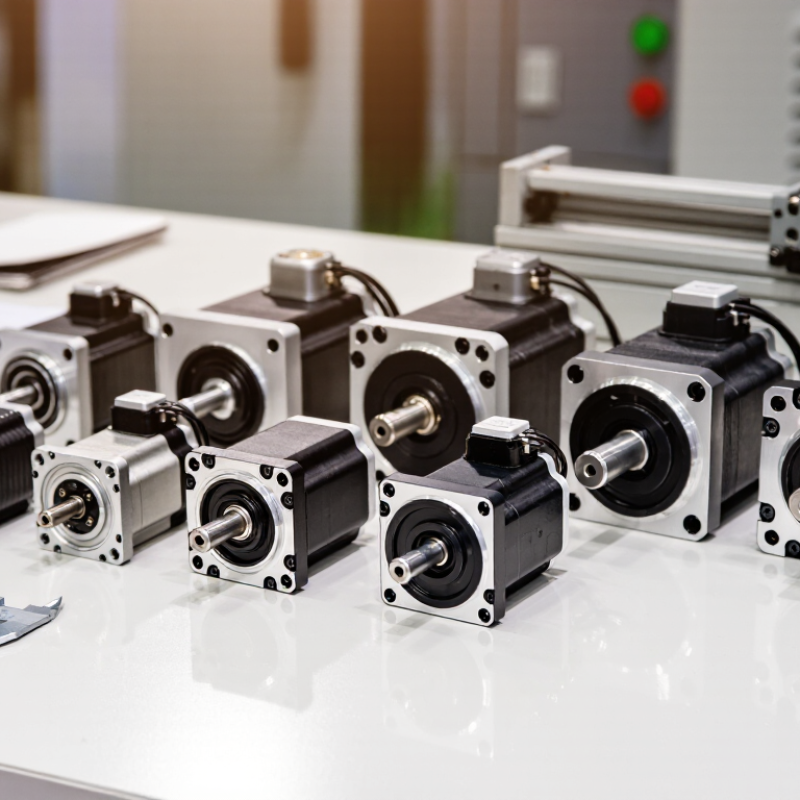
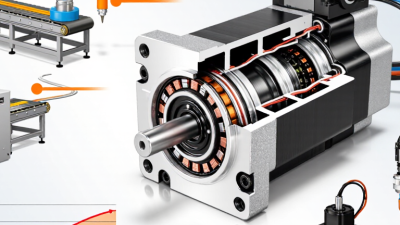
A permanent magnet (PM) stepper motor uses a magnetized rotor and wound stator poles to create controlled rotation. When the driver energizes the stator coils in sequence, the rotor moves between stable positions. Each input pulse commands a step, rather than continuous rotation. That makes the motor useful for compact positioning tasks, such as moving a small valve or adjusting a camera mechanism.
The rotor’s permanent magnets interact with the stator’s changing magnetic field. Pole count and motor construction determine the step angle; they also affect torque and smoothness. With power removed, some PM motors show a slight cogging feel as the rotor settles near magnetic alignment. It is a clue, not a complete test. A motor’s data sheet and wiring information are more reliable for identification.
PM stepper motors are often simpler and less costly than hybrid designs, but their resolution and torque may be lower. The distinction is not always tidy: product descriptions can use “PM” loosely, so buyers should verify rotor construction and rated step angle. Under excessive load, an open-loop motor can miss steps without signaling an error. That matters. Proper sizing, gradual acceleration, and a realistic load estimate help keep commanded movement close to actual movement.
A permanent-magnet (PM) stepper uses a magnetized rotor that interacts with the stator’s energized coils. When the coils switch in sequence, the rotor moves in defined steps. Its magnetic poles also create detent torque when power is off. That small resistance is easy to feel when turning the shaft by hand.
A variable-reluctance stepper uses a soft-iron rotor instead. It moves toward the stator teeth with the lowest magnetic resistance, but usually has little unpowered holding torque. A hybrid stepper combines permanent magnets with toothed rotor sections. This design commonly offers finer step angles and stronger torque, though its construction is more complex. The difference matters. A PM motor may suit a compact pointer or simple positioning mechanism, while a hybrid may better fit equipment that needs finer motion.
Catalog descriptions can make these categories seem perfectly separate. Real machines are less tidy. Load, drive current, speed, and resonance all affect performance, so a PM motor’s step resolution alone does not predict smooth motion. During selection, check the actual torque curve and step angle, then test the motor with the intended driver and load. A motor that moves smoothly on a bare bench may vibrate once attached to a bracket. That can be surprising.
A credible evaluation starts with measured performance, not a headline torque figure.
Compare torque-speed curves at the intended voltage and current. Ask for holding torque, detent torque, step accuracy, and temperature-rise results. The IEA’s 2011 report, Energy-Efficiency Policy Opportunities for Electric Motor-Driven Systems, estimates that motor-driven systems use about 45% of global electricity. That figure covers many motor types, not PM steppers alone. Still, it shows why efficiency and thermal behavior deserve attention.
Check whether test conditions match real operation: load, ambient temperature, duty cycle, and driver settings. The U.S. Department of Energy’s 2014 industrial motor-systems assessment reports that motor-driven systems account for about 68% of U.S. manufacturing electricity use. For PM stepper suppliers, request sample test records, batch traceability, dimensional tolerances, and clear failure-handling procedures.
Inspect winding resistance and shaft runout on delivered samples. Ask about bearing life and insulation ratings, too. Details matter. A polished catalogue cannot show how a motor behaves after hours of stop-start movement. One judgment remains difficult: published tests rarely mirror every machine. Run a pilot under your actual load before approving a large order.
Global buyers comparing permanent-magnet (PM) stepper motor manufacturers need more than a ranked list. The International Federation of Robotics’ World Robotics 2024 reports 541,302 industrial robots installed worldwide in 2023. This is not a stepper-motor sales figure, but it shows the scale of automation demand. Compare holding torque, step angle, winding current, temperature rise, and compatible drive options.
Ask for torque-speed curves, not just headline holding torque. A PM stepper can lose usable torque as speed rises, while a warm enclosure can narrow its safe operating margin. Request sample test records, dimensional tolerances, lead-time history, and change-control procedures. Check for traceable lot records and clear material specifications. Small details matter. Published values may use different test conditions, making direct comparisons misleading.
Efficiency also deserves attention. The International Energy Agency’s Energy Efficiency 2023 report puts industry at about 37% of global final energy consumption. That figure is not specific to stepper motors, but it underlines why motion-system losses should not be ignored. Ask suppliers how they measure current, heat, and performance in your operating conditions. A polished datasheet is useful, but a pilot run can reveal issues it misses. Shipping consistency matters, too.
A non-branded buyer comparison framework covering ten practical selection factors. Values are general PM stepper motor design facts, not specifications attributed to individual manufacturers; confirm exact ratings with each supplier.
| No. | Buyer Evaluation Factor | Relevant PM Stepper Motor Fact | What Global Buyers Should Verify |
|---|---|---|---|
| 1 | Step angle and resolution | Permanent-magnet stepper motors are commonly available with 7.5° or 15° full-step angles, depending on design. | Confirm the full-step angle, positioning requirements, and whether the proposed controller supports microstepping. |
| 2 | Winding and lead configuration | PM stepper motors are commonly offered in bipolar or unipolar configurations; lead counts can include 4, 5, 6, or 8 wires. | Match the winding and lead arrangement to the drive circuit, wiring harness, and required connection method. |
| 3 | Torque at operating speed | Stepper motor torque changes with speed; holding torque alone does not describe available running torque. | Request a torque-speed curve for the intended supply voltage, drive current, and load conditions. |
| 4 | Rated voltage and current | Winding resistance and rated current are key electrical parameters; the correct drive setup depends on the motor winding and controller. | Check phase current, winding resistance, insulation rating, and drive compatibility rather than selecting by voltage alone. |
| 5 | Mounting dimensions | PM stepper motors are produced in multiple frame sizes; NEMA designations describe standardized mounting dimensions where applicable. | Verify the complete mechanical drawing, including mounting-hole pattern, shaft diameter, shaft length, and body length. |
| 6 | Shaft and mechanical options | Shaft geometry, output-shaft style, and gear reduction are application-dependent options, not universal PM stepper features. | Confirm shaft tolerances, allowable radial and axial loads, gearbox ratio, and any required custom machining. |
| 7 | Insulation and temperature limits | Permissible winding temperature depends on insulation system, construction, ambient temperature, and operating conditions. | Request the insulation class, operating-temperature range, and applicable test documentation for the exact model. |
| 8 | Environmental protection | Ingress protection is specified by an IP code under IEC 60529; protection levels vary by motor construction. | Confirm the tested IP rating and whether connectors, cables, and installed accessories retain that protection. |
| 9 | Quality and compliance documentation | Quality-system certification and product compliance are separate matters; requirements depend on the destination market and end use. | Request current certificates, declarations, test reports, and traceability details relevant to the product and target market. |
| 10 | Supply and export readiness | Lead time, minimum order quantity, packaging, and export documentation are supplier-specific commercial terms. | Confirm sample availability, production lead time, order quantities, warranty terms, shipping documents, and after-sales support. |
Comparing PM stepper motor manufacturers takes more than matching a catalog price. Check the motor’s step angle, rated voltage, winding resistance, and holding torque against your actual load. A small motor may look suitable on paper but stall when driving a pulley or a valve under friction. Ask suppliers for torque-speed curves, not just peak torque figures. Confirm shaft dimensions, lead-wire length, mounting-hole spacing, and connector options before approving a sample. These details can prevent a costly redesign.
Tips: Test samples under your real operating conditions. Record noise, temperature, missed steps, and startup behavior. Ask for inspection criteria and batch traceability. A spreadsheet helps, but it can hide differences in testing methods, so compare like with like.
Review lead times, minimum order quantities, sample costs, and how the supplier handles product changes. Request clear drawings and written specifications for each configuration. If your equipment runs for long shifts, discuss expected duty cycles and heat limits. Also check whether the manufacturer can support repeat orders with consistent materials and winding specifications. One detail is easy to overlook: a quick response during sales does not guarantee strong technical support later. Ask a practical question before placing a large order, then assess how clearly the team answers it.
NEMA frame designations correspond approximately to face dimensions in tenths of an inch; the chart converts those nominal values to millimeters. They are not guaranteed mounting dimensions. When comparing suppliers, request mechanical drawings and verify the mounting pattern, shaft, and body dimensions for the exact motor model.