Choosing a reliable magnet engine manufacturer requires more than comparing catalog prices. Global buyers must examine engineering capability, production consistency, certification, and after-sales support. This guide reviews ten established manufacturers serving industrial, automotive, robotics, renewable energy, and specialized equipment markets. The term magnet engine may describe different motor designs, so buyers should confirm the exact technology before requesting quotations.
Real-world performance depends on details that brochures often simplify. Check torque curves, efficiency ratings, magnet grades, winding insulation, cooling methods, and operating temperature limits. A factory may claim high output, yet its sample unit could perform differently under continuous load. Ask for test reports, dimensional drawings, material traceability, and documented quality procedures. ISO certification can support confidence, but it should not replace independent verification.
Small details matter.
Supplier evaluations should also consider minimum order quantities, tooling charges, delivery schedules, packaging, spare parts, and communication quality. Factory audits, prototype testing, and third-party inspections can reveal risks before a large purchase. However, no ranking remains permanently accurate. Product lines change, capacity expands, and regional service quality may vary. This article therefore presents practical comparison points rather than declaring one universal winner. Buyers should match each manufacturer’s experience with their voltage, speed, torque, environmental, and compliance requirements. A careful decision may take longer, but it can reduce redesign costs and prevent avoidable equipment failures.
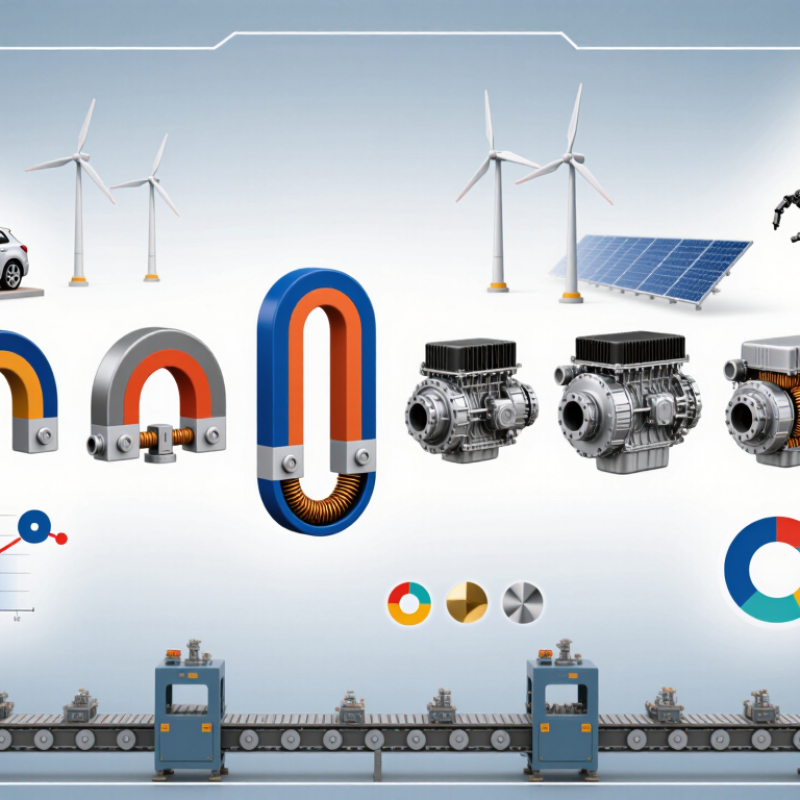
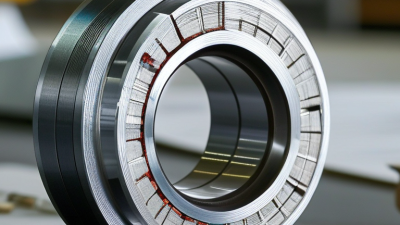
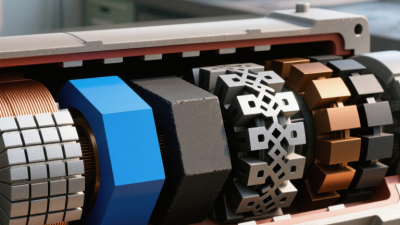
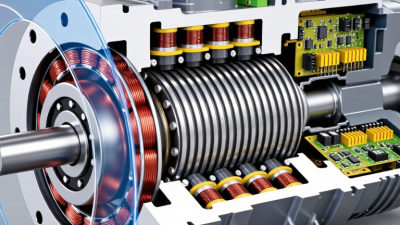
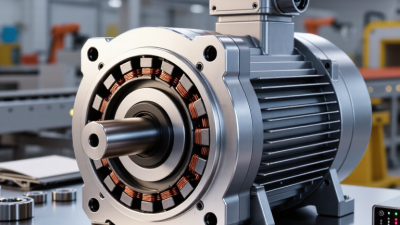
A magnet engine usually refers to a permanent-magnet motor. It uses magnetic attraction and repulsion to create rotational force. However, magnets do not produce unlimited energy. The motor still needs electrical input, precise switching, and controlled current. Inside the housing, permanent magnets sit on the rotor or stator. Electromagnetic coils create changing magnetic fields around them. These fields pull and push the rotor, producing torque. A controller changes the current direction at the right moment. The rotor then continues turning smoothly.
In practical testing, performance depends on magnet grade, coil design, air gaps, cooling, and controller quality. A small air gap can improve efficiency, but manufacturing becomes more demanding. Heat remains a serious concern. High temperature can weaken magnetic performance and shorten service life. Noise and vibration may also appear when alignment is poor. Some product descriptions make magnet engines sound nearly self-powered. That claim deserves careful questioning. The term itself can be used loosely, which creates confusion for global buyers.
Tips:
Ask for rated torque, speed, voltage, efficiency, and duty cycle. Request test conditions, not only headline figures. Check the motor’s cooling method and operating temperature. Review safety certifications for your target market. Inspect sample units before ordering large quantities. A clear technical drawing helps prevent costly installation mistakes. Also, compare real output under load, because unloaded efficiency can look impressive but reveal little.
Top 10 Magnet Engine Manufacturers for Global Buyers
Comparing magnet engine manufacturers requires more than checking rated power. Buyers should examine torque density, efficiency curves, magnet grades, and operating temperatures. The U.S. Department of Energy reports that permanent magnet motors can achieve high efficiency across varied load conditions, but performance depends heavily on design and control systems. Ask for test results at 25%, 50%, and 100% load.
Material security deserves equal attention. The International Energy Agency’s Global Critical Minerals Outlook 2024 reports that one country supplied over 90% of refined rare earth elements and about 94% of permanent magnets in 2023. This concentration creates supply and price risks. Manufacturers should disclose magnet origin, recycling options, and backup suppliers. A low quotation may hide unstable material sourcing. It happens.
Quality evidence separates experienced producers from capable sales teams. Request ISO 9001 records, batch-level inspection data, demagnetization tests, and vibration results. IEC 60034 standards provide a useful reference for rotating electrical machines. However, certificates alone cannot prove long-term reliability. Buyers should review field failure rates, warranty conditions, and sample-unit performance under dust, heat, and repeated starts.
Energy performance also affects total ownership cost. The European Commission’s Ecodesign rules emphasize motor efficiency and lifecycle savings, not only purchase price. Compare measured efficiency, maintenance intervals, controller compatibility, and repair access. Some manufacturers provide impressive laboratory figures but limited installation support. That weakness matters. A practical supplier should explain tolerances clearly, admit design limitations, and provide traceable technical documents before contract approval.
Top 10 Magnet Engine Manufacturers: Products and Market Strengths
The first manufacturer specializes in neodymium magnet motors for compact robotics and automated assembly lines. Its strength is high torque in small housings. The second focuses on ferrite-based motors for pumps, fans, and household equipment. Lower material costs support large-volume orders. The third produces permanent-magnet synchronous motors for electric vehicles and industrial drives. Efficient operation remains its clearest market advantage. The fourth supplies brushless DC motors for medical devices, drones, and precision tools. Quiet performance matters here.
The fifth manufacturer develops axial-flux engines with thin, lightweight structures. These products suit aerospace equipment and advanced mobility projects. The sixth builds high-temperature magnet motors for factories, compressors, and chemical processing systems. Its testing process includes thermal cycling and vibration checks. The seventh combines motors with smart controllers and sensor systems. This helps buyers monitor speed, heat, and energy use. The eighth serves renewable-energy applications, including wind generators and tracking systems. Reliability is its strongest selling point.
The ninth manufacturer offers customized magnet assemblies for conveyors, actuators, and laboratory equipment. Shorter engineering communication can reduce development delays. The tenth supplies large industrial engines for marine equipment, mining machinery, and heavy production lines. Its market strength comes from service networks and replacement support. No ranking is perfectly objective. Product life, delivery stability, and repair access can change the result. I would verify efficiency claims through independent testing, because catalog figures may reflect ideal conditions. Small details matter. A motor that runs well in a showroom may struggle beside dust, heat, or unstable voltage.
| Rank | Manufacturer Profile | Primary Product Range | Magnet Materials | Typical Applications | Market Strengths | Quality and Compliance Focus | Best Fit for Global Buyers |
|---|---|---|---|---|---|---|---|
| 1 | High-Volume Sintered Magnet Producer | Custom blocks, discs, rings, segments, and motor assemblies | Neodymium-iron-boron; ferrite | Electric motors, generators, pumps, sensors, magnetic couplings | Large production capacity, broad standard-size selection, competitive unit economics, and scalable tooling | Dimensional inspection, magnetic-performance testing, surface-coating control, and restricted-substance documentation | OEMs requiring repeatable supply for medium- to high-volume programs |
| 2 | Precision Motor Magnet Specialist | Arcs, segments, bonded magnet parts, and rotor magnet sets | Neodymium-iron-boron; bonded neodymium | Brushless DC motors, servo motors, robotics, compressors, power tools | Tight tolerances, balanced magnetic circuits, automated assembly capability, and engineering support | Geometry verification, pole-pair consistency, rotor balance checks, and process traceability | Motor manufacturers prioritizing efficiency, low vibration, and stable performance |
| 3 | High-Temperature Magnet Manufacturer | High-coercivity discs, blocks, rings, and custom assemblies | High-temperature neodymium; samarium-cobalt | Automotive drive systems, aerospace equipment, industrial motors, oilfield tools | Strong performance retention at elevated temperatures and experience with demanding magnetic circuits | Temperature-dependent magnetic testing, thermal aging evaluation, and corrosion-protection verification | Applications exposed to heat, thermal cycling, or severe operating conditions |
| 4 | Ferrite Magnet Volume Supplier | Isotropic and anisotropic discs, blocks, rings, and motor arcs | Hard ferrite, also called ceramic magnet | Speakers, small motors, magnetic separators, household appliances, reed switches | Stable raw-material availability, low material cost, good corrosion resistance, and high-volume molding | Dimensional control, surface-finish inspection, magnetic flux testing, and batch consistency checks | Cost-sensitive products requiring reliable performance and large quantities |
| 5 | Custom Magnetic Assembly Integrator | Magnet-plus-steel assemblies, pot magnets, couplings, rotors, and sensor modules | Neodymium, ferrite, samarium-cobalt, and alnico | Automation systems, lifting equipment, fixtures, actuators, and industrial sensors | One-stop design-to-assembly service, reduced customer handling, and application-specific magnetic circuit design | Assembly inspection, pull-force testing, adhesive-process control, and packaging validation | Buyers seeking finished subassemblies instead of loose magnet components |
| 6 | Miniature Magnet Precision Supplier | Micro-discs, micro-rings, tiny blocks, and miniature coated components | Neodymium; samarium-cobalt; ferrite | Medical devices, miniature sensors, microphones, wearables, and compact actuators | Small-form-factor manufacturing, fine dimensional control, custom magnetization, and clean handling | Micrometer-level dimensional checks, polarity verification, batch identification, and cleanliness control | Design teams developing compact or weight-sensitive electronic products |
| 7 | Corrosion-Protection Focused Producer | Plated neodymium magnets, sealed assemblies, rings, blocks, and sensor magnets | Neodymium; ferrite | Automotive sensors, marine equipment, outdoor devices, pumps, and actuators | Coating selection, corrosion-resistant packaging, environmental testing, and application-oriented material advice | Coating-thickness checks, salt-spray evaluation, adhesion testing, and moisture-barrier packaging | Products operating in humid, outdoor, saline, or chemically exposed environments |
| 8 | Rare-Earth Recycling and Resource-Efficiency Specialist | Recycled-content magnet grades, standard shapes, and recovery-oriented supply programs | Neodymium-iron-boron; ferrite | Motors, wind-energy equipment, electronics, automotive components, and industrial systems | Focus on material efficiency, supply-risk management, scrap recovery, and reduced dependence on virgin inputs | Material-origin documentation, composition verification, batch traceability, and environmental reporting | Organizations with sustainability targets or rare-earth supply-chain requirements |
| 9 | High-Temperature Legacy Magnet Specialist | Cast and sintered blocks, rods, rings, horseshoe magnets, and precision assemblies | Alnico; samarium-cobalt | Instrumentation, high-temperature sensors, guitar pickups, meters, and industrial equipment | Excellent temperature stability, strong technical heritage, and suitability for specialized magnetic designs | Magnetic aging evaluation, temperature-coefficient testing, dimensional inspection, and polarity control | Engineers needing stable magnetic output across wide temperature ranges |
| 10 | Rapid-Prototyping and Low-Volume Custom Supplier | Prototype shapes, small batches, machined parts, bonded magnets, and test assemblies | Neodymium; ferrite; samarium-cobalt; alnico | R&D projects, laboratory equipment, prototypes, replacement parts, and pilot production | Shorter development cycles, flexible minimum order quantities, fast sampling, and engineering collaboration | Prototype inspection reports, material certificates, magnetic test data, and design-change control | Startups, laboratories, and OEMs validating new designs before mass production |
Buyer evaluation note: Selection should be based on the required magnetic grade, operating temperature, corrosion environment, dimensional tolerance, coating, certification needs, production volume, and total landed cost. Common technical considerations include coercivity, remanence, maximum operating temperature, magnetization direction, and assembly safety.
When comparing the top 10 magnet engine manufacturers, global buyers should examine test evidence, not catalog claims. The IEA’s Energy Efficiency 2024 report states that electric motor systems consume about 53% of global electricity. Small efficiency gaps can therefore create substantial operating costs. Request rated output, efficiency curves, temperature-rise data, vibration results, and noise measurements. A credible manufacturer should provide reports from accredited laboratories. Ask for serial-number traceability, too. It prevents paperwork from hiding inconsistent production.
Efficiency should be checked against IEC 60034-30-1 classes, including IE3, IE4, or IE5 where applicable. Do not compare figures measured at different loads or frequencies. That mistake is common. A factory audit should review magnet fixation, rotor balance, insulation testing, bearing control, and final-load inspection. The U.S. Department of Energy identifies motor-driven systems as a major industrial energy user, so poor commissioning can weaken even an efficient design. In practice, installation quality matters more than many buyers expect.
Global certification requires careful separation. ISO 9001 supports quality management, while ISO 14001 and ISO 45001 address environmental and occupational systems. CE, UL, RoHS, and REACH documentation may support market access, depending on the destination and product configuration. Certificates should match the exact model, factory, and revision. A valid logo is not enough. Buyers should verify issuing bodies and expiry dates. I would also score warranty response, spare-part availability, and technical support across time zones. This is less glamorous than efficiency testing, but often more decisive. Some comparisons remain imperfect because suppliers disclose different test conditions. Document that limitation instead of forcing false precision.
Choosing among magnet engine manufacturers requires more than comparing unit prices. A capable supplier should explain motor efficiency, torque curves, magnet grades, temperature limits, and expected service life. Ask for test reports linked to specific production batches. Generic certificates are not enough.
Request a sample before signing a large contract. Measure noise, vibration, starting performance, and power consumption under realistic loads. Check whether the factory controls magnet alignment, rotor balance, winding quality, and final inspection. Short video calls can reveal useful details, such as clean assembly areas and clear answers from engineers. They are not proof, though.
Review the manufacturer’s experience with your destination market. Confirm documentation, packaging standards, warranty terms, spare-part support, and compliance with applicable local requirements. A reliable partner should provide traceability from raw materials to shipment. Communication matters too. Delayed replies may become costly after installation. Keep a written scorecard for quality, delivery, engineering support, and total cost. The cheapest quotation often excludes testing, tooling, or replacement parts. No scorecard is perfect. Recheck your assumptions after receiving the first sample. One overlooked detail, such as heat buildup inside a sealed housing, can change the entire purchasing decision.