China Best Imperial Electric Permanent Magnet Motor?
Choosing the China best imperial electric permanent magnet motor requires more than comparing advertised power or price. Permanent-magnet motors can deliver strong torque in a compact package, but performance depends on winding design, magnet quality, cooling, and control settings. Real operating conditions matter. A motor pulling a loaded vehicle up a steep road faces different demands from one running at steady speed on a factory floor.
The market is expanding quickly. The International Energy Agency’s Global EV Outlook 2024 reported nearly 14 million electric car sales worldwide in 2023, about 18% of total car sales. That growth increases demand for dependable drive systems, but it does not prove that any single motor is the best choice. Buyers should compare efficiency maps across the operating range, continuous and peak torque, thermal limits, noise, service support, and test conditions. Ask for traceable test data, not just a headline efficiency figure. Small details count.
A polished specification sheet can still leave important questions unanswered. That distinction is easy to miss. For an imperial electric permanent magnet motor, request evidence from independent or clearly documented testing, and check whether the stated ratings match your voltage, duty cycle, and cooling arrangement. Supplier experience and component traceability also deserve attention. The IEA report describes market growth, not a ranking of Chinese motor manufacturers. So this introduction sets a practical standard: judge “best” by verified fit, repeatable performance, and support over the motor’s service life. A cautious comparison may take longer, but it can prevent an expensive mismatch.
Imperial Electric Permanent-Magnet Motors: Types, Ratings, and China Supply
Permanent-magnet motors differ by rotor design and control needs. Surface-mounted magnets suit many steady-speed applications, while interior magnets can handle higher torque demands. Servo versions pair the motor with precise feedback and a compatible drive. The right type depends on the load, operating speed, and start-stop frequency—not just the product name.
Check rated power, voltage, speed, torque, duty cycle, cooling method, and enclosure rating together. A motor rated for a certain output may need derating in a hot, dusty cabinet. Small details matter. For China supply, send suppliers a written duty profile and request a dimension drawing, performance curve, and test data for the exact configuration. Confirm shaft size, mounting pattern, cable entry, and drive compatibility before approving a sample. Compare lead times and spare-part availability, too. One weakness in many sourcing plans is relying on a catalogue rating alone; actual performance can vary with the drive and load. Allow time to verify the sample under realistic conditions.
How PMSMs Work: Permanent-Magnet Rotors, Stators, and VFD Control
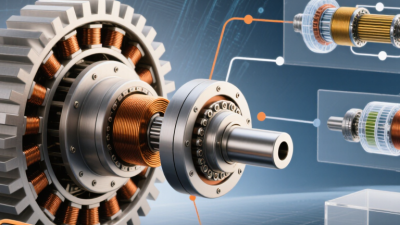
A permanent-magnet synchronous motor (PMSM) has magnets fixed to its rotor and three-phase windings in its stator. The stator’s changing magnetic field pulls the rotor into synchronized rotation. Unlike an induction motor, the rotor needs no induced current to create its magnetic field. That sounds simple. In practice, magnet placement, air-gap size, and heat management all affect performance.
A variable-frequency drive (VFD) controls the stator’s electrical frequency and current, adjusting motor speed to match the load. It may use encoder feedback or estimate rotor position electronically. The International Energy Agency’s report Energy-Efficiency Policy Opportunities for Electric Motor-Driven Systems estimates that motor-driven systems use about 45% of global electricity. That figure covers many motor types, but it shows why speed control and system design matter.
Consider a pump moving water through a changing demand cycle. A VFD can slow the motor instead of relying only on a throttling valve, reducing unnecessary flow and power use. Yet the result depends on the pump curve, operating hours, and drive settings; a VFD alone does not guarantee savings. Heat can also weaken permanent magnets over time, so cooling and temperature limits deserve attention. The details are easy to overlook.
How a PMSM Works: Ideal Three-Phase Stator Currents
A permanent-magnet synchronous motor (PMSM) uses a rotating stator magnetic field to drive its permanent-magnet rotor. A variable-frequency drive (VFD) controls the stator current frequency and magnitude. The chart shows ideal balanced three-phase sinusoidal currents, normalized in per-unit; it is a theoretical illustration, not measured motor data.
Efficiency Benchmarks: IE4/IE5 Classes in IEC TS 60034-30-2
IEC TS 60034-30-2:2016 sets efficiency classes for many converter-fed AC motors, including permanent-magnet designs. IE4 and IE5 are benchmarks, not guarantees of identical performance across every speed and load.
The IE5 framework targets roughly 20% lower losses than IE4; that is not a 20-percentage-point increase in efficiency.
Exact limits depend on motor rating and the standard’s test conditions. Compare like with like.
The scale matters. The International Energy Agency’s 2011 report, Energy-Efficiency Policy Opportunities for Electric Motor-Driven Systems, estimates that motor-driven systems use about 45% of global electricity. Even modest loss reductions can therefore matter across large fleets. In a plant, however, a catalogue figure may not match a motor running at partial load through a variable-speed drive. Check measured input power, shaft output, speed, torque, and test conditions. A warm motor casing is not an efficiency test. Real installations are messier. Part-load data and drive losses deserve attention, and published comparisons do not always make those assumptions easy to spot.
Motor Sizing Data: kW, N·m, rpm, 50/60 Hz, and Duty Ratings
A permanent-magnet motor should be sized from the machine’s actual load, not its headline power alone. Start with required output in kilowatts, then check torque in newton-metres at the operating speed. For a quick estimate, torque equals 9,550 times kilowatts divided by rpm. A 10 kW motor running at 1,500 rpm produces about 64 N·m before losses and operating limits are considered. Small details matter. Record both normal and peak load, especially when a conveyor starts full or a pump meets changing pressure.
Frequency changes the selection. A motor connected to a 50 Hz or 60 Hz supply may have different operating speeds, while a variable-frequency drive can broaden the usable range only within the motor’s approved limits. Check the drive, cooling method, and torque curve together. Then confirm the duty rating, such as continuous operation or repeated starts, against the real work cycle. Measure under load. Ambient heat, dust, and limited airflow can reduce practical capacity. I would leave a sensible margin, though too much oversizing can also reduce efficiency. The calculation is useful, but it is not a substitute for checking the actual installation.
Supplier Verification: GB/T 30253, Test Reports, Warranty, and Support
China Best Imperial Electric Permanent Magnet Motor?
Supplier Verification: GB/T 30253, Test Reports, Warranty, and Support
A motor’s efficiency claim needs evidence, not a polished brochure. The IEA’s 2016 report, Energy Efficiency Policy Opportunities for Electric Motor-Driven Systems, estimates that motor-driven systems use about 53% of global electricity. That scale makes small efficiency differences worth checking. Ask suppliers to state the applicable edition of GB/T 30253, the Chinese standard covering technical requirements for permanent magnet synchronous motors. The standard reference alone proves little. Request a complete test report showing rated voltage, speed, load, temperature, measured efficiency, and the tested unit’s serial number. Check whether an independent laboratory performed the tests, and confirm its accreditation and report date. Details matter.
Warranty terms deserve the same scrutiny. Look for coverage duration, exclusions, response times, and who pays for diagnosis or replacement. Ask for written service procedures and a named technical contact, not just a sales address. For a production line, confirm spare-parts availability and expected repair turnaround. A report may describe one carefully prepared sample, not every motor shipped. That gap is easy to overlook. Compare test conditions with your real duty cycle, including frequent starts, variable loads, and ambient heat. If a supplier cannot explain a discrepancy plainly, pause before ordering. A perfect-looking table is not support.